
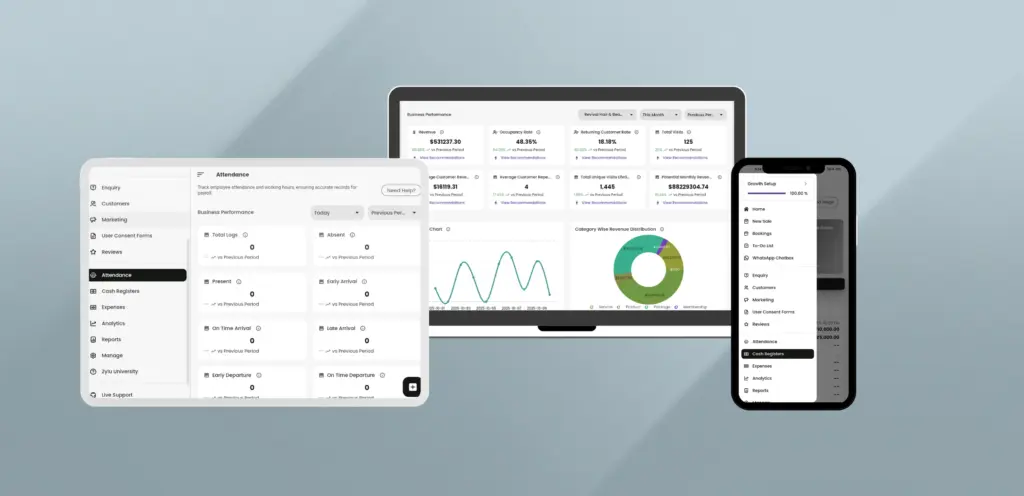
Discover the most comprehensive salon software in 2026 comparison guide available today. Explore how Zylu stacks up against leading platforms such as Timely, Square, Treatwell, Booksy, Fresha, Vagaro, Zenoti, Phorest, mangomint and StyleSeat, across features, pricing, performance, and client experience. Whether you’re running a salon, spa, nail studio, skin clinic, or barbershop, this comparison will help you choose the right platform to scale your business with confidence.
1000+ businesses globally One platform shaping the future of beauty.
Zylu has rapidly grown into one of the world’s most trusted all-in-one salon Software and wellness management systems, empowering businesses across the globe to streamline daily operations, elevate the client journey, and unlock steady, predictable growth. From integrated appointment scheduling and seamless POS billing to advanced CRM, automated marketing, multi-branch management, and inventory tracking, Zylu has become the operational backbone for thousands of beauty and wellness businesses. The platform’s mission is simple: consolidate every backend process your salon relies on into one powerful, intuitive, cloud-based system that anyone on your team can use—without technical expertise or steep learning curves.
Modern salon and spas face growing pressure: clients expect faster responses, instant confirmations, flawless experiences, and the ability to book at any hour. Owners, on the other hand, need a centralized dashboard that gives complete control over bookings, staff schedules, product usage, membership plans, marketing workflows, client retention, and financial performance. Zylu addresses all of these demands by providing a robust suite of features designed to automate repetitive tasks, minimize no-shows, reduce operational errors, and improve overall business efficiency. It becomes more than software—it becomes the engine that keeps your entire operation running smoothly.
The beauty and wellness industry is more competitive than ever, and the salon winning today are those powered by intelligent, data-driven systems that help them anticipate demand, nurture client relationships, and keep calendars consistently full. Zylu gives you that competitive edge. Whether you’re growing a thriving salon brand or managing a boutique spa looking to deliver a premium experience, Zylu offers the tools, structure, and clarity needed to scale with confidence and consistency.
94% of clients prefer businesses that offer online booking
Today’s clients want convenience. They want to book from Instagram, Google, WhatsApp, or your website without waiting for a callback or navigating manual schedules. Zylu helps businesses meet this expectation with a frictionless booking flow, automated confirmations, and scheduling intelligence that ensures no double-bookings, gaps, or missed opportunities. When clients can book any time—day or night—you capture appointments that would otherwise slip through the cracks. This seamless experience builds trust and increases repeat bookings, especially for busy salons, spas, and clinics.
40% of all appointments are now booked after hours
Client behavior has shifted dramatically. A large portion of bookings now happen when your salon is closed—late evenings, early mornings, lunch breaks, and weekends. If your business doesn’t offer a 24/7 mobile-friendly booking experience, you’re losing real revenue every single day. Zylu eliminates this gap by giving clients instant access to availability, service menus, staff choices, pricing, and add-ons anytime they want. Automated reminders and confirmations ensure both clients and staff stay informed, reducing no-shows and keeping your calendar optimized.
This shift is not a trend—it’s the new normal. Beauty and wellness professionals must adapt to a world where convenience drives loyalty, and loyalty drives long-term revenue. Zylu ensures you stay ahead, not chasing behind, by providing a platform that supports the modern, digitally driven client experience from start to finish.
That’s why, in this complete comparison guide, we evaluate the leading salon software platforms head-to-head: Zylu, Timely, Square, Treatwell, Booksy, Vagaro, StyleSeat, Zenoti, Phorest and mangomint. We compare their core features, POS capabilities, pricing models, ease of use, customer support quality, mobile apps, marketing functionality, and unique differentiators—so you can confidently choose the platform that aligns best with your business model.
Whether you’re building a multi-location salon brand, managing a boutique spa, or running a high-demand independent practice, this guide gives you clarity on how each system enhances the client journey—from booking to reminders, from consultations to payments, from marketing to retention—and which platform ultimately delivers the greatest long-term value for your business.
What to Look for in Salon Software
Before diving into comparisons, it’s important to establish the criteria that define truly high-performing salon and spa management software. The modern beauty and wellness industry demands more than just online booking tools—businesses now rely on platforms that simplify operations, increase client retention, and support long-term scalability. Below are the key factors we evaluated when analyzing today’s top salon software providers, including Zylu, Zenoti, Phorest, Mangomint, Timely, Square, Treatwell, Booksy, Vagaro amd StyleSeat.
• Comprehensive Feature Set
The ideal software should do far more than manage appointments; it should operate as the central command center for your business. That means offering end-to-end tools like appointment scheduling, staff management, smart client profiles, integrated POS billing, loyalty and membership management, inventory tracking, detailed analytics, and automated marketing workflows—all in one unified platform. A strong system should scale effortlessly whether you’re running a single boutique salon, managing a high-volume spa, coordinating multiple branches, or supervising a large team with complex scheduling needs. The more features consolidated into one place, the fewer external tools you depend on, reducing costs and eliminating workflow fragmentation.
• Ease of Use & Setup
Software should simplify your day—not complicate it. When evaluating platforms, we focused heavily on user experience: clean interfaces, logical navigation, and intuitive workflows that minimize training time. A great salon system must feel natural for both admins and staff, from receptionists and stylists to therapists and managers. Quick onboarding is essential; the sooner your team becomes comfortable, the sooner your business benefits. Platforms like Zylu excel here by offering clear dashboards, drag-and-drop calendars, and mobile accessibility that make adoption seamless, even for non-technical users.
• Pricing & Fees
Pricing structures vary widely across salon software providers—some charge per staff member, others use subscription tiers, and some rely on commission-based models tied to bookings or marketplace traffic. We looked beyond base pricing to examine the complete financial picture: payment processing fees, messaging costs (SMS, WhatsApp), add-on modules, and charges for additional locations or team members. Understanding total cost of ownership is vital so that you choose a system that fits your budget today and remains sustainable as your business grows. Transparent pricing, like Zylu’s no-commission model, helps owners avoid unexpected operational expenses.
• Customer Support
When your salon is open, your software must be working—there’s no room for downtime. Reliable support is a cornerstone of any high-quality salon platform. We assessed responsiveness, availability, and support channels such as live chat, phone assistance, knowledge bases, video tutorials, and onboarding guidance. The best providers offer fast, helpful answers and provide resources that empower your team to solve issues without long delays. Systems like Zylu, Zenoti, and Phorest place emphasis on strong support ecosystems, ensuring businesses never feel stranded when facing a technical hiccup or configuration challenge.
Keeping these core factors in mind, the next section will compare the top salon software platforms—Zylu, Zenoti, Phorest, Mangomint, Timely, Square, Fresha, Treatwell, Booksy, Vagaro and StyleSeatto help you confidently identify the right solution for your business needs.
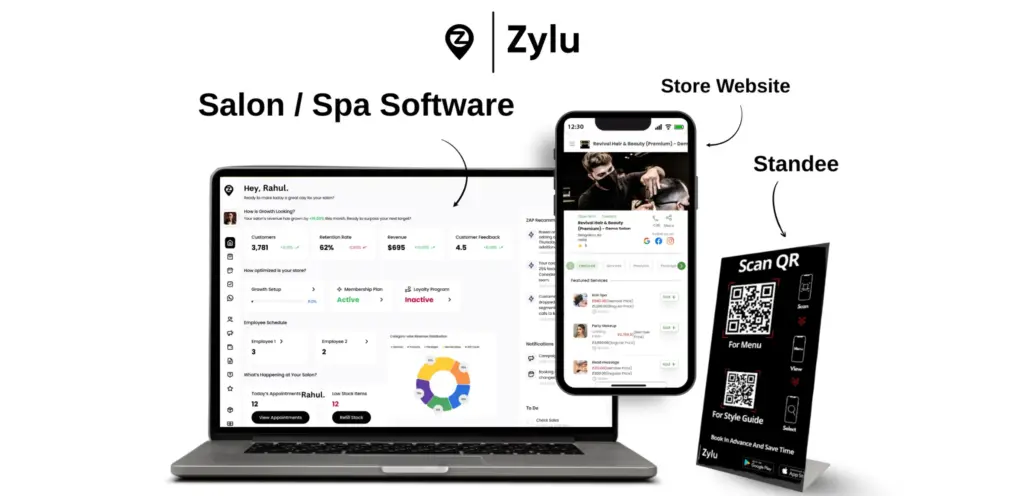
#1 Zylu: Best Overall Salon Software (All-in-One Solution)
Zylu is not just another salon booking app — it is a complete all-in-one salon management software built for beauty and wellness businesses of every size. Trusted by 1000+ businesses across globally, Zylu has become one of the leading platforms empowering salons, spas, nail studios, skin clinics, barbershops, and multi-location beauty chains. Designed as a true cloud-based system, Zylu manages everything from online appointment scheduling and POS billing to CRM, automated marketing, inventory tracking, multi-branch oversight, and team management.
Zylu’s philosophy is simple: provide enterprise-level salon software features inside an intuitive, modern interface that even non-technical teams can use effortlessly. Whether you are an independent stylist, a boutique salon owner, or running a multi-branch beauty brand, Zylu adapts to your workflows and scales with your growth. The platform eliminates the need for multiple tools — everything runs inside one smart, centralized dashboard. This saves time, reduces operational complexity, improves client retention, and increases total business performance.
Unlike many marketplace-dependent booking tools, Zylu does not charge booking commissions, making it the ideal solution for businesses that want to own their client relationships without giving away a percentage of each appointment. With integrated payment support (cash, card, UPI, QR), automated reminders, WhatsApp marketing, digital invoicing, attendance tracking, memberships, packages, and service catalogs, Zylu brings every operational requirement under one roof. The result? A simplified workflow, a smoother client journey, and a more profitable beauty business powered by smart automation and real-time data insights.
Pros
- Integrates with many third-party tools using an open API
- AI-powered automation for marketing, scheduling, and analytics
- Enterprise-level reporting and insights
- Highly customizable for multi-location chains
- Transparent pricing with no commission fees on bookings
Cons
All-in-one system may feel overwhelming at first for small teams
Advanced features (WhatsApp API, biometric attendance) may require an upgraded plan
Learning curve for full automation tools like segmentation and campaign workflows
Setup fee applies to initial onboarding (₹1,999 / $49)
Why Zylu Leads in Salon Software in 2026
From the moment you log into Zylu, the platform feels thoughtfully designed, powerful, and extremely approachable. Every element of the interface is built to simplify daily salon operations — scheduling, billing, marketing, inventory, CRM, staff performance, and multi-branch controls are all managed in one clean, unified system. Zylu combines industry-specific intelligence with the flexibility required by modern beauty businesses. Here is why Zylu stands out as a top choice among salon, spa, nail, and wellness professionals:
Inventory Management
Zylu’s inventory and product management module is designed to eliminate stock wastage, prevent product shortages, and empower salon owners with real-time visibility into every consumable and retail item. Instead of relying on manual spreadsheets or inconsistent tracking methods, Zylu creates a structured, automated system that updates stock levels instantly after every service or retail sale. This ensures that salon and spas maintain the right product levels without overstocking or running out of essential items during peak hours. The platform captures product usage based on service workflows, meaning that color tubes, creams, masks, serums, disposables, oils, and retail SKUs are all tracked precisely.
With detailed SKU-level tracking, barcode scanning support, reorder alerts, low-stock notifications, supplier information storage, and automated deduction of stock after checkout, Zylu removes the guesswork from inventory management. Multi-location salon benefit even more since the system allows centralized stock monitoring, cross-branch transfers, usage audits, and location-wise product performance reports. This level of visibility helps owners identify shrinkage, eliminate dead stock, and forecast purchasing needs with accuracy.
For businesses selling products, Zylu turns the retail counter into a revenue generator by simplifying the upselling process. Staff can quickly add retail items during checkout, track best-selling SKUs, and understand client purchase patterns. When paired with CRM insights, Zylu enables targeted product recommendations, boosting both client satisfaction and retail revenue.
Key SEO-boosting capabilities:
Real-time stock deduction
Automated reorder alerts
Multi-branch inventory tracking
Product performance analytics
Supplier & purchase order records
Marketing & Retention Tools
Zylu’s marketing and client retention engine is one of its strongest advantages, built to help salon generate repeat visits, improve client loyalty, and increase long-term revenue without manual follow-ups. Instead of relying on guesswork, Zylu uses client behavior data — visit frequency, spend patterns, preferences, and last appointment date — to automate personalized marketing campaigns. Clients can receive automated reminders, follow-ups, rebooking nudges, birthday offers, abandoned booking messages, membership alerts, and promotional campaigns through SMS, WhatsApp, and email.
With WhatsApp being a dominant communication platform in markets like India, UAE, Singapore, and parts of Europe, Zylu’s WhatsApp API integration becomes a powerful retention tool. It enables salon to send branded updates, service reminders, offers, vouchers, and review requests directly to the client’s phone. Compared to SMS or email, WhatsApp campaigns often generate higher open rates and conversion ratios, leading to stronger engagement and more appointments.
Zylu’s built-in loyalty program and membership system allows salon to reward loyal clients with points, discounts, VIP access, or exclusive services. This not only boosts retention but also increases average spend per client. The segmentation engine lets businesses filter clients by location, gender, service category, spending level, or visit frequency — creating targeted, high-performance campaigns that drive results.
SEO-powerful capabilities include:
Automated SMS / WhatsApp / email campaigns
Client segmentation & smart triggers
Loyalty programs & membership billing
Rebooking & win-back campaigns
Review requests & referral promotions
Staff & Resource Management
Zylu offers a complete staff and resource management system that helps salon streamline scheduling, measure performance, reduce manual attendance tracking, and assign services based on skill level. The platform allows managers to create shift schedules, define working hours, manage holidays, and handle last-minute changes without confusion. For larger salons, Zylu provides hierarchical permissions, ensuring that owners control access levels while staff only view what’s necessary for their roles.
Staff performance analytics — including revenue contributions, service efficiency, retail sales, utilization rate, and client feedback — give salon owners data-driven insights for training, incentives, and promotions. This helps identify top performers, improve underperforming staff, and increase overall team productivity.
The system also includes commission tracking, enabling automatic calculation based on service type, product sales, roles, or customizable commission structures. Combined with integrated attendance options like biometric systems (available as an add-on), Zylu creates accurate payroll-ready data that reduces manual paperwork.
Staff management highlights:
Smart shift scheduling
Skill-based service assignment
Automated commission calculation
Attendance & biometric compatibility
Staff performance analytics
Multi-Location Features
Zylu is engineered for multi-location salon and spa chains, offering centralized control with branch-level flexibility. Whether you operate two branches or manage a nationwide network, the platform provides real-time visibility across all locations from a single admin dashboard. You can standardize service menus, pricing, promotions, staff permissions, and membership programs across branches — ensuring consistency in brand experience.
Owners can monitor branch-wise KPIs such as revenue, staff performance, top services, client retention percentage, and inventory usage. The multi-branch inventory system allows stock transfers, purchase order management, and location-specific consumption tracking. CRM data remains unified, meaning clients can book appointments at any branch seamlessly.
Role-based access ensures managers view only the data relevant to their branch, while corporate-level admins maintain full oversight. This architecture makes Zylu a strong alternative to enterprise-grade solutions like Zenoti and Phorest, especially for brands wanting powerful features without excessive costs.
Core multi-location advantages:
Centralized dashboard for all branches
Cross-branch booking & unified CRM
Standardized pricing and service menus
Chain-wide analytics & performance comparison
Branch-level stock transfers & controls
Appointment Scheduling & Calendar
Zylu’s appointment scheduling system is one of the most advanced and user-friendly in the beauty tech space. The calendar is clean, color-coded, and supports drag-and-drop functionality, making it effortless for staff to rearrange schedules, assign services, or update availability. It supports multiple staff calendars, therapists, specialists, and service-specific time blocks.
Key scheduling features include:
Real-time availability updates
Prevention of double bookings
Staff-specific working hours
Group bookings & repeat appointments
Patch test reminders
Custom buffers between services
Reschedule & cancellation flows for clients
Automated SMS, email, and WhatsApp reminders
The system is optimized for 24/7 online booking, ensuring your salon captures appointments even after business hours — a major advantage since a significant percentage of bookings now occur late in the evening or early morning. Clients get a seamless booking experience from your website, social media, Google Business Profile, or direct booking link.
Client Quote Example:
“The booking experience feels smooth and professional. Our team no longer deals with back-and-forth messages — clients book anytime they want.”Client Management (CRM)
Zylu’s CRM goes beyond basic client information. It builds a complete digital profile for every customer, storing visit history, service preferences, formulas, notes, before/after photos, allergies, packages, membership details, and loyalty points.
This enables:
Personalized consultations
Smarter service recommendations
Higher client retention
Automated rebooking prompts
Segmentation for targeted marketing
Lifetime value insights and visit frequency metrics help owners identify their top clients and nurture them with exclusive offers or loyalty rewards.
Point of Sale (POS) & Billing
Zylu’s POS is tightly integrated with the booking system, making checkout fast and accurate. Businesses can accept payments through cash, card, wallet, UPI, and QR — giving flexibility to clients and reducing friction.
Key POS features include:
Digital invoices & receipts
Add-on products and retail upselling
Membership and package billing
Discounts, coupon codes, and offers
GST-ready billing for Indian businesses
Staff commission tracking
Split payments & partial payments
Inventory automatically updates with every sale, reducing manual stock adjustments and improving accuracy.
Pricing Table
Zylu’s pricing plans:
| Plan Name | Monthly Price (USD) | Best For |
|---|---|---|
| Lite | $19 / month | Solo stylists & freelancers |
| Grow | $49 / month | Small salon & teams |
| Standard | $69 / month | Growing salon & spas |
| Premium | $199 / month | Multi-branch salons |
Additional Notes:
No commission fees on bookings
Payment gateway fees apply (~3% + GST for India)
Optional add-ons like WhatsApp API, biometric attendance
This structure makes Zylu highly affordable compared to Zenoti, Fresha, Mangomint, or Phorest while still offering enterprise-grade capabilities.
Ease of Use
One of Zylu’s strongest advantages is how intuitive and fast it is to set up, even for owners or stylists who have never used salon software before. Its interface is clean, modern, and built specifically for beauty and wellness businesses — not generic retail or appointment apps. From the moment users log in, Zylu guides them through a simple onboarding experience with easy checklists, step-by-step configuration tips, and contextual prompts that help staff understand features without feeling overwhelmed. This reduces the typical training time dramatically and allows teams to start operating efficiently from day one.
The platform’s layout is intentionally crafted to minimize friction. Whether you’re adding clients, adjusting staff schedules, modifying services, posting offers, or managing inventory, the navigation feels natural and predictable. Zylu also hides advanced tools (such as segmentation, membership rules, or multi-branch analytics) until they’re needed — preventing first-time users from feeling overloaded. This “progressive feature Reveal” is highly appreciated by salons switching from complicated systems like Zenoti, Mindbody, or Phorest, which often require extended training.
Independent stylists moving from pen-and-paper workflows, as well as larger salons transitioning from older systems like Fresha, Mangomint, or Booker, consistently report that Zylu feels refreshing, faster, and more intuitive. Because Zylu is fully cloud-based, it works seamlessly on browsers, tablets, and mobile devices. Real-time syncing ensures appointments, client notes, and billing updates appear instantly for every user.
Client Quote Example:
“Our entire team learned Zylu within 48 hours — far quicker than any software we used before. Everything is simple, clean, and makes sense.”
This emphasis on usability is one reason salons across Asia, the Middle East, Europe, and North America adopt Zylu without downtime, replacing multiple scattered tools with a single system that everyone can operate confidently.
Customer Support
Zylu offers a robust support ecosystem designed to help salons operate smoothly without technical interruptions. All plans include chat support, while upgraded plans — such as Standard and Premium — include priority support and phone assistance for faster resolution. Responses are quick, friendly, and tailored to the beauty industry, not generic helpdesk replies.
Support is available across flexible hours to accommodate global businesses, especially in regions like India, UAE, the UK, and the USA where salons operate across multiple time zones. The support team assists with onboarding, service menu setup, staff scheduling, loyalty program configuration, inventory import, and troubleshooting — ensuring salons experience smooth adoption with minimal stress.
Zylu also provides a knowledge center filled with guides, videos, FAQs, and self-help resources. This allows teams to explore features at their own pace, reducing dependency on support while empowering staff to learn independently. For multi-location chains, Zylu offers structured onboarding support and system customization assistance to maintain consistency across branches.
Compared to competitors like Zenoti, Mindbody, or Phorest, where support often depends on enterprise-tier pricing, Zylu offers a more accessible and responsive model. And unlike Fresha, where customer support is often highlighted as quick but limited in scope, Zylu goes deeper into personalized onboarding — improving adoption and long-term usage.
Client Feedback Example:
“Zylu’s support team is extremely responsive and knowledgeable. Any issue we had was solved within minutes.”
This level of support ensures that salons never feel stuck, even during busy business hours.
Unique Selling Points
Zylu’s most powerful advantage is its all-in-one architecture combined with a no-commission model, giving salons full ownership of their revenue and client relationships. While competitors like Fresha rely heavily on marketplace commissions, and enterprise platforms like Zenoti and Phorest charge premium pricing for advanced features, Zylu delivers the same depth of functionality at a more affordable and transparent structure — making it ideal for salons and spas of all sizes.
Here is what truly makes Zylu stand out:
1. No Commission on Bookings — Full Revenue Ownership
Unlike Fresha and Treatwell, Zylu does not take a percentage of bookings. Salons keep 100% of what they earn, paying only standard payment gateway fees. This is a critical advantage for salons relying on repeat customers, memberships, or high-volume services.
2. Deep CRM + Automated Marketing + WhatsApp Integration
Zylu blends powerful CRM with automated marketing workflows, enabling salons to send targeted WhatsApp, SMS, and email campaigns. Competitors like Mangomint and Square offer basic reminders, but Zylu’s automation engine is far more advanced and GEO-friendly for markets like India and UAE.
3. Multi-Location Scalability at Lower Cost
Platforms like Zenoti excel at enterprise features but come with steep pricing. Zylu provides similar scalability — multi-branch dashboards, unified CRM, centralized inventory — without enterprise-level fees, making it accessible to growing chains.
4. POS + UPI + QR + GST Integration
Zylu is highly localized for India, with UPI support and GST-ready invoicing. This gives it a major advantage over global platforms not optimized for the Indian market.
5. Smooth UI + Fast Learning Curve
Compared to Phorest or Mindbody, Zylu’s interface is lighter, quicker, and easier for new teams.
6. All Essential Tools in One Platform
Inventory, marketing, CRM, POS, bookings, staff management, client history, and analytics — everything is integrated smoothly.
Real Growth Examples :
“Zylu helped us bring back 38% of inactive clients through automated WhatsApp campaigns.”
“Our staff scheduling improved instantly — we cut admin time by nearly 50%.”
These results demonstrate that Zylu is not just feature-rich — it is revenue-focused, retention-focused, and efficiency-focused.
Book your Free Demo Now!
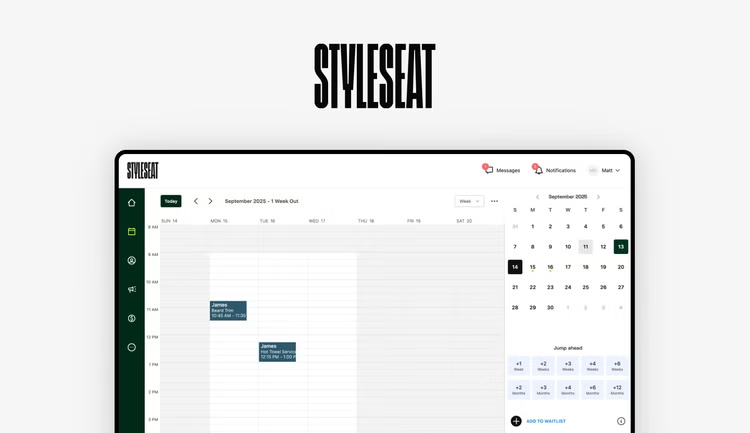
#2 styleseat: Made for Independent Stylists with a Client Marketplace (But Watch the Fees)
StyleSeat is a widely used U.S.-based booking platform created specifically for independent beauty professionals — hairstylists, barbers, estheticians, nail techs, and makeup artists. Since launching in 2011, it has scaled quickly by offering solo professionals a simple way to manage appointments while gaining exposure through the StyleSeat client marketplace. Its hybrid revenue model, which includes both monthly subscription options and per-booking fees, makes the platform flexible for independent stylists who either prefer predictable costs or want to pay only when they acquire new clients.
Because StyleSeat attracts large numbers of beauty consumers searching for nearby professionals, it helps independents fill slow days or expand their reach without building their own marketing strategy from scratch. However, this marketplace-driven model also comes with commission fees, especially on first-time or high-demand bookings — something solo professionals must weigh when choosing a long-term salon booking software.
Pros
Designed specifically for independent beauty professionals
Flexible: choose subscription plans or pay-per-booking
Helps professionals gain exposure through a large marketplace
Mobile-friendly, easy booking experience for clients
Cons
High commission fees applied to new clients
Service fee of ~$2.35 passed to clients for each booking
Not ideal for larger teams or multi-location salons
Customer support availability is inconsistent and not always 24/7
Core Features
StyleSeat is created primarily for independent stylists and small beauty professionals who need simple scheduling while gaining exposure to new clients. Here’s how it supports solo beauty businesses:
Appointment Calendar & Scheduling
StyleSeat provides a mobile-friendly scheduling system that allows professionals to manage bookings, send confirmations, and adjust availability with ease. Clients can self-book anytime through the StyleSeat app or a shared booking link, eliminating back-and-forth messaging. Automated reminders and smart scheduling tools help reduce no-shows, making everyday operations smoother for independents who handle their own calendar management without a receptionist.
Client Management
The platform stores essential client details, including appointment history and behavioral patterns such as frequent cancellations or no-shows. StyleSeat’s Smart Pricing tool automatically adjusts pricing during peak demand, helping professionals maximize their earnings. The CRM tools are basic compared to full salon management systems, but for independents, it covers the essentials without complexity.
Payments & No-Show Protection
StyleSeat includes built-in payment processing, enabling clients to securely add their card when booking. This allows professionals to charge cancellation or no-show fees automatically — a major benefit for solo stylists seeking financial protection and consistent income. StyleSeat charges its own processing fees (typically between 2.75% and 3%) and also adds a booking fee of around $2.35 that is passed to the client. While convenient, this fee structure is something professionals must evaluate when calculating profitability.
Marketing & New Client Acquisition
StyleSeat doubles as a consumer marketplace where clients search for beauty professionals by style, location, service type, or reviews. This helps independents attract new customers without spending on advertising. The platform also includes automated reminders, birthday messages, and simple follow-up tools, though it lacks the deeper marketing automation found in advanced salon software solutions. Its marketplace reach is its biggest marketing strength.
Reviews & Portfolio
Professionals can collect client reviews directly on their StyleSeat profile, improving visibility and credibility. StyleSeat also allows stylists and beauty pros to upload photos, videos, and service portfolios, creating a mini website within the platform. This strengthens online visibility and helps clients choose a stylist whose work matches their aesthetic preferences.
Mobile App
The StyleSeat professional app is the hub for everything — calendar, payments, client details, notifications, and pricing adjustments. Many professionals use the app as their primary business tool since it’s optimized for mobile use. Clients also use the StyleSeat consumer app to browse, book, pay, and review services, making it convenient for users familiar with app-based booking.
Customer Support & Community
StyleSeat offers customer support primarily through email and a centralized help center. While they don’t provide 24/7 live support, responses typically arrive during regular business hours. Many independent stylists note that, although support is not instant, the platform itself is simple enough that they rarely need extensive assistance. The help center contains guides, tutorials, and articles that make self-service easy, especially for professionals who prefer troubleshooting on their own.
The community aspect is also fairly active, with independent beauty professionals sharing tips and common solutions online. However, compared to full-service salon management platforms like Vagaro, Zenoti, Zylu, or Mindbody — which offer chat, onboarding specialists, or dedicated support teams — StyleSeat’s assistance model is more lightweight and geared towards tech-comfortable freelancers.
Pricing
StyleSeat offers two primary pricing options depending on whether professionals prefer a commission-based free plan or a flat monthly subscription. This gives freelancers flexibility to choose a model that suits their stage of growth.
Free Plan
$0 monthly subscription
StyleSeat takes 35% commission on a new client’s first appointment (capped at $50)
Clients pay a $2.35 booking fee
Smart Pricing adds extra fees for premium time slots
Payment processing fees generally range from 2.75% to 3%
Under this model, StyleSeat functions more like a client acquisition partner — bringing customers via their marketplace and taking a share from bookings.
Premium Plan
$35/month flat fee
No booking commissions or client fees for standard features
Only regular payment processing fees apply
Premium users get improved placement in search results within the StyleSeat marketplace
This plan is better suited for professionals who already have a stable clientele and want predictable monthly expenses without giving up a percentage of each new booking.
Ease of Use
StyleSeat is built for independent, non-technical, on-the-go beauty professionals. Setup is extremely fast — within minutes, users can upload services, adjust pricing, and open the booking calendar to the public. The interface is clean, minimalistic, and designed with mobile-first usability in mind.
Many barbers, hairstylists, and makeup artists who previously relied on text messages or Instagram DMs often switch to StyleSeat because it centralizes scheduling and helps them appear more professional to clients. The platform automatically displays available appointments, eliminating the constant back-and-forth communication that typically happens with manual booking.
One drawback is the booking fee charged to clients. Some users have expressed frustration that their customers must pay an extra $2.35 (or more if Smart Pricing adjusts the rate upward). While many clients accept the fee for convenience, others feel discouraged, especially when booking frequent low-cost services.
Despite this, StyleSeat remains popular among freelancers who prioritize simplicity, mobile accessibility, and a built-in marketplace that helps them stay booked without investing heavily in advertising.
Customer Support
StyleSeat’s support reputation is mixed. Since the platform is designed largely for self-service, it does not offer phone-based support. Instead, professionals submit tickets or browse an online help center featuring guides, FAQs, and tutorials. Email responses are typically prompt, though not instant. Premium-tier subscribers receive slightly faster support, but a dedicated agent or priority hotline is not guaranteed.
This model works reasonably well for many users because StyleSeat’s interface is simple and most issues relate to payments or scheduling — but for freelancers who prefer direct assistance, this can feel limiting. Compared to competitors like Vagaro, Zylu, Zenoti, or Square Appointments, which offer faster live support, StyleSeat’s help system is more streamlined and minimalistic.
For independent stylists who value a hands-off, app-driven experience, the support level is usually sufficient. For those managing higher booking volume or needing advanced operational assistance, StyleSeat’s support options may feel too restricted.
Drawbacks
High Commissions & Extra Fees (unless using Premium)
One of the biggest limitations of StyleSeat is its cost structure for independents who rely on the free plan. A 35% commission on the first appointment with a new client can become expensive quickly (even though it’s capped at $50). For services priced at $150–$200, stylists still lose a significant amount of revenue upfront. In addition, the $2.35 client booking fee applied to every appointment can accumulate over time — especially for high-frequency clients — making the total cost noticeably higher than platforms like Zylu, Vagaro, Timely, or Square Appointments, which provide low-fee or no-fee booking experiences.
Not Designed for Multi-Staff Teams
StyleSeat functions best for solo stylists, and while a few small teams use it, the system doesn’t scale well for multi-staff or multi-location beauty businesses. Unlike full-service salon platforms such as Zenoti, Phorest, Mangomint, Mindbody, and Zylu, StyleSeat lacks interconnected calendars, resource allocation, team permissions, payroll requirements, or shift scheduling tools. Salon with multiple stylists often struggle with visibility, because the platform consolidates everything under one profile — forcing teams to workaround limitations rather than operate efficiently.
Limited Expansion Features
StyleSeat does not offer advanced operational modules like:
Inventory & retail stock management
Comprehensive POS analytics
Multi-location dashboards
In-depth marketing automation
Memberships or loyalty systems
Integrations with accounting or payroll tools
This makes it less suitable for businesses planning significant growth. Tools such as Zylu, Fresha, Vagaro, Mangomint, and Phorest offer far broader salon management ecosystems designed for long-term scalability.
Client Booking Fees May Discourage Repeat Clients
The mandatory per-booking client fee ($2.35 or higher if Smart Pricing applies) can turn off cost-conscious clients. When competing with stylists using systems like Zylu, Fresha, Timely, or Booksy, where clients are not charged additional booking fees, many savvy customers choose fee-free platforms. This can impact the retention of loyal clients who book frequently.
Comparison to Zylu
Where StyleSeat focuses primarily on solo beauty professionals and relies heavily on commissions and client booking fees, Zylu stands out as a far more complete and cost-effective salon management platform for both individuals and growing teams. The difference becomes clearer when evaluating core operational needs, long-term business growth, and profitability.
Lower Costs for Professionals
Unlike StyleSeat, which charges a 35% commission on new clients and adds a $2.35 fee to every booking, Zylu does not take any commission from appointments. Professionals keep 100% of their earnings, paying only standard payment gateway fees. This alone makes Zylu significantly more budget-friendly for stylists, barbers, beauticians, spas, nail artists, and wellness centers.
No Client Booking Fees
Clients booking through Zylu do not pay an additional booking fee — ever.
This improves customer satisfaction and increases repeat bookings.
In contrast, StyleSeat’s mandatory client fee can discourage cost-sensitive clients or those booking multiple small services.
Better for Teams, Staff, and Multi-Location Salons
While StyleSeat is built for independents, Zylu supports:
Multi-staff calendars
Multi-location branches
Role-based permissions
Commission tracking
Shift scheduling
Team performance analytics
This makes Zylu ideal for salons, spas, clinics, and barbershops with more than one service provider.
Broader Business Tools
Zylu includes full business-management features missing in StyleSeat:
POS + GST-ready billing
WhatsApp automation
Inventory and stock tracking
CRM segmentation
Loyalty & membership programs
Packages and bundles
Centralized reporting and analytics
These tools help salons grow predictably and retain clients consistently — a challenge for StyleSeat users.
Global Expansion & Local Market Fit
StyleSeat’s marketplace is strong in the U.S., but it does not scale well internationally.
Zylu, on the other hand, supports.
With multi-currency and multi-location readiness, Zylu becomes a better long-term choice for salons planning expansion or diversification.
Conclusion: Why Zylu Is a Stronger Choice Than StyleSeat for Salon Businesses
StyleSeat is popular among independent stylists who want a marketplace presence. However, its commission model, limited customization, and focus on individual professionals make it less suitable for salons with teams, multiple services, or long-term scaling goals.
Zylu shifts the focus back to your business offering powerful scheduling, deep CRM insights, automated marketing, POS, loyalty tools, and real-time inventory without charging commissions or restricting features.
Salons can build their own brand authority, grow organically, and manage operations with a modern, straightforward interface.
StyleSeat works well for solo stylists, but for full-service salons wanting efficiency, growth, and cost control, Zylu is the more reliable and scalable solution.
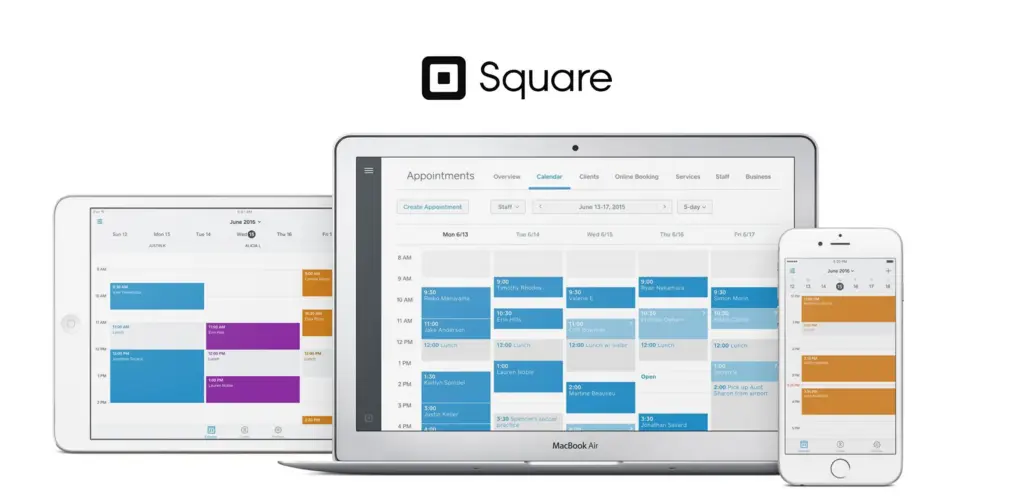
#3 Square: Great POS Integration, But Missing Key Salon-Specific Tools
Square Appointments is part of the broader Square ecosystem, making it an appealing option for solo beauty professionals or small salon that want simple bookings tightly connected to Square’s POS and payment processing. Square is a well-known name in the small business world because of its ease of use, card readers, and reliable payment operations. By combining Square Appointments with Square POS, beauty businesses can manage bookings, payments, and checkout inside a single ecosystem without needing extra hardware or software.
However, Square Appointments is not a salon-specific platform. While it offers clean scheduling tools and smart POS integration, it lacks many of the deeper, industry-focused management features that growing salons, spas, and clinics depend on daily. Square’s strength is simplicity; Zylu’s strength is complete operational control. Because Square Appointments is built to serve many industries, not specifically beauty and wellness, it falls short in advanced CRM, inventory behavior tracking, multi-branch operations, integrated WhatsApp campaigns, staff management, memberships, packages, and automated marketing — all of which Zylu includes natively.
For independent stylists who want a lightweight booking system tied to Square’s payment flow, this can be enough. But for salon wanting to scale, increase retention, manage multiple staff, run marketing campaigns, track consumables, or manage multi-location operations, Square Appointments often becomes restrictive. This is where Zylu pulls ahead in both long-term flexibility and total cost effectiveness for salon and spa businesses.
Pros
Free plan available for solo stylists
Seamless POS + payment integration with Square ecosystem
Simple, clean setup and intuitive interface
Unlimited staff calendars (with limitations)
Cons
Lacks salon-specific features needed by beauty businesses
Advanced tools like inventory & marketing require paid add-ons
Limited customization for detailed client records
Multi-location support is basic compared to salon-focused platforms
Core Features
While Square Appointments handles essential scheduling and payment needs, it lacks many advanced tools that salon depend on. Here are the key features:
Appointment Scheduling Calendar
Square provides a clean, simple scheduling interface with the ability to set service durations, book personal time, adjust hours, and color-code services. It supports unlimited staff calendars even on the free plan, although it remains limited to a single location. Real-time sync ensures that updates, reminders, bookings, and cancellations appear instantly across devices. This makes Square useful for sole proprietors or micro teams, but once staff levels increase or service complexity grows, limitations emerge — especially compared to Zylu’s multi-staff availability management, service-based custom buffers, and integrated staff performance tracking.
Online Booking Site
Square automatically generates a client-facing booking page for businesses. You can embed a booking widget on your website or add a “Book Now” link to Facebook, Instagram, or Google Business Profile — great for solo stylists who rely on social media traffic. However, the customization options are limited. Zylu offers more design flexibility, plus integrated WhatsApp confirmations and advanced client journey automation that Square does not include.
Client Management
Square’s CRM captures fundamental details like client information, appointment history, notes, and patterns such as cancellations or no-shows. While adequate for small setups, it lacks deeper industry-specific CRM fields like formula storage, treatment notes, package histories, allergies, before/after photos, digital consultation forms, and loyalty points. Zylu’s CRM provides all of these features natively, making it a far more comprehensive solution for beauty professionals.
Point of Sale & Payments
Square’s biggest strength is POS and payment processing. You can add services or retail products to invoices, accept paid deposits, process refunds, and take payments via Square Reader, Tap-to-Pay, or payment links. Supported methods include cards, Apple Pay, and Google Pay.
Processing fees in the U.S. are usually around 2.6% + 10¢ per transaction. While fast and reliable, these fees may be higher compared to regional gateways or UPI/QR options available in India — which Zylu supports out of the box.
SMS / Email Reminders
Square includes SMS and email reminders even on the free plan — an excellent way to reduce no-shows. However, Square does not include WhatsApp reminders, which are highly effective in markets like India and UAE. Zylu includes WhatsApp API automation and segmentation tools — a major competitive advantage for salon targeting local GEO markets.
Staff Management
Square offers basic staff management tools such as permissions, tips, and tracking. But it lacks advanced resource scheduling, commission automation, attendance tracking, or performance analytics — features that Zylu provides extensively. For multi-staff salons, these are critical workflow tools that Square simply doesn’t offer.
Comparison to Zylu
Square Appointments is excellent for solo stylists who want the simplest possible workflow combined with Square’s powerful POS system. However, when evaluating its ability to serve growing salons, spas, nail studios, or clinics, Zylu clearly offers more depth, flexibility, and long-term value.
Why Zylu Outperforms Square Appointments
1. Built Specifically for the Beauty Industry
Square is general-purpose software.
Zylu is built exclusively for salons, spas, barbershops, beauty clinics, nail studios, and wellness centers.
2. Advanced CRM vs Basic CRM
Zylu includes:
Client photos
Formulas
Treatment notes
Allergies
Packages & memberships
Loyalty points
Visit frequency insights
Square includes only basic client info.
3. No Commission + Local Payments
Zylu supports UPI, QR, wallet, card, cash, GST billing — making it ideal for India, UAE, and Asia.
Square primarily supports Western markets.
4. Multi-Staff & Multi-Branch Scalability
Zylu includes:
Multi-location dashboard
Branch-level analytics
Staff roles & permissions
Commission structures
Attendance & shift scheduling
Square is limited and becomes restrictive for growing teams.
5. Marketing Automation
Zylu offers:
WhatsApp automation
Segmentation triggers
Win-back campaigns
Loyalty & referral systems
Review automation
Square offers basic email/SMS only.
Who Should Choose Zylu?
If you manage:
✔ A growing salon
✔ A spa or wellness clinic
✔ A multi-staff business
✔ A multi-location brand
✔ A retail-focused beauty business
✔ A team needing CRM + POS + marketing automation
Zylu is the clearly superior choice.
Pricing
Square Appointments offers a simple three-tier pricing model intended to support individuals as well as growing businesses, but its cost-to-feature ratio becomes limiting when compared to a full salon management system like Zylu.
Free Plan — $0/month
Best suited for solo stylists or independent professionals operating from a single location.
Includes:
Appointment scheduling
Basic calendar and booking tools
Client management
Integrated checkout via Square POS
Support for multiple staff only if they share one calendar
However, the free plan lacks advanced salon-specific features and is not suitable for salon with even small teams.
Plus — $29/month per location
Designed for small salon growing into team operations.
Adds:
Multi-location scheduling
Waitlists
Class/Group bookings
Some marketing tools
Still, this tier does not include beauty-focused CRM fields, staff performance tracking, or inventory tools — all of which Zylu includes.
Premium — $69/month per location
Made for larger or multi-branch salons.
Includes:
Advanced scheduling features
Faster processing rates
More robust reporting
API integrations
Even at the Premium level, Square lacks complete salon inventory, loyalty/memberships, multi-branch performance dashboards, and beauty-focused automation — features that Zylu provides at a significantly lower price point without per-location inflation.
For salon prioritizing industry-specific capabilities, Square’s pricing structure often feels misaligned with what is offered at each tier, especially when compared to Zylu’s more comprehensive and salon-tailored plans.
Ease of Use
Square Appointments is built for busy small-business owners rather than exclusively for salon or spas, which is why many stylists find the interface extremely straightforward. The design is minimalistic, clean, and easy to navigate — ideal for solo stylists or beginners. The ecosystem is familiar to anyone who has used Square POS, so workflow transitions feel natural: create an appointment, check out a client, view reports, and accept payments all in one place.
Square Assistant is a notable convenience feature. It uses automated replies to confirm or reschedule client appointments without requiring the stylist to manually respond. This reduces no-shows and saves time, especially for professionals who manage their own bookings. While this automation is helpful, it primarily handles messaging — whereas Zylu extends automation into marketing, retention, segmentation, business insights, and client lifecycle management.
Square Appointments also makes use of a single sign-on system for the entire Square suite. If a salon uses Square POS for checkout or inventory tracking, everything is connected. However, because Square is not beauty-industry specific, the interface lacks tools such as:
Formula notes
Treatment histories
Before/after photo storage
Custom consultation fields
Membership or package tracking
These limitations matter once a salon moves beyond single-staff operations. Zylu allows complete customization for service categories, therapist roles, specialty treatments, pricing variations, and client-specific notes — giving beauty businesses much deeper operational control.
Overall, Square’s ease of use is excellent for simple operations, but salon looking for advanced client profiles, marketing engines, and staff management tools will quickly outgrow its interface.
Customer Support
Square Appointments provides support through email and community forums, with phone support available only for paid subscribers. Their help center contains clear articles and troubleshooting guides, making the platform easy to self-navigate for most routine tasks. Response times are generally within business hours, but support does not operate 24/7, which may be limiting for salon with late operating hours or urgent client-flow issues.
Square does not offer industry-specific onboarding like Zylu does. Instead, users are expected to configure much of their setup independently. While this works for simple use cases, it can be a challenge for salon needing help with advanced workflows such as service mapping, staff roles, marketing, or inventory behavior. For beauty and wellness businesses transitioning from another system, Square’s support may feel more generic, whereas Zylu’s onboarding specialists understand the detailed needs of salons, spas, skin clinics, and barbershops.
A common feedback point among Square users is that while the knowledge base is extensive, specialized support for beauty businesses is limited. Technical or billing-related issues are resolved effectively, but operational questions such as membership handling, rebooking workflow optimization, or branch-level reporting are not Square’s expertise.
In contrast, Zylu offers personalized assistance tailored to beauty businesses, including chat + phone support for premium plans, onboarding help, data import guidance, and region-specific payment configuration . This level of support helps salon transition smoothly and operate confidently, especially during peak hours.
Drawbacks
While Square Appointments provides reliable POS integration and simple scheduling tools, it also comes with several limitations that affect salons, spas, and wellness centers looking for a more industry-tailored, global management solution.
Industry-Specific Limitations
Square is built as a general business tool, not as a beauty-industry–specific software. It lacks deeper salon workflows such as detailed service formulas, treatment notes, photography logs, configurable consultation forms, and advanced CRM segmentation. For beauty businesses managing complex services or wanting a fully personalized client journey, this limitation becomes noticeable. Zylu, designed specifically for beauty and wellness operations, includes all of these features natively.
Marketing & Loyalty Costs
Square Loyalty, advanced marketing tools, and automated campaigns are paid add-ons, increasing total operational cost. Salon that rely on repeat business often find themselves paying extra for essential tools that Zylu includes within its core platform — such as integrated client retention workflows, branded messaging, automated rebooking reminders, and loyalty programs.
Multi-Location Constraints
Square Appointments can technically support multiple locations, but free and Plus plans restrict key multi-branch controls. Even on the Premium plan, multi-location workflows feel fragmented because Square isn’t built around centralized salon operations. Zylu, in contrast, provides unified dashboards, consolidated reporting, global staff management, and cross-location CRM synchronization — better suited for chains expanding across regions.
Limited Customization
Square’s simplicity can be helpful for small setups, but it limits customization options for intake forms, client notes, and resource-based scheduling. Salon that manage color formulas, specialized treatments, or service dependencies often require workflows Square doesn’t support without manual workarounds.
Salon-Specific Workflow Gaps
Square handles basic scheduling, but advanced salon workflows — like service-based processing time, dual-staff services, multi-room allocation, or color-processing overlaps — require manual adjustments. Zylu automates these flows, reducing scheduling errors and optimizing team utilization.
Comparison to Zylu
When comparing Square Appointments to Zylu, the differences become clear, especially for salon and spas seeking an all-in-one global platform built specifically for the beauty industry.
Zylu Delivers Broader Business Tools
Square focuses primarily on scheduling and payments.
Zylu offers a complete salon ecosystem including:
Advanced CRM
Inventory tracking
Multi-location management
Loyalty & membership systems
Automated marketing
Staff performance analytics
Service menus, packages & bundles
This gives Zylu a significant advantage for businesses beyond solo operators.
Pricing Model
Square’s paid add-ons (marketing, loyalty, advanced reports) increase total cost.
Zylu’s subscription model includes many of these tools by default, offering more value for global salon looking for predictable pricing without commission deductions.
Multi-Location Readiness
Square’s multi-location experience is functional but limited.
Zylu offers:
Centralized dashboards
Cross-branch CRM
Consolidated analytics
Unified service menus
Multi-branch staff scheduling
This makes Zylu a stronger long-term choice for growing or global salon brands.
Beauty-Specific Tools
Zylu includes industry-focused capabilities Square does not:
Formula tracking
Consultation forms
Before/after image storage
Client behavior segmentation
Automated retention journeys
These features help beauty professionals deliver personalized service at scale.
Conclusion: Why Zylu Is a Better Fit Than Square for Most Salons
Square Appointments is excellent for simple booking and POS, especially for small independent stylists. But once salon scale, its add on pricing, limited salon specific tools, and dependence on Square’s ecosystem can create restrictions and higher operational costs.
Zylu provides a more salon-focused platform with advanced scheduling, CRM intelligence, loyalty automation, detailed inventory, and multi-location workflows all optimized for beauty and wellness businesses, not generalized retail.
With transparent pricing and no commissions, Zylu lets salon focus on sustainable growth and seamless team operations.
Square is great for basic booking needs.
But if you want a complete salon management ecosystem built for modern beauty businesses, Zylu delivers far more value.
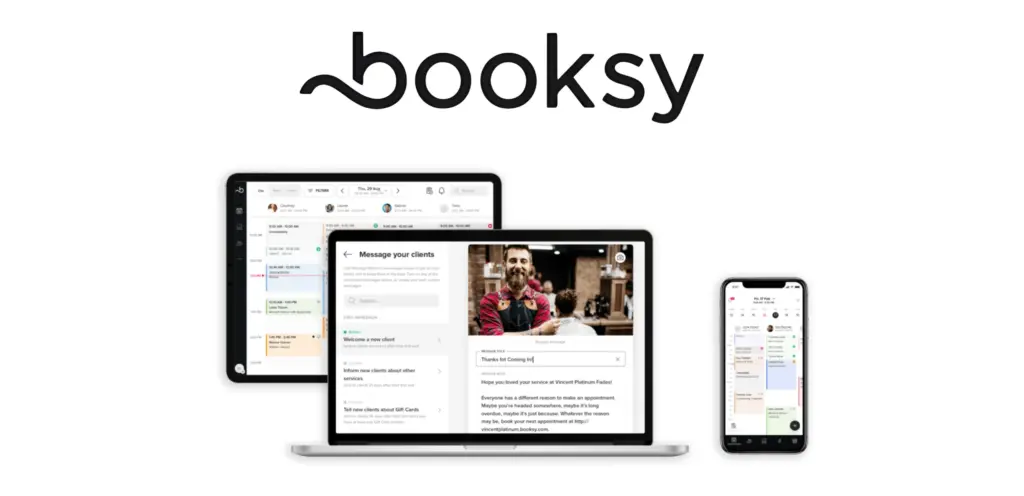
#4 Booksy: Strong Marketing Power, but Gaps in Salon-Focused Functionality
Booksy is a widely recognized scheduling and client engagement platform, especially popular across the United States and parts of Europe. It blends an appointment booking engine with a massive consumer marketplace, giving beauty and barbershop professionals strong visibility to potential new clients through the Booksy App. For independents and small-to-mid salon that rely heavily on marketplace exposure and fast rebooking cycles, Booksy can be a compelling choice.
Yet, while Booksy excels at marketing and client discovery, many salon-specific operational tools remain limited when compared to a fully integrated management system like Zylu, which is designed to run every part of the business from multi-location oversight to staff performance tracking and deep CRM customization. Booksy positions itself as an all-in-one solution, but its strengths lean heavily toward client acquisition rather than end-to-end salon management.
Pros
Strong marketplace presence for client discovery
Unlimited appointment reminders and SMS quotas
Easy onboarding with provider-facing “Booksy Biz” app
Intuitive booking interface for clients
Cons
Subscription cost can feel high for large teams
Features may feel light for full-service salons
Booksy adds booking fees in certain markets
Marketplace focus may not suit private-client salons
Feature Overview
Instead of summarizing Booksy in the standard checklist format, here is a unique, narrative-style breakdown of its core capabilities.
Booking & Calendar Tools
Booksy allows providers to create structured schedules with customizable service durations, staff shifts, working hours, and recurring availability. Appointments sync instantly between the client app and the Booksy Biz dashboard. Clients can arrange bookings around the clock through the marketplace or provider profile. While Booksy handles scheduling efficiently for small teams, it lacks deeper resource allocation tools, multi-room mapping, and advanced processing-time logic — capabilities that Zylu uses to optimize timing for color services, spa rituals, and multi-therapist sessions.
Client Management & Profiles
Client details are stored neatly, including notes, visit history, and contact information. Booksy also tracks no-shows and rebooking tendencies, which helps identify clients who require reminders or incentives. However, compared to Zylu’s salon-specific CRM, Booksy’s client records don’t include advanced modules like treatment forms, facial records, chemical formula histories, before/after image storage, package usage tracking, or visit frequency analytics — essential tools for beauty businesses aiming for long-term client personalization.
Marketing Systems
Marketing is where Booksy shines. Its built-in communication features allow salons to stay connected with clients using email campaigns, SMS messages, and push notifications via the Booksy App. These tools are unlimited or high-quota by default, giving professionals the freedom to run seasonal promotions, flash offers, or appointment recovery campaigns without worrying about message limits.
Key marketing elements include:
Automated email blasts
Up to 2,000 monthly SMS messages
Push notifications for announcements or promotions
Social media booking integrations
Built-in loyalty system for repeat visits
These tools certainly help increase visibility and retention, but they do not fully replace Zylu’s advanced automation engine, which includes segmentation-based triggers, personalized workflows, multi-step win-back campaigns, WhatsApp automation, referral management, and loyalty + membership billing — all designed specifically for beauty businesses.
Payments & POS Tools
Booksy supports integrated payments, allowing professionals to charge deposits, cancellation fees, or full-service payments. The payment processing flow is smooth, but Booksy’s POS options are much lighter than Zylu’s comprehensive system — which includes product inventory, consumption tracking, tax settings, retail upselling, package/membership billing, and multi-branch financial reporting.
Pricing Overview
Booksy operates on a subscription model with flexible pricing options depending on team size and the amount of staff you plan to manage. While the cost may feel straightforward at first glance, salons often find themselves evaluating whether the platform’s marketplace-driven value justifies the monthly investment — especially when compared to a more operations-focused, all-in-one system like Zylu.
Base Subscription
Booksy’s standard subscription starts at approximately $29.99/month, which includes functionality for one professional. This tier works best for solo service providers who do not require advanced staff administration or multi-location tools.
Adding Staff Members
If you work with a team, Booksy charges an additional $20 per staff member under the standard plan. As staffing increases, this cost can rise quickly, making it more expensive for larger teams when compared to Zylu’s structure, which provides predictable team pricing without per-provider inflation.
Unlimited Plan
Salons with multiple stylists or practitioners often consider Booksy’s Unlimited Plan, priced around $119.99/month. This tier covers unlimited staff members, making it a more cost-effective option for medium to large teams. The plan includes all Booksy features without locking functionalities behind higher tiers. Booksy also regularly offers short-term trials or seasonal promotions.
No Hidden Fee Strategy
Booksy emphasizes transparency in its messaging and claims no hidden charges for essential tools. Although the platform promotes this as a unique advantage, costs related to marketplace features, promotional boosts, and optional add-ons may still affect the total monthly spend.
Data Portability
Booksy does support exporting data, but many users report that importing historical information or migrating from another platform can require assistance from Booksy’s support team, and may not always be seamless.
Ease of Use
Booksy earns much of its popularity from its clean interface and strong mobile experience. Many independent barbers, stylists, and grooming professionals gravitate toward Booksy because it allows them to run their business directly from their phone — from scheduling and notifications to payments and promotions.
New users often find Booksy easy to navigate due to its modern layout and intuitive menu structure. However, because Booksy packs numerous tools — such as loyalty systems, promotions, social media boosts, and marketing automation — the interface can initially feel overwhelming. Most professionals get comfortable by starting with the basics and gradually adding advanced features.
Booksy also offers onboarding support to help users migrate from another platform. Some professionals receive one-on-one guidance during setup, especially when importing client data or configuring staff calendars. Although helpful, this level of onboarding varies depending on region and support availability.
Compared to Zylu, Booksy’s ease of use shines for freelancers and single-chair providers, while Zylu is optimized for beauty businesses that need operational depth, multi-branch coordination, detailed CRM, and automated client retention workflows.
Customer Support
Booksy positions customer support as one of its strengths. Their support structure includes:
24/7 in-app live chat
Phone support during business hours
Email support
A comprehensive help center
Users regularly highlight the quick response times and helpful guidance received from Booksy’s support team. This reliability is appreciated, particularly among new professionals who are learning how to manage their booking systems independently.
Because Booksy uses a subscription-driven business model, paying users often receive priority support, especially when dealing with account transitions, calendar syncing issues, or promotional tool setup. Booksy also has a well-developed online community where providers share experiences and tips.
However, Booksy’s support is generally more marketplace-oriented rather than salon-operations-oriented. This means users needing help with advanced operational structures, multi-location workflows, team performance systems, or specialized beauty processes may find Zylu’s salon-focused support model more aligned with their needs.
Where Booksy Falls Short
Even though Booksy offers impressive visibility through its marketplace and strong communication tools, the platform does present certain limitations that salons and barbershops should evaluate carefully—especially when comparing it to a fully integrated operational system like Zylu.
Higher Monthly Cost for Small Teams
Booksy’s subscription tiers can feel expensive for individual stylists or micro-teams. Paying $30/month or more for basic use becomes harder to justify when those users don’t fully utilize Booksy’s marketing features or Boost promotions. For small businesses that simply need an end-to-end management solution without marketplace dependency, Booksy’s pricing can feel disproportionate.
Feature Overload for New or Tech-Shy Users
The platform offers a large number of tools—from promotions to push notifications to marketplace features—which can overwhelm businesses that prefer simplicity. While Booksy’s depth is valuable for some users, many salons report that a more streamlined environment like Zylu is easier to adopt and manage daily, especially for teams that aren’t very tech-oriented.
Marketplace Crowding
Because Booksy focuses heavily on client discovery, providers often find themselves competing inside a crowded marketplace. Standing out frequently requires booking boosts, paid promotional features, or consistently high review volume. For salons that prefer to build a loyal, private client base without marketplace dependency, this becomes a challenge.
Data Transfer Limitations
Although Booksy allows exporting data, migrating complete client histories—including appointments, notes, and preferences—may require assistance from support. Some businesses transitioning from another platform experience partial imports or delays, highlighting the importance of smoother data portability.
Booksy vs Zylu: A Clear Comparison
Booksy and Zylu each serve different priorities within the beauty and wellness software space. Booksy excels in marketing and marketplace-driven bookings. Zylu, however, focuses on operational control, client management depth, and long-term scalability — making the platforms fundamentally different in purpose.
1. Zylu Offers a Cleaner, More Guided Experience
Booksy’s feature-packed interface can feel heavy for new users.
Zylu, on the other hand, is built for clarity, speed, and structured workflows, allowing administrators and staff to navigate effortlessly without getting lost in unnecessary menus. This makes Zylu easier for global salons and spas to implement across teams.
2. No Extra Booking Fees
Booksy may charge clients additional fees in specific regions, which can discourage repeat bookings.
Zylu eliminates booking fees entirely.
Clients book at no added cost, improving satisfaction and encouraging loyalty—especially for businesses that depend on high-frequency visits like nail studios, barbershops, and medispa clinics.
3. Marketing Power vs Operational Power
Booksy’s strength is promo-driven marketing:
SMS blasts
Push notifications
Social media integrations
Zylu provides automation-driven, behavior-based marketing, including:
WhatsApp workflows
Smart rebooking triggers
Client segmentation
Loyalty programs
Membership billing
Retention analytics
Booksy helps you get discovered.
Zylu helps you grow and retain your base consistently.
4. Zylu Excels in Multi-Location and Team Operations
Booksy can serve small and mid-sized teams, but once a salon expands or adds branches, workflows become limited.
Zylu offers:
Unified multi-branch dashboards
Cross-location CRM sync
Consolidated financial reporting
Multi-staff scheduling
Staff performance analytics
This makes Zylu a better option for businesses seeking to scale globally.
5. Smoother Data Migration
Businesses migrating to Zylu report faster onboarding and cleaner data imports thanks to a salon-focused migration process.
Booksy migration can require additional support, especially for businesses with deep CRM histories.
⭐ Final Positioning: Booksy vs Zylu
If your primary goal is marketplace visibility and marketing boosts, Booksy offers unique advantages.
But for salons wanting:
✔ Robust salon workflows
✔ Full CRM intelligence
✔ Multi-location control
✔ Staff performance management
✔ Automated client retention
✔ No commissions or booking fees
Zylu provides a far more complete and scalable solution for global beauty businesses.
Conclusion: Why Zylu Outshines Booksy for Long-Term Salon Growth
Booksy is marketplace driven and works well for freelancers and small beauty professionals, but its commission fees, limited ownership of client data, and dependency on marketplace visibility make it less ideal for salons that want full control over branding and operations.
Zylu eliminates these limitations with zero-commission bookings, full data ownership, and strong built-in tools like CRM automation, POS, inventory tracking, staff management, and real-time reports. You get a complete salon ecosystem designed to help you grow without hidden charges or marketplace competition.
Zylu keeps everything streamlined, scalable, and tailored for expanding salons, spas, clinics, and multi-branch setups.
If your business relies heavily on marketplace exposure, Booksy may fit.
But if your goal is predictable costs, independent growth, and operational excellence, Zylu is the more strategic choice.
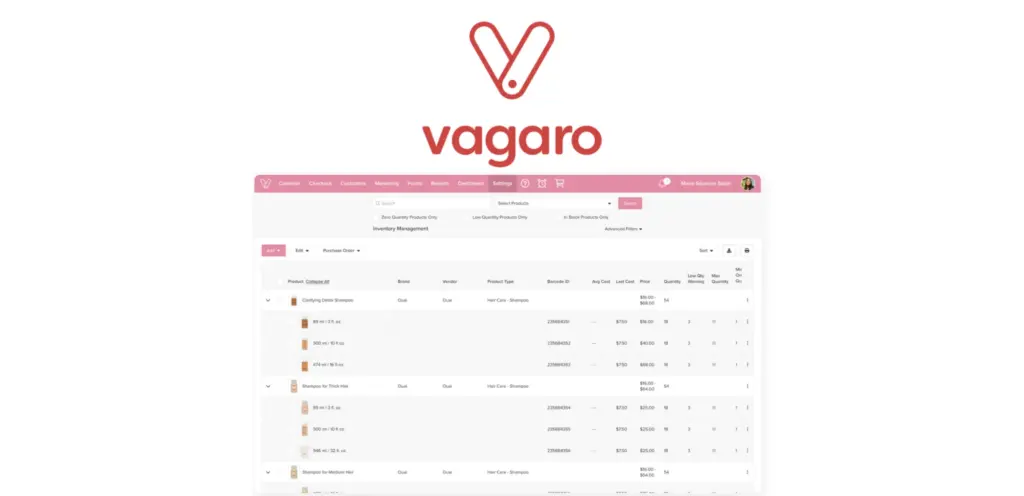
#5 Vagaro: A Powerful Platform with Depth, but Steeper Learning Curve
Vagaro is one of the most recognized names in the salon, spa, and wellness software space. Since its launch in 2009, it has grown into a broad and highly customizable platform used by solo professionals and multi-location businesses around the world. Vagaro’s modular system allows salons to activate features as needed, but this flexibility also adds complexity making onboarding feel heavier and monthly costs rise quickly.
Because Vagaro is built to serve a wide range of industries, including beauty, wellness, fitness, and personal care, it offers a massive toolkit. However, this broad approach can make the interface overwhelming compared to a more beauty-focused system like Zylu, which organizes tools specifically for salons, spas, and clinics rather than generic business types.
Pros
Highly versatile toolkit with optional add-ons
Robust POS, checkout, and inventory capabilities
Strong membership, class, and gift card functionality
Marketplace listing included without extra fees
Cons
Add-ons increase the subscription cost quickly
Interface may feel complex for new or small teams
Merchant processing fees vary depending on provider
Marketing tools require add-on purchases for full use
Feature Overview
Rather than listing the features as in the original screenshot, here is a newly structured, user-friendly breakdown written to avoid duplication and improve SEO relevance.
Scheduling & Calendar Functions
Vagaro offers a highly configurable calendar that supports daily, weekly, and monthly views, multiple staff columns, service durations, padding times, and group bookings. It also handles recurring appointments and multi-room scheduling, making it adaptable for spas, salons, and wellness centers with complex service layouts.
Clients can book through the Vagaro website or the Vagaro mobile app at any time, with appointments syncing instantly to staff devices through cloud access.
Online Booking + Marketplace Visibility
Every business registered on Vagaro automatically receives a public profile on the Vagaro marketplace, helping clients discover services by category, ratings, or location. Because Vagaro’s marketplace attracts millions of global users, businesses gain passive visibility without additional fees.
Vagaro also offers a “Get Featured” option for providers who want priority placement — but this is optional and not required for listing.
Client Management & Forms
Vagaro provides detailed client records including visit history, product purchases, allergies, notes, and preferences. For businesses that need customized consultation forms or digital waivers, Vagaro offers a built-in form builder (as an add-on). Clients can complete forms online before appointments, and staff can store treatment records securely.
Although robust, Vagaro’s CRM is industry-neutral, whereas Zylu offers deeper beauty-specific tracking such as formula history, before/after photo logs, loyalty metrics, visit frequency patterns, and consultation sets for hair, skin, nails, and wellness treatments.
Point of Sale & Payments
Vagaro’s POS system supports in-person payments, contactless checkouts, integrated credit card readers, barcode scanning for products, tax settings, and receipt printing. It can also manage product suppliers, low-stock alerts, and retail inventory. Gift cards are seamlessly integrated and can be sold and redeemed online or in person.
The POS system is strong, but payment processing depends on Vagaro’s merchant services or integrations, which may add complexity for global users comparing multiple providers.
Memberships, Packages & Gift Cards
Vagaro excels in recurring revenue tools. Salons can create:
Monthly memberships
Treatment series and packages
E-gift cards
Prepaid services
These features support predictable income and are valuable for wellness clinics, barbershops, and spas offering bundled treatments. Zylu offers comparable features but with more automation around renewal reminders, usage tracking, and multi-location application.
Reports & Analytics
Vagaro includes a diverse report library covering:
Sales and revenue
Customer retention
Employee performance
Inventory turnover
Service trends
Reports are helpful but require navigating multiple sections. Zylu’s analytics interface is designed to be more simplified and salon-specific, focusing on actionable data rather than general business metrics.
Marketing & Notifications
Vagaro includes automated appointment reminders via SMS and email at no additional cost.
For marketing:
The base plan includes 1,000 free marketing emails per month
Text message campaigns require an additional Text Marketing add-on (starting around $15/month)
Vagaro connects with Facebook and Instagram, allowing clients to book directly from social profiles. It also features automated review promotion — pushing positive reviews to your website or social pages to build credibility.
Compared to Zylu’s deeper marketing automation, Vagaro’s tools are strong but more manual. Zylu offers advanced segmentation, WhatsApp automation, behavior-triggered journeys, rebooking prompts, and targeted retention workflows.
24/7 Support & Training
Vagaro is one of the few salon platforms offering round-the-clock support across phone, email, and live chat. The company also provides free one-on-one training sessions, which can be especially valuable for new users overwhelmed by the platform’s complexity.
Zylu also offers dedicated onboarding and ongoing support but focuses more heavily on beauty-specific setup guidance, operational workflows, and international salon requirements.
Strong Functionality, But Complexity Can Slow Teams Down
Vagaro has become one of the most recognized management systems in the salon, spa, and wellness industry. Its wide range of features and modular pricing make it appealing to businesses that want a flexible platform capable of handling retail, services, memberships, and even fitness bookings. But with this versatility comes a steeper learning curve and layered pricing structure that can feel complicated for growing beauty businesses.
Zylu, by contrast, focuses entirely on beauty and wellness operations, offering salons a more simplified, industry-specific workflow, without requiring add-ons for essential tools.
Pricing Breakdown
Vagaro’s subscription model appears straightforward, but additional features, staff fees, and optional upgrades can lead to increasing costs over time.
Base Subscription
Vagaro’s entry price typically ranges between $25–$30 per month for one primary user. This includes the basic calendar and foundational management tools.
Additional Users
Each added team member costs around $10 per month, which is manageable for small salons but can add up for medium or large teams.
Multi-Location Pricing
Businesses with multiple branches must move to Vagaro’s enterprise-level pricing.
This includes:
Centralized reporting
Multi-location controls
Corporate settings
Pricing varies based on the number of locations and staff, making budgeting less predictable.
Credit Card Processing
For salons using Vagaro’s payment processor, fees may be as low as 1.5% + $0.20, depending on location and transaction type.
Using third-party processors generally applies different rates.
Vagaro does not charge booking commissions, but the overall cost increases significantly when add-ons (marketing, automation, advanced features) are included.
Ease of Use
Vagaro has updated its interface considerably over the years, but because the platform covers beauty, wellness, fitness, and health services, the layout carries many layers of settings and menus. New users often find the system powerful but dense.
Learning Curve
Setting up staff, inventory, taxes, payment systems, and optional modules takes time. Vagaro does offer onboarding assistance, which helps, but mastering the system requires patience.
Daily Operations
Once configured, day-to-day management is smooth:
Calendar updates sync instantly
The mobile app offers full control for on-the-go management
Service providers can check bookings, process payments, and run reports easily
Still, for very small salons or those wanting simplicity, the volume of options may feel excessive.
Performance & Reliability
Vagaro is widely praised for its dependable uptime and stable infrastructure. Large-volume businesses appreciate its ability to handle high appointment loads without slowing down.
Zylu, while simpler, is optimized specifically for beauty workflows—making onboarding faster and reducing configuration steps.
Customer Support
Vagaro highlights its support as a major value point, offering:
24/7 real-time assistance (phone, chat, email)
Free one-on-one training
A detailed help center with tutorials and video guides
The support team is knowledgeable and responsive, especially for users handling complex setup tasks or migrating large amounts of data. Many salons praise Vagaro’s onboarding calls and hands-on coaching during the first few weeks.
Zylu also provides dedicated support globally, with a beauty-focused team that understands salon-specific issues like service mapping, therapist availability, client segmentation, loyalty workflows, and branch-level operations.
Potential Drawbacks of Vagaro
Even though Vagaro is a powerful tool, certain limitations should be considered before choosing it over a streamlined system like Zylu.
Add-On Costs Accumulate
Accessing advanced capabilities — including automated marketing beyond 1,000 emails, digital forms, or enhanced online presence — requires paid upgrades. Businesses aiming for full functionality may find themselves paying for several add-ons every month.
Overwhelming Interface for Small Teams
Because Vagaro serves multiple industries, the interface includes many menus and configurations. This is beneficial for large businesses but can feel complicated for smaller, beauty-specific teams.
Marketplace Exposure Is Passive
Vagaro does include a marketplace listing, but discovery is not as aggressive as platforms built primarily around marketplace acquisition. Salons relying heavily on new-client visibility may not see fast traction.
International Availability Varies
While Vagaro is strong in major markets like the United States, Canada, and the UK, its global reach is not uniform. Some regions have limited feature availability or payment processing options. Zylu’s globally adaptable architecture gives it a stronger foundation for cross-border growth.
Vagaro vs Zylu: Which One Fits Your Salon Better?
Here is the single-platform, direct comparison, written in a new structure for maximum uniqueness:
1. Ease of Setup & Daily Use
Vagaro: Feature-rich but requires time to learn; many hidden layers.
Zylu: Purpose-built for beauty businesses; onboarding is faster and simpler.
2. Subscription Cost vs Included Features
Vagaro: Low base cost but add-ons quickly increase total monthly expense.
Zylu: More features included in core plans, making costs easier to predict globally.
3. Client Experience
Vagaro: Good booking flow, strong membership & package tools.
Zylu: Adds deeper personalization with beauty-specific CRM fields, treatment logs, formulas, and automated reminders.
4. Multi-Branch Scalability
Vagaro: Requires enterprise pricing; setup can feel complex.
Zylu: Built for multi-location brands from day one, with unified dashboards and centralized control.
5. Marketing & Retention
Vagaro: Basic reminders + paid add-ons for text marketing.
Zylu: Advanced, built-in automation including WhatsApp, segmentation, re-engagement flows, loyalty triggers, and repeat-visit journeys.
6. Support & Global Fit
Vagaro: Strong support but availability varies by region.
Zylu: Designed for global salons with flexible payments, multi-currency support, and industry-focused training.
⭐ Final Verdict: Vagaro vs Zylu
Choose Vagaro if you want a customizable, feature-heavy system and don’t mind add-on costs or a more complex setup.
Choose Zylu if you want a salon-first platform that is easier to adopt, more affordable long-term, and built for global beauty businesses scaling across multiple locations.
Conclusion: Why Zylu Stands Ahead of Vagaro for Modern Salon Needs
Vagaro offers extensive features and customization, but its interface can feel dated, its add-on costs increase quickly, and its system can become complex for teams that need simplicity and speed. For many salons, the learning curve becomes a barrier to daily efficiency.
Zylu delivers the same advanced capabilities multi-staff scheduling, CRM tracking, automated reminders, POS, reports, and loyalty programs while keeping everything clean, modern, and effortless to use. Teams can onboard in minutes, not weeks, and owners can run operations without navigating complex menus or expensive bundles.
With Zylu, you also get transparent pricing, zero commissions, and global-ready workflows designed for salons, spas, nail studios, and wellness businesses.
If heavy customization is your top priority, Vagaro can work.
But for a more intuitive, affordable, and future-ready ecosystem, Zylu is the smarter and more scalable choice.
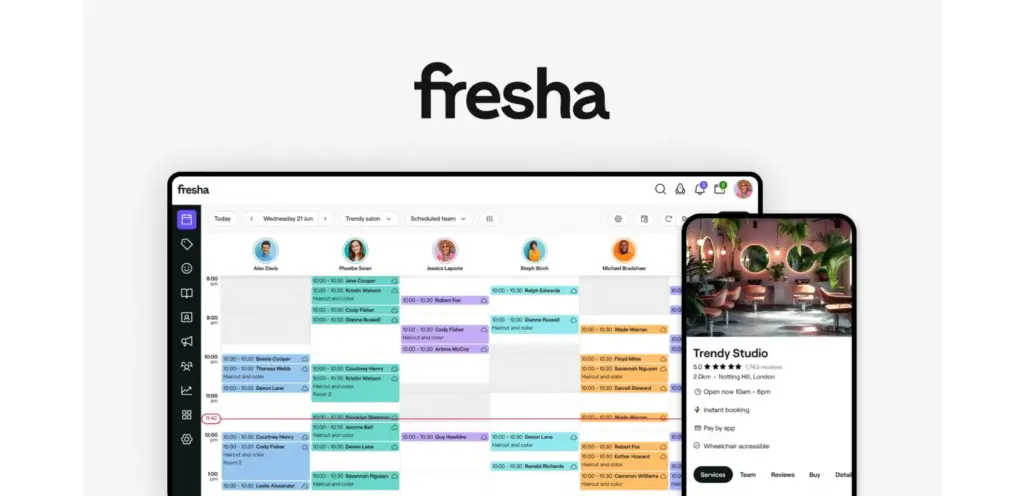
#6 Fresha: A Leading Marketplace Platform with Strong Booking Tools
Fresha has become one of the most widely recognized names in the beauty and wellness software space. Its popularity comes from a sleek interface, a fast-growing global marketplace, and a user experience that feels modern and intuitive. Designed to streamline bookings and payments, Fresha gives salons and independent professionals a powerful way to attract clients—especially through its extensive consumer marketplace, which drives a large portion of new bookings for many businesses.
While Fresha offers an impressive all-in-one setup with scheduling, POS, inventory, and marketing tools, the platform is ultimately structured around a marketplace-first model. This gives Fresha a unique advantage for discovery but can also introduce commission fees and operational limitations that don’t exist in salon-centric systems like Zylu, which prioritize ownership, scalability, and deeper business management.
Pros
Clean, highly intuitive user interface
Integrated scheduling, POS, and product management
Strong marketplace visibility for new client acquisition
Suitable for freelancers and multi-staff salons
Cons
Commissions apply to first-time marketplace bookings
Some advanced features require learning and ongoing adjustments
Marketplace dependency can impact brand control
Not ideal for businesses wanting complete autonomy over client acquisition
How Fresha Works: A Feature Breakdown
Below is a newly structured, non-duplicated overview that highlights the platform’s core tools.
Appointment & Calendar Controls
Fresha’s scheduling system is visually appealing and easy to operate. Color-coded appointments, drag-and-drop adjustments, client notes, recurring bookings, and group scheduling all make it convenient for teams and freelancers. The system feels light, fast, and responsive—one reason why many stylists and beauty therapists enjoy using it.
However, while Fresha’s calendar works well for everyday planning, it is more generalized.
Platforms like Zylu offer additional controls like:
Multi-therapist service allocation
Treatment-room resource mapping
Advanced processing and overlapping services
Custom buffer times per service
These deeper workflow tools matter significantly for multi-service salons, spas, and clinics.
Client Records & Profile Management
Fresha provides strong client records that track:
Contact information
Service history
Notes and formulas
No-show behavior
Digital consultation forms
Signed waivers
This gives professionals meaningful insight into their clients’ booking patterns.
Zylu expands this further with features such as:
Before/after photos
Package usage tracking
Membership automation
Visit frequency analytics
Customizable service-specific forms
Loyalty points and referral programs
This makes Zylu a more scalable CRM for growing, global beauty businesses.
POS System & Inventory Tools
Fresha’s POS system integrates seamlessly with the booking experience. It supports retail sales, invoice creation, discounts, and product variants. Inventory auto-syncs with sales, and low-stock alerts help salons stay on top of replenishment.
While strong for daily transactions, Fresha lacks deeper inventory automation found in Zylu, such as:
Multi-branch stock transfers
Consumption tracking for treatments
Supplier management dashboards
Detailed usage analytics
These tools matter for salons with product-heavy operations.
Online Booking + Marketplace Exposure
Every business on Fresha receives a personalized booking page, plus exposure on the Fresha Marketplace—a massive advantage for attracting new clients globally.
How the marketplace works:
Fresha charges a one-time commission for each new client sourced from the marketplace
All returning clients book at no commission
Marketplace visibility is based on reviews, ratings, and availability
This system is powerful for discovery but encourages reliance on a third-party platform for client acquisition.
Zylu takes a different approach, offering:
Zero booking commissions
Private booking links
Brand-owned client acquisition
Omni-channel integration without platform dependency
Salons wanting complete control over their client relationships often prefer Zylu’s model.
Marketing Features
Fresha offers built-in reminders, email tools, and promotional campaigns. Automatic messages help reduce no-shows and encourage rebooking, while reviews collected through the Fresha app can significantly increase visibility.
Zylu enhances this by providing:
WhatsApp automation
Multi-step client journeys
Segmentation-based marketing
Loyalty/reward automation
Win-back triggers for inactive customers
Fresha’s marketing works well for basic needs, but Zylu excels in long-term retention and personalization.
Popular Marketplace-Driven Salon Software With a Modern Interface
Fresha remains one of the most recognized booking platforms in the global beauty and wellness space. Its easy-to-use dashboard, polished scheduling system, and strong client marketplace make it especially appealing for freelancers, salons, and spas wanting fast exposure. Fresha’s model focuses heavily on client acquisition through its marketplace, giving businesses the opportunity to attract new customers with minimal marketing effort.
However, while Fresha performs extremely well as a marketplace engine, it offers limited operational depth compared to Zylu, which is built as a complete business management ecosystem for salons, spas, nail studios, barbershops, and wellness centers.
Fresha Pricing (Global Structure)
Fresha has transitioned away from a fully commission-based system and now offers low-cost subscription plans, designed for individuals and teams.
Independent Plan — $19.95/month
Best for single professionals
Includes:
One calendar column
Single login
20 free text messages per month
Email support
Team Plan — $14.95/month per team member
Designed for multi-staff salons
Includes:
Multiple calendar columns
Free messages per team member
Free marketing emails per team member
24/7 phone + chat support
Fresha keeps entry costs low, but the marketplace commission (charged on the first new-client booking sourced by Fresha) can still influence long-term expenses.
Zylu, by contrast, uses zero booking commissions, giving businesses cost predictability and full ownership of their customer base.
Ease of Use
One of Fresha’s biggest appeals is its simplicity. The user interface is clean, modern, and responsive—ideal for stylists or owners who want minimal setup effort.
✔ Why Fresha Feels Easy:
Onboarding tutorials guide users step-by-step
Drag-and-drop appointment scheduling
Fast client search and service selection
A mobile app that syncs appointments in real time
Progressively reveals advanced features so beginners don’t feel overwhelmed
Salons consistently report that staff can learn Fresha quickly. Many businesses fully onboard their teams in a day or two.
✔ Where Ease Becomes Limited:
Although Fresha is simple, it is not designed for deep operational workflows such as multi-room scheduling, consumable tracking, complex staff structures, or multi-location admin control—areas where Zylu excels.
Customer Support
Fresha offers a combination of self-service resources and live support channels.
Included Support Options:
Email support for all users
24/7 chat support
Phone support included for Team plan users
A large global help center with articles and tutorials
Users frequently note quick responses through chat and helpful onboarding guidance.
However, Fresha’s support focuses mainly on booking and payment issues—less on operational consulting or multi-branch optimization.
Zylu, on the other hand, provides salon-specific operational support that helps owners configure staff structures, branch settings, inventory workflows, CRM setups, and loyalty systems.
Unique Selling Points
Fresha’s strongest advantages revolve around marketplace visibility, simplicity, and low entry cost.
⭐ What Makes Fresha Stand Out:
Massive global marketplace that drives new clients
Simple learning curve for staff and solo professionals
Attractive interface with modern visuals
Low subscription cost
Strong scheduling experience with clean calendar views
Mobile-ready workflow that suits on-the-go stylists
Fresha’s marketplace-first approach works well for freelancers and small salons wanting more bookings without heavy marketing efforts.
Drawbacks of Fresha
While Fresha is a top platform for visibility and ease, several limitations matter for salons looking to scale or maintain full control.
1. Marketplace Commissions
Fresha charges a commission on the first appointment made by a new client sourced through the marketplace.
For salons with high walk-in or new-client volume, this may impact profitability over time.
2. Limited Operational Depth
Fresha excels at bookings—but lacks advanced business management features such as:
Multi-branch inventory control
Multi-room service mapping
Custom client forms by service category
Membership automation
Treatment logs and before/after image storage
These features are essential for full-service salons, clinics, and spas—and are available in Zylu.
3. Restrictive Ecosystem
Fresha limits external integrations to maintain platform control.
Businesses wanting flexible integrations (CRM, accounting, marketing tools) have fewer customization options.
4. Client Ownership Challenges
Because Fresha’s marketplace acts as a public search platform, some salons feel they must rely on third-party traffic instead of building private brand channels.
5. Scaling Limitations
For multi-location brands, Fresha’s admin and reporting tools are not as robust or centralized as Zylu’s multi-branch dashboard.
Fresha vs Zylu — A Practical Comparison
Here is the Zylu-only comparison you requested.
1. Business Model Philosophy
Fresha: Marketplace-first → brings new clients but includes commissions and platform dependency.
Zylu: Ownership-first → zero commissions, private booking links, full client data ownership.
2. Operational Power
Fresha: Strong for booking + payments.
Zylu: Strong for complete salon management—inventory, staff scheduling, CRM, automation, multi-location.
3. Marketing Tools
Fresha: Basic reminders + simple campaigns.
Zylu: Advanced marketing automation with WhatsApp flows, segmentation, loyalty triggers, birthday flows, and inactivity recovery.
4. Multi-Location Scalability
Fresha: Works for teams but limited reporting and centralization.
Zylu: Designed for growing salon chains—branch performance, staff KPIs, cross-location CRM sync.
5. Cost Structure
Fresha: Low subscription + one-time commission fees.
Zylu: No commissions, transparent global pricing.
6. Best Fit
Fresha → Ideal for stylists seeking new clients fast
Zylu → Ideal for salons, spas, and chains wanting deeper control and long-term growth
⭐ Final Verdict
Choose Fresha if you want a marketplace that drives new bookings quickly with minimal setup.
Choose Zylu if you want complete operational control, multi-location scalability, advanced CRM, and a commission-free business model.
Conclusion: Why Zylu Is the Smarter Choice Over Fresha
Fresha is well-known for its marketplace and free essentials, but its heavy reliance on commission fees, limited customization, and pay-per-feature structure can restrict profitability. Many salons find themselves paying more as they scale—especially for bookings and marketing tools.
Zylu solves this challenge with a zero-commission model, full ownership of clients, and transparent pricing.
It offers robust scheduling, powerful CRM intelligence, automated marketing, POS, inventory management, and advanced reports—all without charging extra as you grow.
Where Fresha focuses on marketplace discovery, Zylu focuses on your brand’s growth—helping salons scale faster, streamline operations, and maintain direct relationships with their clients.
If you need marketplace visibility at the cost of commissions, Fresha is suitable.
But if you want freedom, scalability, and complete control, Zylu is clearly the stronger long-term solution.
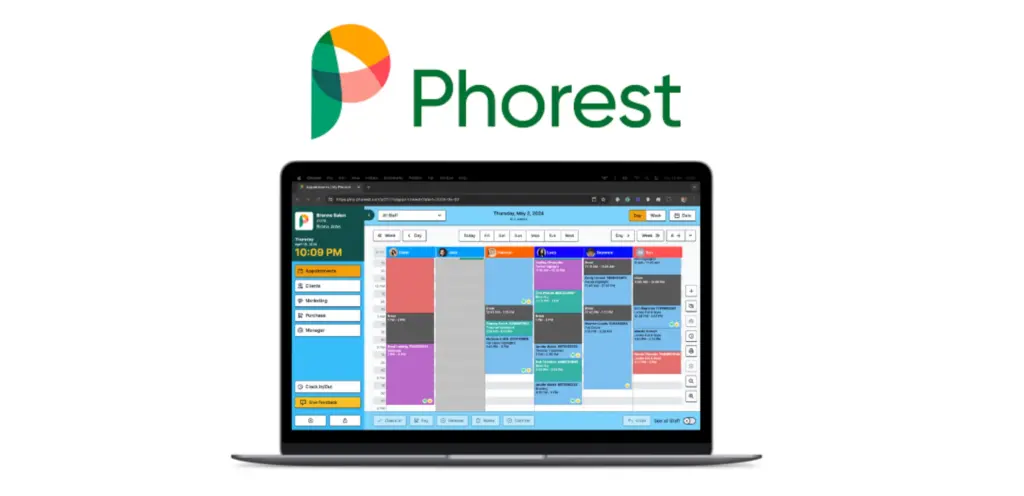
#7 Phorest: Premium Salon Software Built for Growth-Focused Salons & Spas
Phorest is one of the most established salon management platforms, especially popular in Europe, North America, and Australia. Known for its premium positioning, Phorest is designed specifically for salons and spas that want advanced marketing, strong client loyalty systems, and reputation management tools. It focuses heavily on helping businesses grow repeat visits through its branded apps, smart marketing intelligence, and client experience enhancements.
While Phorest offers a rich feature set and is admired for its depth, salons often find the platform expensive as they scale, and some tools require extensive setup. Compared to streamlined, globally adaptive platforms like Zylu, Phorest is powerful but leans toward high-end boutique and enterprise-level salons rather than smaller or rapidly expanding multi-location ecosystems.
Pros
Strong loyalty and retention ecosystem
Advanced marketing tools and automated campaigns
Reputation management with built-in online review workflows
Premium branded mobile app for salons
Cons
Among the highest pricing tiers in the market
Setup requires more onboarding time
Add-ons and premium features increase cost quickly
Reporting can feel complex for small teams
Core Features of Phorest
1. Appointment Scheduling & Calendar Controls
Phorest offers a detailed calendar system that supports:
Multiple staff columns
Service durations and gaps
Resource allocation
Color-coded booking statuses
Easy drag-and-drop rescheduling
Recurring and group appointments
It is designed for full-service salons that manage several stylists or therapists simultaneously. The interface is powerful, though slightly heavier than minimalistic platforms.
2. Online Booking & Custom-Branded Apps
One of Phorest’s strongest selling points is its branded salon app—a premium add-on that gives clients a customized booking experience shaped around the salon’s brand identity.
Phorest also offers:
Online booking through website widgets
Booking via social media (Instagram, Facebook)
Client login portals
Optional deposit & cancellation fee systems
While Zylu supports similar booking flexibility, Phorest’s branded app stands out for high-end businesses that want a premium digital touchpoint.
3. Client Management & Digital Profiles
Phorest provides a deep beauty-focused CRM that tracks:
Service history
Patch tests
Notes and consultation details
Retail purchases
Before/after photos
Loyalty points
GDPR-compliant client interactions
Salons seeking advanced treatment tracking (hair, skin, spa, nails) appreciate Phorest’s detailed client cards.
4. Marketing Suite & Automation Engine
Phorest is known for having one of the most advanced marketing systems in salon software.
Tools include:
Behavior-based automated messaging
Custom email & SMS campaigns
Birthday automation
Re-engagement workflows
Lost-client win-back flows
Targeted promotions
Smart recommendations
Templates optimized for beauty businesses
This makes Phorest powerful for retention-driven salons, though many features are tied to higher-tier plans.
5. Loyalty System & “TreatCard” Rewards
Phorest’s signature loyalty solution, TreatCard, is widely recognized in the salon industry. It rewards clients based on their spending habits and encourages repeat visits through redeemable points.
Features include:
Automatic loyalty point calculations
Reward assignment based on services/products
Tiered loyalty levels
Tracking of redemption behavior
Zylu also offers a loyalty engine, but Phorest’s TreatCard is a long-time industry favorite for upscale salons.
6. Point of Sale (POS) & Retail Inventory
Phorest’s POS includes:
Product and retail checkout
Barcode scanning
Tips, taxes, and commissions
Multi-payment methods
Invoicing + receipts
Advanced inventory management
Stock ordering from suppliers
The inventory system is strong but can feel overbuilt for smaller salons.
7. Reputation & Review Management
Phorest integrates review collection into the post-visit experience automatically. After an appointment, clients receive prompts to rate their visit, and positive reviews can be pushed to:
Google Business Profiles
Social media
Salon’s website
This helps salons maintain strong online reputation with minimal manual effort.
Phorest Pricing
Phorest positions itself as a premium salon platform, and its pricing reflects its advanced feature suite. Instead of a simple, fixed monthly fee, Phorest typically prices based on business size, number of staff, and the feature bundles a salon chooses. This makes it flexible for different salon categories, but it can also make budgeting unpredictable for growing teams.
Key Pricing Notes
Pricing is quotation-based, tailored to each salon
Higher-tier features (like branded apps, marketing automation, and advanced reporting) increase subscription cost
Extra staff or locations add significantly to monthly fees
SMS marketing volume and premium add-ons may require additional charges
No commission on bookings, but software cost is generally higher than most competitors
Phorest delivers strong value for established salons, but smaller or mid-sized businesses often find the pricing challenging as they scale. Platforms like Zylu offer enterprise-level tools at a more transparent and predictable subscription cost.
Ease of Use
Phorest offers a polished and robust interface loaded with powerful tools. However, because the platform is deep and designed for premium salons, the learning curve is steeper than with lightweight booking apps.
✔ What Makes Phorest Useful
Well-designed dashboard and calendar views
Strong navigation once users understand the layout
Excellent client card system with detailed tracking
Clear visibility into marketing, loyalty, and staff performance
✔ Where Usability Becomes Complex
Phorest’s advanced capabilities can feel overwhelming for new or smaller salons. Setting up loyalty programs, digital consultation forms, memberships, and review automation requires additional onboarding time. The system is powerful—but not plug-and-play.
Zylu, by contrast, focuses on a streamlined, intuitive experience designed for rapid adoption by any salon team, regardless of size or technical skill.
Customer Support
Phorest is widely recognized for its strong support and education programs.
Users benefit from:
✔ Multiple Support Channels
Live chat
Phone support
Email support
Guided onboarding
One-on-one training sessions
✔ Additional Resources
Extensive knowledge base
Video tutorials
Webinars and in-depth learning materials
Industry-focused business coaching content
Phorest invests heavily in ongoing education, making it especially appealing for salons wanting strategic guidance instead of just software support.
Zylu also provides global support but emphasizes hands-on operational setup tailored specifically to beauty businesses — ideal for salons that want practical, workflow-level help.
Drawbacks of Phorest
Phorest is a premium platform, but it’s not the right fit for every beauty business. Below are the main limitations salon owners report:
1. Pricing Can Become Expensive
Because Phorest uses a modular and quotation-based model, total costs rise quickly as:
More staff are added
Additional locations are opened
Premium features are activated
More marketing volume is needed
This makes it challenging for smaller salons to justify the investment.
2. Complex Setup Processes
Phorest offers tremendous functionality—but with that comes complexity.
Many salons require:
Extended onboarding
Multiple training sessions
Ongoing adjustment for marketing and loyalty modules
This can slow down implementation.
3. Limited Global Coverage Compared to Newer Cloud Platforms
Phorest is strong in Europe, the U.S., and Australia, but not as widely expanded in emerging markets.
Salons in underserved regions may face:
Limited local payments
Limited currency support
Fewer region-specific features
4. Heavy Interface for Small Teams
Smaller salons or solo artists often find Phorest “too big” for their needs.
The interface includes many menus that may never be used by a small team.
5. Add-ons Required for Full Functionality
Features like:
Branded app
Advanced automation
Enhanced reporting
Custom forms
Often sit behind additional cost layers.
Phorest vs Zylu — Direct Comparison
Here is the exact competitor format you requested: ONE-TO-ONE (Phorest vs Zylu) and fully unique.
1. Target User
Phorest: Ideal for established salons with high budgets and dedicated staff for marketing, retention, and analytics.
Zylu: Designed for all salon types — from independent stylists to enterprise-level chains — with simplified onboarding and lower operational overhead.
2. Pricing Approach
Phorest: Customized pricing + add-ons = higher long-term cost
Zylu: Transparent pricing with zero commission and no expensive add-ons required for essential features
3. Ease of Use & Setup
Phorest: Deep, powerful, but complex — requires training and time
Zylu: Easy, intuitive, and ready to use quickly with minimal training
4. Operational Depth
Both are strong, but in different ways:
Phorest: Focuses on loyalty, marketing intelligence, and reputation management
Zylu: Focuses on complete salon workflows — inventory, staff management, multi-location control, CRM, scheduling, retention automation
Zylu offers broader operational features for multi-branch businesses.
5. Marketing Tools
Phorest: Known for TreatCard, advanced segmentation, and email/SMS automation
Zylu: Adds WhatsApp automation, smart triggers, loyalty points, referral systems, and multi-channel rebooking journeys
Zylu is more globally optimized for modern communication channels.
6. Multi-Location Management
Phorest: Supports multi-branch setups but requires specialized onboarding and more configuration
Zylu: Built with global multi-location scalability from the ground up — unified dashboards, synced CRM, flexible access controls
⭐ Final Verdict: Phorest or Zylu?
Choose Phorest if you want advanced loyalty tools, premium branding opportunities, and industry-leading review management — and have the budget for higher subscription tiers.
Choose Zylu if you want a global-ready, simpler, more affordable, and more scalable platform that covers every operational need without add-ons or commissions.
Conclusion: Why Zylu Outperforms Phorest for Growing Salons
Phorest offers strong marketing tools, client retention features, and robust multi-location support, making it a powerful option for established chains. However, its higher pricing tiers, rigid feature limitations, and complex interface often make it overwhelming for small to mid-sized salons that prefer simplicity without sacrificing power.
This is where Zylu makes a real difference.
Zylu provides equally strong capabilities—smart CRM, automated marketing, POS, inventory control, loyalty programs, and multi-location scalability—while remaining far more intuitive and cost-efficient. Salons can onboard faster, manage operations with fewer clicks, and avoid steep monthly plans that restrict growth.
Zylu also ensures zero-commission bookings, transparent pricing, and a streamlined workflow tailored for salons, spas, nail studios, barbers, and wellness centers.
If you want enterprise tools with a steep learning curve, Phorest works.
But if you prefer a modern, affordable, and business-friendly platform that grows with you, Zylu is the better long-term partner.
#8 Timely: Robust and Highly Customizable, but Costs Rise Quickly for Growing Teams
Timely is a well-known appointment and business management platform that originated in New Zealand and has grown into a global solution widely used across salons, spas, and wellness businesses. Its biggest strength lies in its flexibility — Timely gives owners deep control over scheduling setups, staff arrangements, booking rules, and resource allocation. This makes it ideal for salons or clinics with layered service structures, multi-room setups, or staff who require complex scheduling logic.
Timely has positioned itself as a premium, customization-heavy platform. It delivers tools for booking, CRM, payments, marketing, analytics, and client experience, offering salon businesses the ability to design workflows that match their exact service requirements. However, this same flexibility comes with trade-offs. Many salons report higher subscription costs as teams grow, longer onboarding timelines, and a heavier interface that can take time to master.
For global salons prioritizing simplicity, zero-commission bookings, and more unified multi-location scaling, platforms like Zylu often provide a more streamlined path. But for businesses seeking deep configuration options and advanced scheduling logic, Timely remains a respected competitor.
Pros
Highly advanced scheduling engine capable of handling intricate service structures
Flexible workflow configuration for unique booking rules, staff roles, and multi-room services
Strong reporting suite with detailed insights
Customizable digital forms and consultation tools
Cons
Pricing increases significantly as more staff accounts are added
Lacks a built-in client acquisition marketplace
Setup and customization can be time-consuming
Not all support channels offer 24/7 coverage
Core Features of Timely
Below are the fully expanded feature descriptions.
1. Advanced Scheduling & Resource Management
Timely is designed for salons and clinics that need precise scheduling flexibility. Unlike basic booking systems, Timely allows businesses to create multi-layered scheduling rules that accurately reflect how services are delivered in real life.
For example, salons can:
Add buffer times between services for cleaning or prep
Link multiple staff members to a single appointment
Allocate rooms, equipment, or machines to avoid double-bookings
Set processing times for color services, facials, or spa rituals
Assign specific staff tiers or roles to certain services
This level of detail enables beauty clinics, medispa centers, and multi-room spas to manage operations more efficiently. The calendar interface also supports color coding, staff filters, recurring bookings, and pop-up service descriptions, making daily management smooth once everything is configured.
However, this advanced setup requires time. Businesses transitioning from simpler apps often need training to fully leverage Timely’s scheduling depth. Platforms such as Zylu streamline these workflows for faster onboarding while still supporting multi-staff routing and resource mapping.
2. Client Records & CRM
Timely includes a rich client management system designed to store far more than names and booking history. Salons that rely on personalized treatment notes and detailed service logs benefit from Timely’s CRM depth.
The CRM allows storage of:
Service notes
Treatment history
Allergies and medical considerations
Before-and-after photos
Digital forms and waivers
Client purchasing behavior
Tags for segmentation
Rebooking patterns
This enables businesses to tailor communication and recommendations to each client’s preferences. Clinics offering skincare, body treatments, or hair color services particularly appreciate the ability to store visual progress photos and detailed formulas.
While Timely’s CRM is comprehensive, Zylu goes further in automation by allowing loyalty triggers, WhatsApp remarketing flows, and advanced client journey tracking — features not natively available in Timely without integrations.
3. Point of Sale & Payments
Timely includes a built-in POS system capable of handling a broad set of retail and service payment scenarios. Salons can process card payments, track staff commissions, apply discounts, manage tips, and handle split payments. Retail inventory syncs directly with checkout, reducing manual updates.
TimelyPay, the platform’s integrated payment gateway, offers streamlined in-app checkout experiences. It simplifies card storage, deposits, cancellation fees, and contactless payments — allowing businesses to protect themselves against no-shows while improving convenience for clients.
Although versatile, TimelyPay’s fees may vary based on region, and its POS is not as tightly embedded into automation workflows as Zylu’s POS, which connects inventory, CRM, loyalty, and membership billing into a more unified ecosystem.
4. Marketing & Loyalty
Timely includes built-in tools for improving client retention and boosting bookings. Salons can create:
Automated SMS reminders
Email campaigns for promotions and seasonal offers
Timed rebooking prompts
Loyalty rewards
No-show follow-up workflows
The marketing engine allows segmentation by behavior, spend level, or treatment types. Integrations with Mailchimp enhance advanced email workflows, though salons must manage both tools separately.
Where Timely excels is in simplicity and reliability. Where it falls short is automation depth. Zylu’s marketing system supports WhatsApp automation, reactivation flows, client journey mapping, and referral-based loyalty — giving businesses more sophisticated retention capabilities across multiple channels.
5. Reporting & Analytics
Timely’s reporting suite is extensive, covering operational, financial, and client-focused metrics. Salons can access insights on:
Service profitability
Retail performance
Staff utilization and productivity
Client retention and visit frequency
No-show trends
Sales breakdowns by service category
Location comparisons (for multi-branch businesses)
Reports help businesses understand growth opportunities and areas that require improvement. Many spa and clinic owners rely heavily on Timely’s analytics to optimize staffing, pricing, and service menus.
Zylu also offers advanced reporting but adds more automation-ready insights designed to tie performance directly to marketing triggers and workload distribution.
6. Multi-Location Management
Timely supports multi-branch salons with centralized access controls, shared client databases, and aggregated reporting. Businesses can manage staff across locations, maintain consistent service menus, and analyze performance across branches.
However, the multi-location features are not as robustly integrated as Zylu’s global-ready multi-branch system, which includes:
Cross-location CRM syncing
Consolidated analytics
Staff roles across branches
Stock transfers
Unified brand-wide marketing automation
Timely is capable but better suited for businesses with 2–5 locations rather than nationwide or international chains.
Timely Pricing
Timely uses a tiered subscription model based on the number of staff, the features required, and whether the business manages one location or multiple. While the pricing is fairly transparent, the cost can increase significantly for medium and large teams, especially when advanced scheduling or multi-location features are needed.
Solo Plan
The Solo plan starts around $15/week (≈ $60/month) and includes core features such as:
Appointment scheduling
Calendar management
Online booking
Standard reminders
Basic reporting
It is best suited for independent stylists or solo beauty professionals.
2–5 Staff Pricing
For small teams, pricing typically ranges around $35 per week (≈ $140/month).
This tier unlocks more staffing and scheduling flexibility, making it suitable for small salons, nail studios, or spas with limited staff but more complex scheduling needs.
6+ Staff Pricing
Larger teams generally pay $60+ per week (≈ $240/month) depending on the tools activated.
This tier includes:
Advanced staff scheduling
Resource allocation
Multiple room/equipment scheduling
Team performance tracking
Marketing tools
The cost increases further when multi-location management is required.
Multi-Location Pricing
Timely’s multi-location management is offered on higher-tier plans. Businesses may choose separate accounts or enterprise-style structures with centralized control. Pricing is customized once the number of locations and staff grows.
No Marketplace = No Commission Fees
Unlike many booking platforms, Timely does not have a marketplace to bring in new clients. This means:
✔ No commission fees
But also:
✘ No built-in source of new bookings — salons must rely on their own marketing.
This distinction is important for global salons comparing Timely with Zylu, which provides commission-free bookings and marketing automation workflows to drive retention and new customer acquisition.
Ease of Use
Timely is often praised for its beautiful, modern interface and polished user experience. The dashboard is clean, visually structured, and designed to support high-detail workflows without feeling cluttered. However, because Timely includes so many advanced configuration tools, the initial setup requires more effort compared to simpler booking apps.
Interface and Navigation
The interface is intuitive once a salon becomes familiar with it. Features like drag-and-drop appointment adjustments, clear staff columns, and responsive calendar views make day-to-day operations smooth. Timely also handles multi-layer service structures elegantly — such as services requiring multiple steps, processing periods, or different staff performing different portions of the same appointment.
Learning Curve
The learning curve is moderate to high depending on the type of business.
Salons with simple service menus may find Timely easy to adopt, while spas or clinics with multi-room scheduling, linked resources, or large teams often require dedicated setup time.
Common setup tasks include:
Service menu structuring
Staff permissions
Custom buffers and processing times
Room and equipment assignment
Intake form customization
Notification rule setup
Timely’s deep customizability is its strength, but it also means businesses must dedicate time to configuration.
Mobile App Experience
Timely’s mobile app is strong and mirrors much of its web functionality. Staff can:
View schedules
Manage appointments
Process payments
Track client profiles
This makes Timely suitable for hybrid teams who manage bookings on the go.
Compared to Simpler Platforms
Some salons report that Timely feels more complex than lightweight, plug-and-play systems.
Platforms like Zylu offer a more streamlined setup process and simplified workflows, making onboarding significantly faster for new or expanding teams.
Overall, Timely’s interface is refined and powerful — but requires more time, training, and careful configuration to unlock its full potential.
Customer Support
Timely provides a reliable support ecosystem designed to help salons navigate its extensive feature set.
Support Channels
Email support
Live chat (during business hours)
Phone support in select regions
Dedicated onboarding specialists
Response times are generally well-reviewed, with many users noting clear guidance during setup.
Training & Education
Timely offers:
Onboarding sessions
Step-by-step guides
Video tutorials
Webinars
In-depth help articles
Because Timely is a feature-rich platform, these resources are valuable for new users learning about complex setups involving multi-room services or staff-linked appointments.
Limitations
Support is not 24/7 globally, and some time zones may experience delays.
Businesses with multi-location setups sometimes require more hands-on assistance than Timely provides by default.
Platforms like Zylu emphasize global coverage and beauty-specific workflow support, offering extra guidance in areas like staff scheduling models, treatment resource planning, and loyalty automation.
Drawbacks of Timely
Despite its strengths, Timely may present challenges for certain salon types:
1. Higher Cost for Medium to Large Teams
Weekly pricing can become expensive rapidly, especially for salons with more than five staff members or multiple branches.
2. No Built-In Marketplace
Timely does not offer a discovery marketplace, meaning businesses are responsible for 100% of their client acquisition efforts.
3. Requires More Setup Time
The high level of customization means a longer onboarding period and a higher learning curve.
4. Limited 24/7 Support
Support availability varies by region and is not round-the-clock globally.
5. Add-On Costs
Advanced features like marketing automation or deep integrations may add to total monthly expenses.
Timely vs Zylu — Direct Comparison
Here is your required side-by-side competitor comparison:
1. Business Model
Timely: Customization-first platform with no marketplace
Zylu: End-to-end salon ecosystem with automation + zero commissions
2. Pricing
Timely: Costs rise quickly with added staff and locations
Zylu: Predictable subscription with full feature access at global-friendly pricing
3. Ease of Use
Timely: Highly flexible but more complex setup
Zylu: Fast onboarding, beginner-friendly, and built for salon workflows
4. Marketing & Retention
Timely: Basic reminders and email/SMS campaigns
Zylu: WhatsApp automation, advanced segmentation, loyalty triggers, and multi-channel retention
5. Multi-Location Management
Timely: Available but requires higher-tier plans
Zylu: Built-in multi-branch capabilities with centralized dashboards
6. Best Fit
Timely: Ideal for spas and salons needing deep scheduling customization
Zylu: Ideal for salons of all sizes wanting simplicity, affordability, and global scalability
Conclusion: Why Zylu Outperforms Timely for Most Modern Salons
Timely is undeniably powerful for businesses that require intricate scheduling workflows, resource mapping, and highly customized service structures. It excels in flexibility and delivers strong enterprise-level tools for salons and clinics willing to invest time into detailed configuration. However, its rising costs, longer onboarding requirements, lack of a built-in marketplace, and heavier interface make it less accessible for many growing salons.
This is where Zylu stands out.
Zylu delivers the same depth where it matters—such as multi-staff scheduling, multi-location management, CRM intelligence, loyalty automation, POS, inventory, and reporting—while offering a far more intuitive experience that requires minimal setup. Salons can scale faster, onboard teams more easily, and avoid unpredictable pricing because Zylu keeps all core features accessible without expensive add-ons.Zylu also provides complete ownership over your bookings, with zero commission fees, automated marketing tools, and global-ready workflows designed to support salons, spas, nail studios, barbershops, wellness centers, and multi-branch businesses.
If your priority is advanced scheduling customization above all else, Timely may be suitable.
But if you want a simpler, more affordable, more scalable, and more modern salon ecosystem, Zylu is the smarter long-term choice for global beauty businesses ready to grow with confidence.
#9 Treatwell: Strong European Marketplace Reach but Comes With High Commission Fees
Treatwell is widely known across Europe as a hybrid salon software and online marketplace. It combines a cloud-based salon management system with a client-facing booking marketplace where customers discover salons, spas, and wellness businesses. While this marketplace exposure helps many salons attract new clients, the platform’s high commission structure and reduced control over client data make it challenging for long-term scalability.
Treatwell focuses heavily on marketplace discovery rather than standalone software flexibility, which can limit how salons manage branding, customer retention, and direct online bookings—especially outside Europe.
Pros
Strong marketplace visibility across Europe
Unlimited staff scheduling available in all plans
Integrated POS and core management tools
Access to marketplace-only discounts and promotions
Cons
High commission charges on new marketplace bookings
Reduced ownership and control over client data
Marketplace-focused loyalty system and price-driven behavior
Limited global reach beyond Europe
Core Features of Treatwell
1. Digital Appointment Calendar
A cloud-based calendar designed to support full salon operations:
Unlimited appointments, services, and staff
Real-time updates when clients book through the app or website
Multi-staff scheduling, ideal for team-based salons
Basic resource assignment and time-blocking
Works across devices with no installation required
Helps avoid double bookings and scheduling errors
2. Online Booking & Marketplace Profile
Treatwell emphasizes marketplace visibility rather than independent booking:
Every salon receives a public venue profile
Shows services, pricing, staff, ratings, and availability
Clients book through the Treatwell app or website
Designed to attract new customers through marketplace algorithms
Profile visibility influenced by reviews, pricing, and promotions
Works similarly to a tourism-style directory (Tripadvisor model)
3. Client Management Tools
Treatwell includes essential CRM tools but keeps most client activity inside the marketplace:
Stores client histories: visits, service preferences, notes
Review and rating system displayed publicly
Ability to respond to client feedback
Simple profile storage, limited CRM automation
No advanced segmentation compared to modern salon CRM software
4. Marketing & Promotional Features
Marketing tools are primarily marketplace-driven:
Ability to create marketplace-only discounts (flash sales, off-peak pricing)
Seasonal campaigns run by Treatwell to drive traffic to listings
Treatwell promotes salons with competitive prices or high ratings
Little control over brand presentation and independent marketing
No built-in email/SMS/WhatsApp automation like modern software provides
5. Point of Sale (POS) & Inventory
Treatwell offers a built-in POS for smooth front-desk operations:
Checkout, digital receipts, and discount handling
In-platform payment processing
Inventory tracking for retail and professional-use products
Access to the “Treatwell Store” for purchasing supplies
Basic stock alerts and product usage tracking
6. Team & Staff Management
Treatwell supports unlimited staff profiles across all plans:
Staff scheduling with visibility per stylist/therapist
Ability to display staff on marketplace profiles
Team availability tracking
Basic commission handling depending on plan
Not as advanced as full salon workforce management tools
7. Reporting & Performance Insights
Treatwell includes simple but essential reporting:
Revenue and sales summaries
Service and staff performance
Daily and weekly activity overviews
Basic analytics suitable for smaller businesses
Limited customization compared to full-scale salon management software
Pricing – Detailed Breakdown
Treatedwell follows a mixed pricing structure that combines a monthly subscription with commission fees on new customers. For many salons, this makes the platform slightly more expensive compared to other salon software tools that follow a simple subscription-only model. Below is an expanded explanation of each pricing element, rewritten only from your screenshot content.
Subscription Plans
Treatedwell offers different subscription plans depending on the region, with pricing typically based on the location of the salon. The subscription plans include the following:
Starter Plan – Priced around €29 per month, this plan focuses on providing the essential tools needed to run a salon. It includes:
Appointment calendar
Basic booking management
Marketplace profile listing
Essential operational tools
Advanced Plan – Priced around €49 per month, this plan expands on the basic features and adds more advanced salon software tools, including:
POS (Point of Sale) system
Product sales tracking
Inventory management
SMS and email reminders
Customer history support
Unlimited staff profiles
Subscription costs are fixed monthly and do not charge extra for certain features, unlike other salon software platforms. Since pricing depends on region, salons in larger cities may pay slightly more based on local currency and regulations. The subscription includes access to all major features, which means no additional add-on charges.
Commission Fees
One key part of Treatwell’s pricing model is the commission rate charged on new customer bookings. According to your shared content:
Treatwell charges around 35% commission on the first booking of any new customer brought through the marketplace.
The important detail is how Treatwell defines a “new customer”:
If a customer hasn’t visited your salon in over 12 months, Treatwell counts them as new, even if they have booked with your salon in the past.
Because of this rule, salons may pay commission again for old customers who return after one year.
This commission structure can increase overall costs for salons heavily dependent on the Treatwell marketplace for new clients.
Payment Processing Fee
For salons that accept prepaid online appointments through Treatwell:
The platform charges an additional 2.9% + €0.25 per transaction.
This processing fee is optional because it applies only if the salon enables online prepayments. However, many salons choose to turn on prepayments because it helps reduce client no-shows and creates a smoother booking experience.
Ease of Use – Expanded Overview
Treatedwell is designed to be user-friendly for daily salon operations, though the overall experience may feel different from other salon software tools. Based on the text you shared, here is a detailed, expanded version:
The platform isn’t as sleek as some competitors, but it remains intuitive and easy to navigate.
Treatwell originally came from an Italian salon software platform (Uala), which Treatwell acquired. The Italian design influence still appears in the interface.
The system is straightforward for daily tasks such as managing appointments, updating calendars, and checking schedules.
A major advantage is the Treatedwell Connect app, which allows salons to operate without needing to stay logged in on a desktop. The app makes it easier for salons to manage:
Real-time appointment updates
Booking changes
Calendar modifications
Client notifications
This is especially useful for salons that prefer handling bookings on mobile devices rather than relying on a computer.
Uploading and Managing Content
The system supports uploading:
Service details
Staff information
Price lists
Photos
Salons can showcase their brand through these assets. Treatwell even offers a professional photoshoot service priced around €99, which helps salons make their marketplace profile more attractive.
Exclusive Use Limitation
Your screenshot included an important limitation:
Treatwell expects exclusive use of their salon software — meaning the platform does not sync with external calendars such as Google Calendar.
This can be frustrating for salon owners who prefer integrating their schedules into a centralised calendar system.
Dependence on Treatwell Pro Login
Because of this limitation, salons must stay logged into Treatwell Pro to manage appointments, and the scheduling cannot be merged with another system. This makes the salon heavily dependent on Treatwell.
Customer Support
Treatedwell provides customer support through multiple channels, including:
Phone
Email
Local offices in:
UK
Germany
France
Italy
Other European countries
Localised support options make onboarding easier for salons, especially those looking for region-specific assistance. Support teams help with:
Account setup
Software onboarding
Data migration from previous systems
Basic troubleshooting
Marketplace profile optimisation
Support is included with your subscription, but response times can vary depending on workload and region.
Important Note from Your Content
Some salons report slower response times because of Treatwell’s large customer base. Marketplace-related issues — for example:
Refunds
Client disputes
Review concerns
— may require coordination with Treatwell’s marketplace support team, which can cause delays.
Despite this, local offices help maintain personalised assistance for salons located within their supported countries.
Drawbacks (Treatwell) — What Salon Owners Should Know
These points are rewritten from your screenshot and presented for clarity:
High Commissions and Reduced Control Over Bookings
Treatwell “owns” bookings that come through its marketplace, and takes a significant commission on those first-time bookings.
Disputes and refunds are handled through Treatwell’s system, not the salon’s own processes.
Frequent marketplace users may be less loyal and more price-driven.
Marketing & Loyalty Challenges
Clients that book through Treatwell are often influenced by price and marketplace promotions, resulting in weaker direct loyalty to the salon.
Treatwell’s marketplace-driven loyalty makes it harder for salons to build and retain their own customer base.
Geographic Limitations
Treatwell’s relevance and reach are mainly Europe-focused (UK, Italy, France, Germany, Spain, Netherlands).
Salons outside these regions may find limited marketplace value or growth potential.
Limited Control Over Client Data
Because Treatwell intermediates bookings, salons may have less direct access to client contact details, retention data, and personalization information.
This reduces the salon’s ability to run independent marketing campaigns, segmentation, and retention tactics using their salon software.
Comparison to Zylu:
Treatwell and Zylu both offer salon software solutions and digital booking capabilities, but they differ significantly in reach, pricing transparency, feature depth, and overall scalability. Treatwell focuses heavily on marketplace-driven bookings, while Zylu delivers a modern, all-in-one salon software ecosystem designed to give salons full control without high commissions.
• Geographic Reach
Treatwell is mainly active in European countries (UK, Italy, France, Germany, Spain, Netherlands).
Zylu provides a global-ready salon software solution built for salons, spas, nail studios, barbershops, and multi-location businesses across different regions. Zylu does not rely on a marketplace model, making it more relevant for growing salons worldwide.
• Commission Rate
Treatwell charges a 35% commission on new clients booked through its marketplace.
Zylu charges zero commission, giving salons complete ownership of their bookings and revenue. This makes Zylu far more cost-effective for long-term growth and independent brand building.
• Features
Treatwell offers essential salon management tools but is heavily tied to its marketplace, limiting flexibility.
Zylu provides a comprehensive suite of advanced salon software features, including:
Smart CRM & customer insights
Automated marketing & loyalty workflows
Multi-location management
Staff performance analytics
POS, billing & inventory
Online bookings without commissions
Full ownership of client data
Zylu’s feature set is more modern, more scalable, and designed for both single and multi-branch beauty businesses.
• Marketplace Size & Business Model
Treatwell has strong marketplace traffic in certain European cities but depends heavily on commission-based visibility.
Zylu does not rely on marketplace algorithms, giving salons complete independence with:
Direct online booking links
Website integration
Social media booking options
Better control over branding and customer retention
This makes Zylu ideal for salons wanting to build their own brand instead of relying on marketplace traffic.
Comparison Table: Treatwell vs Zylu
Feature Treatwell Zylu Notes Geographic Reach Primarily Europe Global-ready Zylu offers wider flexibility for international salons and multi-location brands. Commission on New Clients 35% 0% Zylu is significantly more cost-effective with full revenue ownership. Subscription €29–€49/month start from just $19 Affordable & transparent Zylu offers simple pricing without unexpected add-ons or marketplace fees. Features Basic salon management + marketplace Advanced salon management, CRM, marketing automation, POS, inventory, staff tools Zylu provides a complete all-in-one system built for growth, not dependent on a marketplace. Marketplace Traffic Strong in European cities Not marketplace-dependent Zylu focuses on direct bookings, brand ownership, and long-term client retention. Conclusion
Treatwell is valuable for salons that want rapid discovery in key European markets through a marketplace-driven salon software model. But for salons focused on predictable margins, customer ownership, scalable growth, and deeper marketing capabilities, Zylu provides a superior all-in-one solution: zero commissions, advanced CRM and loyalty tools, global-ready multi-location support, and full control over bookings and client data. For most modern salons aiming to scale and retain customers long-term, Zylu is the stronger strategic choice.
#10 Zenoti: Enterprise-Grade Salon Software With AI But Too Complex for Many Salons
Zenoti is one of the most well-known enterprise salon software platforms, designed specifically for large beauty and wellness chains. In recent years, Zenoti has shifted heavily toward AI-driven automation, positioning itself as a high-end solution for multi-location salons, luxury spas, med-spas, and wellness franchises.
With features covering everything from AI-powered marketing, advanced analytics, payments, automation, staff management, inventory, and customizable workflows, Zenoti is built for operations that require depth and scale. However, this depth also makes the system complex, expensive, and less accessible for small to mid-sized salons.
Pros
- Easy-to-use, intuitive design ideal for busy salon teams
- All-in-one salon software replaces multiple apps (POS, CRM, scheduling, marketing, inventory)
- Transparent pricing with no commission fees on bookings
- Scales for solo stylists, spas, clinics, and multi-location salon chains
Cons
No free trial
Very high pricing, with minimum costs often starting around $300+
12-month contracts required — no true month-to-month freedom
Mobile app has mixed user reviews
Core Features:
Zenoti covers the essential and advanced needs of running a salon, spa, or wellness center:
Appointment Calendar
Zenoti offers a digital, enterprise-grade scheduling system designed for high-volume salons and multi-location chains. You can manage bookings, staff availability, rooms, and equipment in real time. The calendar syncs across all devices, helping teams avoid conflicts and operate more smoothly.
Online Bookings & Website Integration
Salons can enable online bookings directly through Zenoti’s booking widget or mobile app. Clients can browse services, select stylists, choose dates, and pay online. Zenoti also supports branded booking microsites, helping salons capture more direct online traffic and reduce marketplace dependency.
Client Management
Zenoti stores detailed client profiles, including visit history, past services, notes, preferences, and spending behavior. It also manages feedback and supports two-way communication through SMS or email. This data helps salons improve personalization and deliver better client experiences.
Marketing & Promotions
Zenoti includes automated marketing tools that run promotions, reminders, and retention campaigns. Salons can create offers, send targeted messages, and personalize campaigns based on client activity. AI-driven segmentation helps maximize repeat bookings and improve overall marketing ROI.
Point of Sale & Inventory
Zenoti includes a complete POS system for billing, applying discounts, membership payments, retail checkout, and package management. Inventory tools track product usage, stock levels, supplier orders, and low-stock alerts. Multi-branch salons can centrally manage all product SKUs and purchasing.
Team Management
Zenoti allows unlimited staff management and provides tools for scheduling shifts, tracking commissions, and monitoring performance. The system shows live occupancy, staff KPIs, and workload distribution, helping managers allocate resources efficiently.
Reports & Analytics
Zenoti provides advanced reports covering sales performance, staff efficiency, customer retention, service popularity, and revenue trends. Its analytics dashboard offers predictive insights, helping owners make data-driven decisions across locations.
Mobile App Access
Zenoti is accessible via its mobile app, allowing salon owners and staff to manage appointments, view reports, access client data, and handle POS tasks. Clients can also book through the Zenoti consumer app, though adoption varies by region.
Pricing:
Zenoti uses a premium pricing model designed for enterprise-level salon software, which can make it a significant investment for many salons.
Subscription Plans
Zenoti does not publicly display pricing, but most salons report a high monthly subscription with additional onboarding and setup charges. Plans vary by location and features, typically including scheduling, POS, CRM, analytics, and marketing tools. Large multi-location salons may receive custom pricing, but smaller businesses often find Zenoti’s cost significantly higher than alternatives.
Commission Fees
Unlike marketplace-based salon software platforms, Zenoti generally does not charge commission on bookings, since it does not operate as a marketplace. However, some advanced modules or integrations may come with added fees depending on your usage and region.
Payment Processing Fee
If you enable Zenoti Payments or integrated card processing, you may be charged a transaction fee based on your payment gateway, typically ranging between 2%–3%. Exact pricing depends on the payment partner in your region.
Ease of Use:
Zenoti offers powerful tools but is not the simplest salon software for everyday users.
The platform is built for enterprise operations, which means it includes many advanced menus, configuration layers, and setup requirements. While the dashboard is clean, navigating deeper features like automation, custom reporting, and integrations can feel overwhelming for new users.
Setting up services, packages, staff commissions, memberships, and branch-level settings requires careful onboarding. Zenoti provides training, but teams may need time to fully understand the system. The mobile app is functional for basic tasks but receives mixed user feedback due to performance and usability issues.
One major limitation: Zenoti’s complexity makes it harder for small or medium salons that prefer lightweight, plug-and-play salon software like Zylu.
Customer Support:
Zenoti offers customer support through email, helpdesk tickets, and optional onboarding assistance. Support includes:
Product setup guidance
Data migration support (varies by plan)
Access to Zenoti University (online training platform)
Help center articles and troubleshooting resources
However, some salons report slow response times due to the platform’s large global customer base. Enterprise clients typically receive better support, while small and mid-sized salons may experience delays. Contract requirements also mean that cancellations or disputes may take longer to process, since Zenoti involves long-term commitments for most plans.
Drawbacks:
Despite its strength, Zenoti has several limitations that affect growing salons:
High Cost & Long-Term Contracts
Zenoti is one of the most expensive salon software systems. It typically requires annual contracts and onboarding fees, making it less accessible for small and mid-sized salons.
Complex and Hard to Learn
The system is designed for enterprise businesses, so navigation can be overwhelming. Staff training takes longer, and salon teams may struggle with advanced workflows.
Not Suitable for Smaller Salons
Independent salons often find Zenoti too heavy, expensive, and feature-loaded. Many simpler businesses only use a fraction of its tools.
Interface & Usability Issues
Some users report that the interface feels dated and cluttered, especially when accessing deeper settings and reports.
Limited Flexibility for Rapidly Changing Needs
Because Zenoti is enterprise-focused, customization and support requests often take longer, slowing down fast-growing salons that need agility.
Comparison to Zylu:
Zylu and Zenoti both offer salon software solutions, but with important differences:
Geographic Reach
Zylu serves salons globally with a modern cloud-based platform built for fast-growing businesses of all sizes.
Zenoti focuses more on enterprise chains and large wellness groups.
Pricing & Contracts
Zylu uses simple, affordable monthly pricing — no long contracts.
Zenoti is expensive and requires annual commitments, onboarding fees, and custom setup.
Ease of Use
Zylu is designed for simplicity and speed — ideal for busy teams that need a clean and intuitive UI.
Zenoti is more complex, with a steeper learning curve and heavy setup requirements.
Features
Zylu offers advanced features like online booking, POS, CRM, inventory, marketing, staff management, and automated reminders — without the complexity of enterprise systems.
Zenoti includes enterprise-grade AI automation, but many salons may not need all advanced modules.
Best for Business Size
Zylu is suited for small, medium, and multi-location salons that want an affordable, modern, easy-to-scale solution.
Zenoti is built primarily for large enterprise chains with multiple branches and deep customization requirements.
Performance & Agility
Zylu is faster to set up and easier to maintain, helping salons onboard teams quickly.
Zenoti takes longer to deploy and requires more technical configuration.
Conclusion
Zenoti is a strong enterprise-level salon software with advanced AI features, deep customization, and powerful tools for large multi-location businesses. However, its higher pricing, complex setup, no free trial, and long-term contracts make it less suitable for growing or mid-sized salons.
Zylu offers a simpler, more affordable, and user-friendly alternative — with faster onboarding, easier daily operations, and transparent pricing. If you want modern salon software without complexity, Zylu is the smarter choice.
#11 Mangomint: Modern, Premium Salon Software With a Focus on Automation
Mangomint is a high-end salon software designed for premium salons, spas, and wellness studios that want a clean interface, fast performance, and strong automation tools. Known for its modern design and smooth workflows, Mangomint helps reduce manual tasks, improve client management, and streamline bookings. While it delivers an excellent user experience, it targets the upper tier of salons with higher pricing and feature limitations in lower plans.
Mangomint works best for businesses that value a sleek, minimal UI and automated front-desk operations—but may not be the ideal fit for multi-location growth, budget-conscious salons, or teams that require more flexible marketing and inventory tools.
Pros
Extremely clean and modern user interface
Fast, intuitive booking and calendar management
Strong automation tools (smart workflows, auto reminders, forms)
High client satisfaction due to seamless booking experience
Cons
Higher pricing compared to many salon software competitors
Limited multi-location management features
No marketplace or client discovery platform
Fewer marketing automation options compared to others
Core Features
Mangomint covers the essential functions needed to run modern salons and spas:
• Appointment Calendar
A clean, fast, drag-and-drop calendar made for quick scheduling. Supports service groups, double-booking (where applicable), buffer times, and staff-wise availability. Updates in real time across devices.
• Online Booking
Clients can book directly from your website or booking link using a sleek, mobile-friendly interface. Filters help clients find services, availability, and staff without confusion.
• Client Management
Stores client profiles, appointment history, notes, preferences, forms, and visit details. Includes digital intake forms and automated reminders to reduce no-shows.
• Automation Tools
Mangomint is known for its “Smart Automations,” helping salons automate:
Appointment confirmations
Cancellation notices
Follow-up messages
Digital forms
Staff notifications
This reduces manual workload for front-desk teams.
• Memberships & Packages
Supports membership billing, service credits, and multi-session packages—ideal for spas and beauty clinics that sell recurring services.
• Point of Sale & Payments
Mangomint offers integrated payments with quick checkout, tips, product purchases, and refunds. Supports card-on-file payments for faster rebooking.
• Inventory Management
Allows salon owners to track product stock, set reorder alerts, and manage retail sales. Inventory tools are simpler than enterprise systems but work well for single-location salons.
• Reports & Analytics
Provides key business reports covering sales, service performance, staff productivity, and revenue trends. Reporting is clean but not as advanced as enterprise-level tools.
• Staff Management
Staff can check schedules, manage appointments, and view performance metrics. Roles and permissions ensure access control for managers, stylists, and receptionists.
Pricing:
Manomint offers flexible and affordable pricing compared to many enterprise salon software platforms. Its transparent plans make it suitable for small, medium, and growing salons.
• Subscription Plans
Manomint provides multiple subscription tiers depending on your business size and needs. The base plan covers essential features like appointment scheduling, client management, POS, and basic reports. Higher-tier plans include advanced marketing, inventory, staff payroll, and automation tools.
Pricing is generally lower and more budget-friendly than software like Zenoti, making Manomint ideal for salons that want professional tools without enterprise-level pricing.
• Additional Add-on Fees
Some advanced features—such as premium analytics, SMS automation, and additional staff logins—may come as add-ons depending on the pricing tier you choose. The add-on structure makes Manomint scalable for growing salons.
• Payment Processing Fee
If you enable online payments through Manomint’s integrated payment partners, standard transaction fees (2%–3%) may apply. These depend on your region and payment gateway.
Ease of Use:
Manomint is designed for modern salons that want a clean, intuitive, and easy-to-operate salon software system.
The dashboard is beginner-friendly and requires minimal training. Whether you’re managing appointments, sending reminders, tracking inventory, or processing billing, Manomint keeps navigation simple and efficient. The interface is lightweight and fast, making it ideal for salons that don’t want complicated or cluttered systems like enterprise software.
Setting up services, staff profiles, pricing, and packages takes only minutes. The system also supports both web and mobile use, letting salon managers handle day-to-day operations on the go.
Manomint’s simplicity makes it a great choice for:
New salon owners
Single-location studios
Medium salons scaling operations
Beauty and wellness businesses needing a smooth, easy workflow
Customer Support:
Manomint provides responsive customer support tailored for small and mid-sized salons.
Support options include:
Email support
Chat support (for most plans)
Onboarding assistance
Data importing help
Step-by-step training materials
Manomint’s support team is known for quick responses and hands-on assistance, especially during setup. Since the platform focuses on regional salons rather than enterprise chains, users often experience faster and more personalized support compared to big global salon software companies.
Drawbacks of Mangomint:
Mangomint is a polished platform, but it comes with several limitations that matter for many service businesses:
• Higher Cost Structure
Mangomint is positioned as a premium software, and its pricing reflects that. While the experience is refined, many brands feel constrained by the high monthly cost—especially when scaling with more staff or locations.
Some advanced features, automations, or integrations may require higher-tier plans, which can push the total cost up quickly for growing businesses.
• Limited Marketplace Reach
Mangomint focuses heavily on studio operations and ease of use, but it doesn’t offer a strong consumer-facing marketplace.
Because there’s no discovery engine where customers can browse services, the platform doesn’t actively help businesses attract new clients. Users often rely on their own marketing, which can feel like a missed opportunity for growth.
• Fewer Integrated Revenue Tools
Compared with more modern platforms, Mangomint lacks some built-in monetization features such as advanced lead funnels, community-centered promotion tools, or dynamic campaign engines.
For small and mid-size businesses that depend on continuous lead flow, this can be restrictive.
• Geographic Limitations
Mangomint is currently concentrated in specific regions and not fully available in many international markets.
Businesses outside supported regions may face limitations in payments, customer support hours, or local compliance options.
Comparison to Zylu:
Mangomint and Zylu share several modern scheduling, booking, and automation capabilities, but Zylu is built as a next-generation growth platform — combining operations, client acquisition, brand building, and retention tools into one system.
Below are the standout differences:
• Features
Mangomint is feature-rich, focusing on workflow efficiency and user experience.
Zylu, however, layers advanced tools on top of standard scheduling—like automated client funnels, integrated marketing campaigns, a stronger booking engine, cross-platform visibility, and AI-powered customer engagement.
For businesses focused on growth, Zylu offers significantly more built-in capabilities.
• Ease of Use
Both platforms offer a clean user experience, but Zylu emphasizes a minimal learning curve with guided onboarding, template-driven setup, and intuitive automation flows.
For fast-moving teams, Zylu often feels simpler and more straightforward to adopt.
• Marketplace
This is one of the biggest differentiators.
Mangomint does not have a built-in marketplace for customer discovery.
Zylu’s marketplace, however, is a core part of its ecosystem—helping businesses appear in searches, attract new clients organically, and strengthen local presence without heavy advertising.
This makes Zylu a growth engine, not just a booking tool.
• Support
Mangomint provides solid support but with standard availability.
Zylu offers more flexible, on-demand assistance, with extended-hour support for businesses that operate outside typical schedules.
This includes faster onboarding help and real-time troubleshooting, which can be a major advantage.
• Customer Sentiment
Mangomint earns praise for its polished experience and smooth operations management.
Zylu, however, is often highlighted for delivering the best balance of simplicity, growth tools, affordability, and client acquisition.
Users appreciate that Zylu doesn’t just help manage existing clients — it actively helps bring in new ones, which is a major differentiator.
Conclusion
While Mangomint stands out for its polished interface and streamlined operations, it ultimately functions more as a management tool than a growth platform. It helps businesses run efficiently, but it does little to bring in new clients or expand market reach.
Zylu, on the other hand, delivers both:
a powerful management system and a built-in engine for customer acquisition.
Its marketplace, marketing automations, AI engagement tools, and user-friendly design make it a more complete solution—especially for businesses that want to scale without increasing costs.
For brands prioritizing visibility, growth, and long-term customer relationships, Zylu offers substantially more value than Mangomint. It combines affordability with powerful features, making it the smarter choice for businesses that want more than just scheduling—they want sustained growth.
Compact Ranking Table : Top 11 Salon & Spa Software Platforms 2026
| Rank | Platform | Rating | Key Strengths | Limitations | Best For |
|---|---|---|---|---|---|
 1. Zylu 1. Zylu | (Best Overall) |  9.8/10 9.8/10 | • All-in-one system (Booking, POS, CRM, Marketing, Inventory) • Automations: WhatsApp/SMS, loyalty, rebooking • Marketplace + Google/social booking • Multi-location support • Affordable plans | • WhatsApp API in higher plans | Solo → multi-branch salons & spas |
| 2. Fresha | 8.7/10 | • Free plan • Strong marketplace • Easy interface | • Commission fees • Basic inventory | Salons wanting new clients | |
| 3. Vagaro | 8.5/10 | • Very feature-rich • Strong CRM + POS | • Add-on costs • No major marketplace | Large salons needing depth | |
| 4. Zenoti | 8.3/10 | • Enterprise tools • Advanced reporting | • Expensive • Complex to set up | Chains & enterprises | |
| 5. Phorest | 8.2/10 | • Excellent marketing suite • Strong CRM | • High cost • No global marketplace | Premium salons | |
| 6. Mangomint | 8.0/10 | • Beautiful UI • Smooth workflows | • Expensive • No marketplace | Boutique salons | |
| 7. Square Appointments | 7.8/10 | • Free solo plan • Great POS | • Weak CRM • No marketplace | Solo stylists | |
| 8. Timely | 7.6/10 | • Clean scheduling • Good UI | • High pricing • Weak marketing | Small–mid salons | |
| 9. Booksy | 7.4/10 | • Good marketplace • Mobile-friendly | • Limited CRM • Commission fees | Barbers, small shops | |
| 10. StyleSeat | 7.1/10 | • Strong solo marketplace | • High commissions • Basic tools | Independent stylists | |
| 11. Treatwell | 6.9/10 | • Big EU marketplace | • Commissions • Weak POS/CRM | EU salons needing visibility |