
10 Best Tattoo Studio Software in 2026
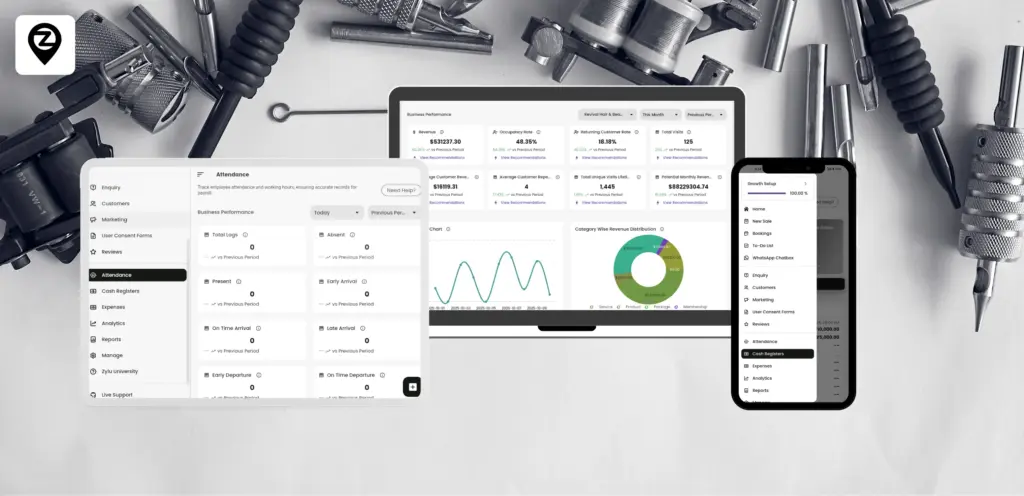
Discover the most comprehensive best tattoo studio software comparison for 2026. Finding the best tattoo studio software in 2026 requires more than comparing prices or basic booking features. Tattoo studios software operate in a highly specialized environment where client trust, consent compliance, artist scheduling, deposits, payments, and long term relationship management all play a critical role. This detailed comparison helps tattoo studio owners understand how today’s leading tattoo software platforms perform across real world studio needs.
This guide compares Zylu with established tattoo focused platforms such as Tattoo Studio Pro, InkBook, TattooGenda, Revolution Tattoo Studio Manager, Booksy, Fresha, DaySmart Tattoo, Acuity Scheduling, Schedulicity, and Square Appointments. Each platform has strengths, limitations, and ideal use cases. The goal is not hype but clarity so studio owners can make informed, confident decisions.
Whether you run a private appointment only tattoo studio software , a walk in shop with multiple artists, or a growing multi location tattoo brand, choosing the right software directly impacts client experience, revenue stability, and operational efficiency.
1000+ tattoo and creative businesses globally. One platform redefining tattoo studio software management
Zylu has emerged as one of the most comprehensive all in one platforms competing for the title of best tattoo studio software globally. While many tools focus on one or two functions like scheduling or payments, Zylu consolidates the entire tattoo studio software workflow into a single cloud based system.
Tattoo studios using Zylu manage online booking, artist schedules, POS billing, client CRM, automated communication, inventory tracking, analytics, and multi location operations from one dashboard. This unified approach reduces errors, saves time, and provides studio owners with full visibility into daily operations.
Compared to tools like Tattoo Studio Pro, which focuses primarily on scheduling and digital forms, or InkBook, which emphasizes no show reduction and multi location scheduling, Zylu is designed as a complete operational system rather than a feature specific solution.
Modern tattoo studios face increasing expectations from clients who want instant confirmations, clear pricing, digital consent workflows, and reliable communication. At the same time, owners need structured systems to manage artist availability, deposits, payments, repeat visits, and business growth. The best tattoo studio software bridges both sides, client convenience and studio control.
40% of tattoo appointments are now booked after hours
Client behavior in the tattoo industry has changed significantly. A growing percentage of tattoo consultations and session bookings now happen when studios are closed late nights, early mornings, lunch breaks, and weekends. If a tattoo studio does not offer a 24/7 mobile friendly booking experience, it risks losing high intent clients to competitors that do.
The best tattoo studio software closes this gap by giving clients instant access to artist availability, service options, pricing, deposits, and add ons at any time. Automated confirmations, reminders, and calendar syncing ensure both artists and clients stay aligned. This reduces no shows, prevents double bookings, and keeps studio schedules fully optimized.
Tattoo studios that adapt to this always available booking behavior build stronger trust with clients. Convenience drives loyalty, and loyalty drives long term revenue. Zylu tattoo studio software helps tattoo studios stay ahead of this shift by supporting a modern, digital first client experience from booking to payment to follow up.
Why modern tattoo studios must adopt advanced tattoo studio software
Tattoo studios today operate in a more competitive and compliance focused environment than ever before. Clients expect seamless booking, digital consent forms, clear communication, and professional operations. Studio owners need full visibility into bookings, artist schedules, payments, client history, inventory usage, and overall studio performance.
The best tattoo studio software acts as the central operating system for your business. It automates repetitive tasks, reduces administrative errors, and allows artists and managers to focus on delivering exceptional tattoo experiences instead of managing spreadsheets or manual systems.
Zylu provides tattoo studio software with a unified platform that supports booking, POS billing, CRM, marketing automation, inventory tracking, and multi location management. Rather than relying on fragmented tools, studios gain one cloud based system that scales with growth and adapts to changing client expectations.
Comprehensive feature set
The ideal tattoo studio software should go far beyond appointment booking. It should function as the central command center for the entire studio. This includes online booking, artist scheduling, digital consent forms, client profiles with tattoo history, integrated POS billing, inventory tracking, marketing automation, analytics, and reporting.
Zylu stands out by consolidating all these capabilities into one unified platform. This reduces dependency on multiple tools, simplifies workflows, and improves operational consistency across the studio.
Ease of use and setup
Tattoo studio software should simplify daily operations, not complicate them. A clean interface, logical navigation, and intuitive workflows are essential. Studio staff should be able to onboard quickly without extensive training.
Zylu is designed for ease of adoption, allowing artists, front desk staff, and managers to use the system effectively from day one. This minimizes downtime and accelerates ROI.
Pricing & Fees
Pricing models vary widely across tattoo studio software providers. Some charge per artist, others use tiered subscriptions, and some rely on commission based pricing tied to bookings or marketplace exposure. When evaluating the best tattoo studio software, it is important to look beyond the base subscription cost and understand the full financial picture.
This includes payment processing fees, messaging costs such as SMS or WhatsApp, add on modules, and charges for additional studio locations or users. Understanding total cost of ownership helps tattoo studio owners choose software that fits their budget today while remaining sustainable as the business grows. Transparent pricing models, such as Zylu’s no commission approach on bookings, help studios avoid unexpected operational expenses and maintain better control over margins.
Customer Support
When your tattoo studio is operating, your software must work reliably. Downtime or unresolved issues can directly impact bookings, payments, and client trust. Strong customer support is a critical factor when choosing the best tattoo studio software.
Support quality was evaluated based on response speed, availability, and support channels including live chat, phone assistance, help documentation, tutorials, and onboarding resources. Platforms like Zylu place a strong emphasis on responsive support systems, ensuring tattoo studios are not left without assistance when facing technical issues or configuration challenges.
Keeping these core factors in mind, the next section compares the top tattoo studio software platforms to help you confidently identify the solution that best fits your studio’s operational needs and long term growth goals.
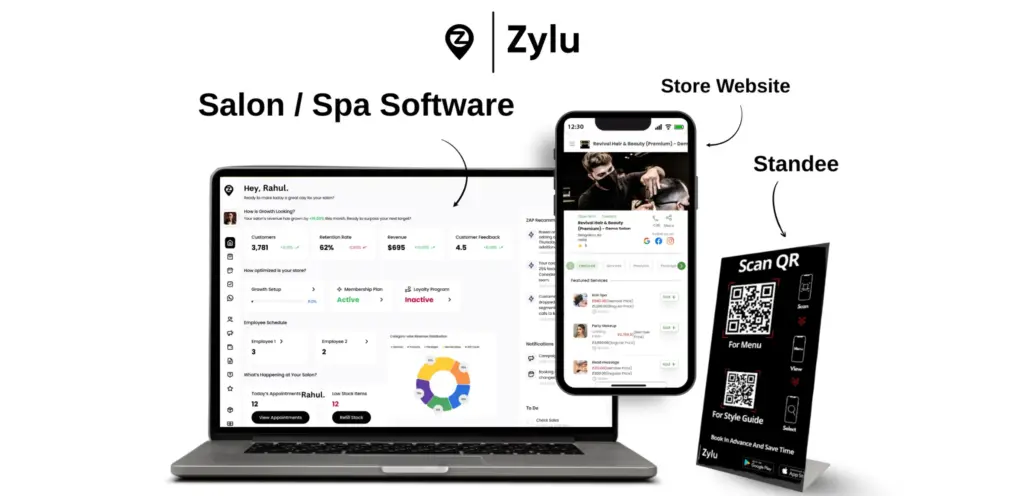
#1 Zylu: Best Overall tattoo studio Software (All-in-One Solution)
Zylu is not just a tattoo appointment booking tool. It is a complete all-in-one tattoo studio management software designed specifically for modern tattoo studios and body art businesses. Trusted by 1000+ businesses globally, Zylu supports professional tattoo studios, independent artists, multi-artist studios, and multi-location tattoo brands. Built as a cloud-based platform, Zylu manages the full tattoo studio workflow, from artist scheduling and client records to POS billing, consent documentation, marketing, staff management, and business analytics.
Zylu is designed to match how tattoo studios actually operate. Instead of generic service-based scheduling, it supports artist-led bookings, long tattoo sessions, and custom appointment durations. Studio owners can manage artist calendars, track availability, assign workstations, and maintain detailed client histories including tattoo notes and references. Everything runs inside a centralized dashboard, eliminating the need for separate tools for booking, billing, CRM, and marketing. This reduces manual effort, improves studio organization, and helps tattoo businesses scale smoothly.
Unlike marketplace-driven tattoo booking platforms, Zylu does not charge commission on appointments. Tattoo studios retain full ownership of their client data and revenue. The system includes integrated payments with cash, card, and UPI support, digital invoicing, automated appointment reminders, WhatsApp and email communication, client management, memberships, and package handling. With real-time reporting and automation, Zylu helps tattoo studios deliver a professional client experience while improving operational efficiency and long-term profitability.
Pros
- Integrates with many third-party tools using an open API
- AI-powered automation for marketing, scheduling, and analytics
- Enterprise-level reporting and insights
- Highly customizable for multi-location chains
- Transparent pricing with no commission fees on bookings
Cons
- All-in-one platform may feel complex initially for very small or single-artist studios
- Advanced automation features such as WhatsApp API and attendance tracking may require higher plans
- Full setup requires onboarding to configure artists, schedules, and workflows correctly
- Setup fee applies to initial onboarding
Why Zylu Leads in Tattoo Studio Software in 2026
From the moment tattoo studio owners log into Zylu, the platform feels purpose-built for how professional tattoo studios actually operate. Every feature is designed to simplify day-to-day tattoo studio management, including artist scheduling, client records, billing, inventory, marketing, and performance tracking. Instead of juggling multiple tools, Zylu brings everything together in one unified system that supports both creative work and business growth.
Zylu tattoo studio software combines the flexibility required by tattoo artists with the operational control studio owners need. Artist calendars, long tattoo sessions, client histories, inventory usage, and payments are all managed from a single dashboard. This balance of simplicity and depth is why Zylu tattoo studio software stands out as a leading choice for modern tattoo studios, private tattoo artists, and multi-location tattoo brands in 2026.
Inventory Management for Tattoo Studios
Zylu’s tattoo inventory management module is built specifically for tattoo studios that rely on consumables, supplies, and studio equipment rather than traditional retail products. The system helps tattoo studio owners eliminate stock wastage, avoid last-minute shortages, and maintain full visibility into every item used during tattoo sessions.
Instead of manual logs or spreadsheets, Zylu tattoo studio software automatically updates inventory levels as supplies are used during appointments or sold at checkout. Tattoo inks, needles, cartridges, gloves, ointments, wraps, disposables, aftercare products, and studio supplies are all tracked accurately in real time. This ensures artists never run out of critical materials during sessions and studio operations remain smooth even on busy days.
Zylu supports SKU-level tracking, supplier records, low-stock alerts, reorder reminders, and automated stock deduction after billing. Tattoo studio owners can monitor usage patterns by artist, by service type, or by location. For studios with multiple branches, the system provides centralized inventory visibility, cross-location stock transfers, and location-wise usage reports. This level of control helps studios reduce waste, manage costs, and forecast purchases more accurately.
When inventory data is connected with client and artist records, Zylu tattoo studio software enables better planning and accountability. Studio owners can identify high-usage items, control overconsumption, and ensure hygiene and compliance standards are met consistently. This structured approach to tattoo inventory management reduces operational risks while improving profitability.
Key Inventory Capabilities for Tattoo Studios
Real-time tracking of tattoo supplies and consumables
Automatic stock deduction after each tattoo session or sale
Low-stock alerts and reorder notifications
Supplier details and purchase order records
Multi-studio and multi-location inventory monitoring
Usage analytics by artist, service, and location
Marketing and Client Retention Tools for Tattoo Studios
Zylu’s marketing and client retention system is designed to help tattoo studios build repeat business, strengthen client trust, and grow long-term revenue without manual follow-ups. Tattoo studios rely heavily on repeat sessions, referrals, and long-term client relationships, and Zylu uses real client behavior data to automate engagement at the right time.
Instead of generic promotions, Zylu tattoo studio software tracks visit frequency, session history, spending patterns, artist preferences, and last appointment dates to trigger personalized communication. Clients can receive appointment reminders, follow-ups after sessions, rebooking nudges, aftercare messages, abandoned booking alerts, and promotional updates through SMS, WhatsApp, or email. This ensures clients stay connected to the studio even between long tattoo sessions.
With WhatsApp being a primary communication channel in regions like India, UAE, Europe, and Southeast Asia, Zylu’s WhatsApp API integration becomes a powerful retention tool for tattoo studios. Studios can send consent confirmations, appointment updates, design approval reminders, offers, vouchers, and review requests directly to the client’s phone. Compared to traditional SMS or email, WhatsApp messages typically see higher open rates, faster responses, and better conversion into confirmed appointments.
Zylu tattoo studio software also includes built-in loyalty and membership tools adapted for tattoo studios. Studios can reward repeat clients with points, discounts, VIP access, or exclusive artist slots. Memberships can be structured around session packages, annual plans, or priority booking access. These programs help increase repeat visits and average client value while strengthening loyalty.
Advanced segmentation allows tattoo studios to target clients based on location, artist preference, session category, spending level, or visit frequency. This helps studios run focused, high-performing campaigns that feel relevant rather than promotional, driving stronger engagement and measurable results.
Key Marketing Capabilities for Tattoo Studios
Automated SMS, WhatsApp, and email campaigns
Client segmentation and behavior-based triggers
Loyalty programs and membership billing
Rebooking reminders and win-back campaigns
Review requests and referral promotions
Staff and Resource Management for Tattoo Studios
Zylu tattoo studio software provides a complete staff and resource management system designed specifically for tattoo studios where artists, assistants, and workstations must be carefully coordinated. The platform helps studios streamline artist scheduling, track performance, reduce manual attendance tracking, and assign sessions based on artist availability and expertise.
Studio owners and managers can create artist schedules, define working hours, manage holidays, and handle last-minute changes without confusion. For studios with multiple artists or locations, Zylu tattoo studio software supports role-based access controls, ensuring managers have full oversight while artists only see what is relevant to their role and schedule.
Zylu’s performance analytics give tattoo studio owners clear insights into artist productivity, session revenue, utilization rates, rebooking behavior, and client feedback. These insights help studios identify top-performing artists, support skill development, design incentive programs, and improve overall studio efficiency.
The system includes commission tracking tailored for tattoo studios. Commissions can be calculated automatically based on session value, role, product sales, or custom commission structures. Combined with attendance tracking options, including biometric integrations available as add-ons, Zylu tattoo studio software generates accurate, payroll-ready data that reduces manual work and minimizes errors.
By bringing scheduling, attendance, performance tracking, and commission management into one system, Zylu tattoo studio software helps tattoo studios operate more professionally while giving artists transparency and confidence in their earnings.
Staff Management Highlights for Tattoo Studios
Zylu’s staff management system is built to support how tattoo studios actually work, where artists have different skill sets, session durations, and availability. The platform helps studio owners manage artist schedules efficiently, reduce manual coordination, and ensure the right artist is assigned to the right client every time.
Tattoo studios can schedule artists based on availability, specialty, and workload while maintaining flexibility for long sessions or walk-ins. Automated commission tracking removes manual calculations and provides transparency for both artists and management. Attendance tracking ensures accurate records without paperwork, helping studios stay organized and payroll-ready.
Performance analytics give studio owners a clear view of artist productivity, revenue contribution, and session efficiency, making it easier to reward top performers and support underperforming artists.
Staff Management Capabilities
Smart artist shift scheduling
Skill-based tattoo session assignment
Automated commission calculation
Attendance tracking with biometric compatibility
Artist performance and productivity analytics
Multi-Location Features for Tattoo Studios
Zylu tattoo studio software is engineered for tattoo studios operating across multiple locations, whether managing two studios or running a large tattoo brand across cities or countries. The platform provides centralized control with branch-level flexibility, allowing owners to maintain consistency while giving local teams the autonomy they need.
From a single admin dashboard, studio owners can monitor real-time performance across all locations. Service menus, pricing, promotions, artist permissions, and membership programs can be standardized across studios to ensure a consistent brand experience. At the same time, each location can track its own bookings, artist schedules, and daily operations independently.
Branch-wise reporting allows owners to monitor key performance indicators such as revenue, artist utilization, top tattoo categories, client retention rates, and supply usage. The multi-location inventory system supports stock transfers between studios, centralized purchase order management, and location-specific consumption tracking.
Client data remains unified across all studios, meaning clients can book appointments at any branch without re-entering details. This unified CRM approach improves convenience for clients and helps studios deliver a consistent experience regardless of location.
Role-based access ensures that managers only view data relevant to their studio, while head office teams maintain full visibility across the entire operation. This structure makes Zylu tattoo studio software a scalable alternative to complex enterprise solutions while remaining easy to use for growing tattoo businesses.
Core Multi-Location Advantages
Centralized dashboard for all tattoo studio locations
Cross-location booking with unified client records
Standardized pricing, services, and artist permissions
Chain-wide analytics and performance comparison
Branch-level inventory transfers and controls
Appointment Scheduling and Calendar for Tattoo Studios
Zylu’s appointment scheduling system is built for tattoo studios that manage long sessions, artist availability, and custom booking durations. The calendar is clean, visual, and easy to use, allowing studio managers and artists to view schedules clearly and make changes without confusion. Drag-and-drop functionality helps teams reschedule sessions, block time for large tattoos, or update artist availability instantly.
Unlike generic booking tools, Zylu tattoo studio software supports artist-based calendars rather than service-only scheduling. Each tattoo artist can have their own working hours, session limits, and availability rules. This makes it easier to manage full-day bookings, multi-hour tattoo sessions, walk-ins, and repeat appointments without overlap or errors.
Key Scheduling Capabilities for Tattoo Studios
Real-time artist availability updates
Prevention of double bookings for long tattoo sessions
Artist-specific working hours and session limits
Repeat bookings and follow-up session scheduling
Patch test and consultation reminders
Custom buffer times between tattoo sessions
Easy reschedule and cancellation flows for clients
Automated SMS, email, and WhatsApp appointment reminders
The system supports 24/7 online booking, allowing clients to request or confirm tattoo appointments even outside studio hours. This is critical for tattoo studios, as many clients prefer booking late evenings or weekends. Clients can book through the studio website, social media, Google Business Profile, or direct booking links, reducing manual back-and-forth communication.
Client Feedback Example:
“The booking process feels professional and well-organized. Clients can book when it suits them, and our artists no longer deal with constant scheduling messages.”
Client Management (CRM) for Tattoo Studios
Zylu’s tattoo studio software CRM goes far beyond basic client contact details. It creates a complete digital profile for every client, helping tattoo studios deliver consistent, personalized, and safe experiences.
Each client profile stores visit history, tattoo design references, session notes, consent details, artist preferences, allergies, aftercare instructions, package details, memberships, and loyalty data. This information is available instantly, helping artists prepare better and maintain continuity across sessions.
This enables tattoo studios to:
Conduct more personalized consultations
Maintain detailed tattoo history and design references
Improve artist-client communication
Increase repeat sessions and long-term retention
Trigger automated rebooking reminders
Segment clients for targeted marketing
Lifetime value insights and visit frequency metrics help studio owners identify their most loyal clients and nurture relationships through exclusive offers, priority bookings, or loyalty rewards.
Point of Sale (POS) and Billing for Tattoo Studios
Zylu’s tattoo studio POS is tightly integrated with scheduling and CRM, ensuring fast, accurate, and transparent billing at checkout. Tattoo studios can accept payments through cash, card, wallet, UPI, and QR, giving clients flexibility while reducing payment friction.
The billing system supports both session-based billing and product sales, allowing studios to manage tattoo services, deposits, aftercare products, and merchandise in one place.
Key POS and Billing Capabilities
Digital invoices and receipts
Add-on products and aftercare upselling
Membership and package billing
Discounts, coupon codes, and promotional offers
GST-ready billing for Indian tattoo studios
Artist commission tracking
Split payments and partial payments
tattoo studio software Inventory levels update automatically after each sale or session, reducing manual stock adjustments and improving accuracy. This ensures tattoo studios maintain control over supplies, billing, and artist payouts without manual errors.
Why Trust Zylu tattoo studio software
Zylu tattoo studio software is a dedicated software comparison and research platform built to help business owners make confident, data-driven decisions. Our goal is simple: to provide clear, unbiased, and up-to-date comparisons of the best business software available, so you can choose the right tools without wasting time or money.
Unlike promotional blogs or vendor-sponsored reviews, Zylu tattoo studio software follows a research-first approach. Every software included in our comparisons is evaluated using the same structured criteria, ensuring fairness and consistency across all recommendations.
Independent & Unbiased Analysis
Zylu does not favor any specific software provider. Our rankings are based on real product capabilities, usability, pricing transparency, and suitability for different business sizes. We focus on what works best for users, not what pays the most.
Real Feature & Pricing Evaluation
Each software is reviewed based on:
Core features relevant to tattoo studios
Ease of use for artists and managers
Booking, client management, and payment tools
Pricing plans and value for money
Scalability for growing studios
We prioritize accurate pricing information and highlight hidden costs or limitations whenever possible, so readers know exactly what to expect.
User-Centric Research
Zylu’s comparisons are designed around real user needs, not marketing claims. We analyze:
Public user feedback
Product documentation
Feature updates
Industry trends
This helps ensure our recommendations remain relevant in 2026 and beyond, especially in fast-changing software markets.
Clear Comparisons, Not Confusion
Our guides are structured to make decision-making easier. Instead of overwhelming readers with technical jargon, Zylu tattoo studio software presents information in a clear, organized, and comparable format, allowing users to quickly understand the strengths and weaknesses of each option.
Regularly Updated Content
Software changes constantly — pricing updates, new features, discontinued plans. Zylu regularly reviews and updates its content to reflect the latest information, so readers are not relying on outdated advice.
Built for Business Owners
Zylu is created for entrepreneurs, studio owners, freelancers, and growing teams who need practical software recommendations, not sales pitches. Every guide is written with real-world use cases in mind.
Our Mission
Zylu exists to simplify software decisions. By combining structured research, transparency, and user-focused insights, we help businesses choose tools that genuinely improve efficiency, customer experience, and growth.
Pricing Overview for Tattoo Studio Software
Zylu offers flexible pricing plans designed to support tattoo studios of all sizes, from solo artists to multi-location tattoo brands.
Zylu Pricing Plans
| Plan Name | Monthly Price (USD) | Best For |
|---|---|---|
| Lite | $19 / month | Solo tattoo artists and freelancers |
| Grow | $49 / month | Small tattoo studios and teams |
| Standard | $69 / month | Growing tattoo studios |
| Premium | $199 / month | Multi-location tattoo studios |
Additional Notes for Tattoo Studios
No commission fees on tattoo bookings
Payment gateway fees apply, approximately 3 percent plus GST for India
Optional add-ons available such as WhatsApp API integration and biometric attendance
This pricing and feature structure makes Zylu highly affordable compared to platforms like tattoo studio pro, InkBook, or TattooGenda, while still delivering enterprise-level tattoo studio management capabilities.
Ease of Use for Tattoo Studio Teams
One of Zylu’s strongest advantages is how easy it is for tattoo studio owners and artists to start using the system, even if they have never used tattoo management software before. The interface is clean, modern, and designed specifically for creative businesses like tattoo studios, not generic retail or appointment apps.
From the first login, Zylu tattoo studio software guides users through a simple onboarding process using checklists, step-by-step configuration, and clear prompts. Studio owners can quickly set up artists, working hours, tattoo categories, pricing, and booking rules without technical help. This significantly reduces training time and allows studios to go live quickly.
The layout is intentionally designed to minimize friction. Whether managing artist schedules, client records, tattoo sessions, inventory, or billing, navigation feels predictable and straightforward. Advanced tools such as segmentation, memberships, automation rules, and multi-location analytics remain hidden until needed. This prevents new users from feeling overwhelmed while still offering powerful functionality as the studio grows.
Tattoo artists transitioning from manual methods or studios moving from older systems consistently report that Zylu tattoo studio software feels faster and more intuitive. Because the platform is fully cloud-based, it works seamlessly across desktops, tablets, and mobile devices. Real-time syncing ensures that bookings, client notes, payments, and inventory updates appear instantly for all authorized users.
Client Feedback Example:
“Our entire team learned Zylu within 48 hours. It was much faster than any system we used before. Everything feels simple and logical.”
This focus on usability is one reason tattoo studios across Asia, the Middle East, Europe, and North America adopt Zylu to replace multiple disconnected tools with one unified system.
Customer Support for Tattoo Studios
Zylu tattoo studio software provides a reliable customer support system designed to keep tattoo studios running smoothly without technical disruptions. All plans include chat support, while higher-tier plans such as Standard and Premium also include priority support and phone assistance for faster issue resolution.
Support teams are trained specifically in tattoo and studio workflows, not generic software helpdesks. This means tattoo studios receive relevant, practical guidance rather than scripted responses. Support assistance covers onboarding, artist setup, booking rules, consent management, inventory configuration, payroll preparation, and troubleshooting.
Support availability spans flexible hours to accommodate global tattoo studios operating across different time zones, including India, UAE, the UK, Europe, and the USA. For larger tattoo brands, the support team also assists with structured onboarding, multi-location configuration, and system customization to maintain consistency across studios.
Zylu tattoo studio software includes a dedicated knowledge center with guides, videos, FAQs, and self-help resources. This allows studio owners and staff to explore features independently and reduce dependency on support while maintaining confidence in daily operations.
Compared to platforms like Zenoti, Mindbody, or Phorest, where support access often depends on high-cost enterprise plans, Zylu offers responsive and accessible support at every level. Unlike Fresha, which focuses on basic assistance, Zylu provides deeper onboarding and long-term usage support.
Client Feedback Example:
“Zylu’s support team is extremely responsive and knowledgeable. Every issue we had was solved quickly without delays.”
This ensures tattoo studios never feel stuck, even during peak business hours.
Unique Selling Points of Zylu tattoo studio software for Tattoo Studios
Zylu’s biggest strength is its all-in-one platform combined with a no-commission booking model. This gives tattoo studios complete ownership of their revenue, client relationships, and business data.
1. No Commission on Bookings and Full Revenue Ownership
Unlike marketplace-driven platforms, Zylu software does not take a percentage of tattoo bookings. Studios keep 100 percent of their earnings and only pay standard payment gateway charges. This is especially important for tattoo studios that rely on repeat sessions, memberships, and high-value custom work.
2. Deep CRM with Automated Marketing and WhatsApp Integration
Zylu combines a powerful tattoo studio CRM with automated marketing workflows. Studios can send targeted WhatsApp, SMS, and email messages based on client behavior, session history, and visit frequency. This allows better engagement than basic reminder-only systems.
3. Multi-Location Scalability at a Lower Cost
Zylu tattoo studio software offers multi-location features such as centralized dashboards, unified client records, and cross-studio inventory without enterprise-level pricing. Tattoo brands can scale across cities or countries without switching platforms or paying excessive fees.
4. POS, UPI, QR, and GST Integration
Zylu is optimized for regions like India with full UPI support and GST-ready invoicing. This gives tattoo studios an advantage over global platforms that lack regional payment and compliance support.
5. Smooth Interface and Fast Learning Curve
Compared to heavier systems like Mindbody or Phorest, Zylu’s interface is faster and easier to learn. Tattoo artists and studio staff can start using the platform confidently with minimal training.
6. All Essential Tattoo Studio Tools in One Platform
Zylu tattoo studio software replaces the need for separate booking apps, POS systems, CRM tools, marketing software, inventory trackers, and payroll spreadsheets. Everything works together in one system, improving efficiency and reducing operational errors.
Real Growth Examples from Tattoo Studios
“Zylu tattoo studio software helped us re-engage 28 percent of inactive tattoo clients using automated WhatsApp follow-ups and rebooking reminders.”
“Our artist scheduling improved immediately. We reduced idle time between tattoo sessions by nearly 50 percent while maintaining better artist availability.”
These results show that Zylu tattoo studio software is not just a feature-heavy tattoo studio software. It is built to drive real business growth through better client retention, smarter scheduling, and improved operational efficiency.
Book your Free Demo Here!
#2 Tattoo Studio Pro: Simple Tattoo Management Software for Small Studios
Tattoo Studio Pro is a basic tattoo studio management tool aimed at very small studios and solo tattoo artists who need only fundamental functionality. The software focuses mainly on simple appointment scheduling, basic client records, and limited billing features, making it suitable only for studios transitioning away from manual or paper-based tracking.
The platform lacks many of the advanced tools commonly expected in modern tattoo studio software. Features such as automated workflows, marketing tools, detailed reporting, and customer retention functionality are either minimal or not available. As a result, Tattoo Studio Pro may feel restrictive for studios that manage multiple artists or want more control over daily operations.
Tattoo Studio Pro is generally better suited for entry-level use rather than long-term business growth. Studios that expand, add staff, or operate multiple locations may quickly outgrow the system due to its limited scalability and lack of advanced customization options. Compared to more comprehensive solutions, it offers fewer opportunities to streamline operations or improve overall efficiency.
Pros
Designed specifically for tattoo studios and tattoo artists
Basic appointment scheduling and calendar management
Simple client profile storage for tattoo history and notes
Easy to use for small teams or solo artists
Cons
Limited marketing and client retention tools
No advanced automation for rebooking or follow-ups
Basic reporting with limited business insights
Not ideal for multi-artist or multi-location studios
Scalability and customization options are limited
Core Features of tattoo studio software
Tattoo Studio Pro is built mainly for independent tattoo artists and small tattoo studios that need a straightforward system for managing daily operations. The platform focuses on essential tools rather than advanced automation, making it suitable for artists who want basic organization without complex setup.
Below is an overview of how Tattoo Studio Pro supports tattoo studio operations.
Appointment Calendar and Scheduling
Tattoo Studio Pro offers a mobile-friendly scheduling system that allows tattoo artists to manage appointments, confirm bookings, and update availability with ease. Artists can share a booking link with clients, reducing back-and-forth messages and manual coordination.
The calendar helps artists view upcoming sessions, adjust time slots, and manage cancellations directly from the app. Automated reminders help reduce no-shows, which is especially useful for independent artists managing their own schedules without front-desk support.
While the scheduling system works well for simple use cases, it is more suitable for single-artist or small studios and may feel limited for larger teams or studios with complex booking rules.
Client Management
Tattoo Studio Pro stores essential client details such as contact information, appointment history, and basic behavior patterns like frequent cancellations or no-shows. This helps artists keep a simple record of their client interactions over time.
The CRM functionality is designed to be lightweight and easy to use. It does not include deep automation, advanced segmentation, or long-term retention tools, but it covers the basics needed for independent artists who want quick access to client information without complexity.
For studios focused on simple record-keeping rather than personalized engagement or repeat marketing, this approach can be sufficient.
Payments and No-Show Protection
Tattoo Studio Pro includes built-in payment processing, allowing clients to securely add their card details while booking appointments. This enables artists to charge cancellation or no-show fees automatically, offering financial protection against last-minute cancellations.
The platform typically charges a commission fee on appointments, usually around 2.75 percent plus 30 cents, and also applies a booking-related service fee that is passed on to clients. While this simplifies payment handling, artists need to consider these fees when calculating overall profitability.
This payment structure can work well for artists who prioritize convenience but may become costly for those handling higher booking volumes.
Marketing and New Client Acquisition
Tattoo Studio Pro functions partly as a discovery marketplace where clients can search for tattoo artists based on location, style, or reviews. This marketplace exposure helps independent artists attract new clients without investing heavily in external marketing.
The platform includes basic marketing tools such as automated reminders and simple follow-up messages. However, it lacks advanced marketing automation, behavior-based campaigns, and detailed analytics commonly found in more comprehensive tattoo studio software.
For artists who rely primarily on marketplace visibility rather than long-term client retention strategies, this approach can still provide value.
Reviews and Portfolio Management
Tattoo artists using Tattoo Studio Pro can collect client reviews directly on their profile, helping build credibility and online visibility. The platform also allows artists to upload photos, videos, and portfolio content, creating a simple digital showcase of their work.
This portfolio acts as a mini profile page where potential clients can review an artist’s style before booking. While effective for discovery, customization options are limited compared to full-featured websites or advanced studio platforms.
Mobile App Experience
Tattoo Studio Pro offers a mobile app that serves as the central hub for managing schedules, payments, client details, notifications, and pricing adjustments. The app is optimized for artists who prefer managing their business from a smartphone.
Clients can also use the consumer-facing app to discover artists, book appointments, pay, and leave reviews. This app-based approach makes booking convenient for users familiar with marketplace platforms.
However, studios that prefer full desktop dashboards or multi-user workflows may find the mobile-first approach restrictive.
Customer Support and Community
Tattoo Studio Pro provides standard customer support and access to a broader professional community within its marketplace. Artists can find help resources and community discussions related to platform usage.
Support availability and depth may vary depending on the plan, and it is generally structured to assist individual users rather than larger studios with complex operational needs.
Pricing of Tattoo Studio Pro
Tattoo Studio Pro offers two main pricing approaches, allowing tattoo artists and small studios to choose between a commission-based free model or a flat monthly subscription. This structure is designed mainly for independent artists who want flexibility in how they pay as their business grows.
The pricing model works best for solo artists and very small studios but may require careful evaluation for growing tattoo businesses due to transaction fees and booking-related charges.
Free Plan (Commission-Based)
The Free Plan allows tattoo artists to use the platform without a fixed monthly subscription. Instead, costs are applied on a per-booking basis.
Under this plan:
There is no monthly subscription fee
Tattoo Studio Pro charges approximately 35 percent commission on a new client’s first appointment, capped at $50
Clients are charged a booking fee of around $2.35 per appointment
Smart pricing features may apply additional fees for premium time slots
Payment processing fees generally range between 2.75 percent and 3 percent
This model positions Tattoo Studio Pro as a client acquisition platform rather than a pure management system. Artists gain exposure through the marketplace but give up a portion of revenue in exchange for visibility and bookings.
While this approach can help fill empty slots, especially for new or less-established artists, commission costs can add up over time. Artists handling frequent bookings or high-value sessions may find this model less predictable and harder to manage financially.
Premium Plan (Flat Monthly Subscription)
The Premium Plan is designed for tattoo artists who prefer predictable monthly expenses and want to avoid commission on bookings.
Under this plan:
Monthly subscription fee of approximately $35
No booking commission or client service fees for standard features
Only standard payment processing fees apply
Premium users receive improved visibility within the Tattoo Studio Pro marketplace
This plan is better suited for tattoo artists who already have a steady client base and want to reduce variable costs. However, the platform still relies heavily on marketplace exposure rather than offering advanced studio-level automation or growth tools.
For tattoo studios planning to scale, add artists, or operate across multiple locations, pricing flexibility and feature depth may become limiting.
Ease of Use
Tattoo Studio Pro is built with simplicity in mind and targets independent tattoo artists rather than large studio teams. The interface is clean, lightweight, and focused on essential tasks such as scheduling, pricing, and booking management.
Setup is generally fast and can be completed within minutes. Artists can upload services, adjust pricing, and open online booking links quickly. The platform is designed to minimize setup complexity, making it appealing for artists who want to get started without technical assistance.
The system helps reduce back-and-forth communication by showing availability clearly and allowing clients to book directly. Automated reminders help minimize missed appointments, which is useful for artists managing their own schedules.
One drawback often mentioned is the booking fee charged to clients. Some artists report that clients question or resist paying extra fees, especially for higher-priced or recurring tattoo sessions. This can occasionally impact conversion rates or client satisfaction.
Overall, Tattoo Studio Pro is easy to use for simple workflows, but it may feel restrictive for studios that require advanced scheduling logic, artist coordination, or deeper operational control.
Customer Support
Tattoo Studio Pro provides standard customer support primarily through online resources. Support options include help articles, guides, FAQs, and tutorials available through their help center.
Email support is available, but response times may vary. Premium subscribers may receive faster assistance, although dedicated account management or phone support is not always guaranteed.
The support structure is designed for individual users rather than complex studio environments. This works well for solo tattoo artists who need occasional help but may feel limited for studios managing multiple artists, high booking volumes, or advanced workflows.
Compared to full-scale tattoo studio management platforms, Tattoo Studio Pro’s support is more self-service oriented. Artists are expected to rely on documentation and community knowledge for most issues.
For independent tattoo artists with straightforward needs, the support model is generally sufficient. However, growing studios or brands that require hands-on onboarding, customization, or operational guidance may find the support options restrictive.
Drawbacks of Tattoo Studio Pro
Tattoo Studio Pro can work for independent tattoo artists who want a basic booking tool, but there are important limitations studio owners should understand before choosing it as a long-term solution. These drawbacks become more visible as a tattoo business grows, adds artists, or aims to improve profitability and client retention.
High Commissions and Extra Fees (Unless on Premium)
One of the biggest concerns with Tattoo Studio Pro is its pricing structure. Artists using the free or commission-based plan pay a high percentage on new client bookings. For high-value tattoo sessions, this can significantly reduce earnings.
In addition to commission, clients are often charged a booking fee. While this may seem small per appointment, it can add friction over time. Tattoo studios that rely on repeat sessions or long-term clients may find that these extra charges discourage bookings, especially when clients compare with studios that do not charge booking fees.
Even on the premium plan, while commissions may be reduced or removed, studios still need to factor in payment processing fees and marketplace dependence. Over time, these costs can exceed the price of a full-featured tattoo studio management platform.
Not Designed for Multi-Artist or Growing Tattoo Studios
Tattoo Studio Pro is primarily built for solo artists or very small teams. It does not offer the level of flexibility and control required for tattoo studios with multiple artists, shared workstations, or complex schedules.
There is limited support for managing multiple artist calendars, assigning sessions based on skill or availability, and monitoring performance across a team. As a result, studios with more than one or two artists often struggle to maintain visibility and operational clarity.
For tattoo studios planning to grow, hire more artists, or manage multiple rooms, these limitations can slow down operations and create confusion.
Limited Expansion and Business Growth Features
Tattoo Studio Pro focuses mainly on booking and marketplace exposure. It lacks several important business tools that modern tattoo studios rely on to scale and operate efficiently.
Missing or limited capabilities include:
Inventory and consumable tracking for tattoo supplies
Advanced POS analytics and revenue insights
Multi-location dashboards for studio chains
Deep marketing automation and client segmentation
Memberships, packages, and loyalty systems
Payroll, commission structures, and advanced reporting
Because of these gaps, Tattoo Studio Pro is often used as a short-term or entry-level solution rather than a long-term business platform.
Client Booking Fees Can Impact Retention
Clients booking through Tattoo Studio Pro are often required to pay a booking fee. While this supports the marketplace model, it can discourage repeat bookings, especially for clients who book frequently or return for multiple sessions.
In competitive markets, clients may choose studios that offer a smoother, fee-free booking experience. Over time, this can affect client loyalty and lifetime value.
Tattoo Studio Pro vs Zylu: A Clear Comparison
When comparing Tattoo Studio Pro and Zylu, the difference comes down to marketplace dependency versus full business ownership.
Tattoo Studio Pro focuses on helping artists get discovered through a marketplace. Zylu focuses on helping tattoo studios build, manage, and grow their own business.
Lower and More Predictable Costs with Zylu
Zylu does not charge commission on tattoo bookings. Studios keep 100 percent of their revenue and only pay standard payment gateway fees.
This makes Zylu more predictable and budget-friendly for tattoo studios, especially those handling high-value sessions, repeat clients, and long-term memberships.
No Client Booking Fees with Zylu
Clients booking through Zylu never pay a booking fee. This removes friction from the booking process and improves conversion rates.
A smoother booking experience leads to higher rebooking rates, better client satisfaction, and stronger long-term relationships.
Built for Teams, Artists, and Multi-Location Tattoo Studios
Unlike Tattoo Studio Pro, Zylu is designed to support:
Multiple tattoo artists and shared schedules
Role-based access for owners, managers, and artists
Commission tracking by artist, session, or product
Shift scheduling and attendance management
Performance analytics for individuals and teams
This makes Zylu suitable not only for small studios, but also for growing tattoo brands and multi-location operations.
Broader Business Tools with Zylu
Zylu includes a full set of business management tools that Tattoo Studio Pro does not offer, such as:
Inventory and tattoo supply tracking
GST-ready billing and global payment support
WhatsApp automation and client engagement workflows
Advanced CRM segmentation
Loyalty programs and memberships
Packages and bundled session offerings
Centralized analytics and reporting
These tools help tattoo studios operate more professionally, reduce manual work, and scale with confidence.
Global Expansion and Local Market Fit
Tattoo Studio Pro’s marketplace model is strongest in specific regions, primarily the U.S. Its structure does not scale easily across countries with different currencies, tax systems, or payment preferences.
Zylu supports multi-currency operations, local compliance, and region-specific payments. This makes it a better long-term choice for tattoo studios planning to expand internationally or manage studios across different markets.
Conclusion: Why Zylu Is the Stronger Choice for Tattoo Studios
Tattoo Studio Pro can be a starting point for independent tattoo artists who want marketplace exposure and basic scheduling. However, its commission-based model, client booking fees, and limited business tools make it less suitable for professional tattoo studios focused on long-term growth.
Zylu is built for tattoo studios that want control. Control over revenue, clients, branding, operations, and future expansion.
With no booking commissions, no client booking fees, deep CRM, automated marketing, inventory tracking, team management, and multi-location scalability, Zylu provides a complete foundation for running a modern tattoo studio.
For tattoo studios that care about profitability, client retention, and business ownership, Zylu is the more reliable and future-ready platform.
#3 inkBook: Simple Tattoo Booking Software Focused on Appointments
inkBook is a tattoo studio software booking software primarily designed to help tattoo artists and small tattoo studios manage appointments and client scheduling. It is commonly used by independent tattoo artists or small studios looking for a dedicated tattoo-focused booking tool without the complexity of a full business management system.
The platform focuses mainly on appointment booking, client communication, and basic studio organization. inkBook is often chosen by artists who want a tattoo-specific alternative to generic scheduling tools, especially those who prioritize ease of booking and client coordination over advanced business automation.
However, inkBook is more limited when it comes to scaling, operational depth, and long-term business growth. While it serves basic booking needs well, it does not offer the broader set of tools required by growing tattoo studios managing teams, inventory, payments, and retention strategies.
Pros
- Integrates with many third-party tools using an open API
- AI-powered automation for marketing, scheduling, and analytics
- Enterprise-level reporting and insights
- Highly customizable for multi-location chains
- Transparent pricing with no commission fees on bookings
Cons
- All-in-one platform may feel complex initially for very small or single-artist studios
- Advanced automation features such as WhatsApp API and attendance tracking may require higher plans
- Full setup requires onboarding to configure artists, schedules, and workflows correctly
- Setup fee applies to initial onboarding
Core Features of inkBook
Appointment Scheduling and Calendar
inkBook provides a tattoo-focused appointment scheduling system that allows artists to manage their calendars, accept bookings, and communicate availability with clients. Artists can define working hours, block off unavailable time, and manage upcoming sessions through a simple interface.
The scheduling system works best for single artists or small studios with limited complexity. It does not fully support advanced scheduling needs such as multi-artist coordination, shared workstations, or long-session optimization across teams.
While the calendar is easy to use, studios with multiple artists or higher booking volumes may find it restrictive over time.
Online Booking Experience
inkBook offers an online booking option where clients can request appointments directly. This helps reduce manual back-and-forth communication and allows artists to receive booking requests outside business hours.
The booking experience is straightforward, but customization options are limited. Studios cannot easily design advanced booking journeys, add automated pre-session workflows, or integrate deep client communication flows.
For artists who only need basic booking functionality, this can be sufficient. For studios aiming to professionalize their client journey, the system may feel basic.
Client Management
inkBook includes basic client management features such as storing client contact details, appointment history, and session notes. This allows artists to keep a simple record of past work and communication.
However, the CRM functionality is limited compared to full tattoo studio software management platforms. Features like advanced client segmentation, lifetime value tracking, automated rebooking triggers, and personalized marketing workflows are either minimal or unavailable.
As a result, inkBook is more suitable for record-keeping than long-term client retention and engagement.
Messaging and Notifications
inkBook supports basic notifications and messaging to keep clients informed about their appointments. Artists can send confirmations and reminders to reduce no-shows.
However, messaging automation is limited. There is no advanced WhatsApp automation, behavior-based messaging, or multi-channel campaign management. Studios relying heavily on automated follow-ups or regional messaging platforms may find this limiting.
Payments and Billing
inkBook’s payment capabilities are basic and may depend on third-party integrations. It does not offer a deeply integrated POS system, advanced billing workflows, or region-specific payment features like UPI or GST-ready invoicing.
This means studios often need to use additional tools for payments, invoicing, or financial reporting, increasing operational complexity.
Staff and Team Management
inkBook is primarily designed for individual artists. It offers limited support for managing multiple artists, assigning sessions based on skill, or tracking performance across a team.
Features such as commission tracking, attendance management, shift scheduling, and role-based permissions are either limited or unavailable. For multi-artist studios, this can create operational gaps as the business grows.
Limitations of inkBook for Growing Tattoo Studios
inkBook works well as a basic tattoo booking tool, but it lacks several capabilities needed by professional and growing tattoo studios:
No advanced inventory or supply tracking
Limited CRM and client retention tools
No built-in marketing automation
Minimal reporting and analytics
Limited support for multi-artist or multi-location studios
Dependence on external tools for payments and billing
These limitations mean inkBook is often used as a short-term solution rather than a long-term business platform.
inkBook vs Zylu: Key Differences
inkBook focuses mainly on booking and basic client management. Zylu is a complete tattoo studio software management platform designed to handle every part of the business.
Where inkBook provides simplicity, Zylu provides scalability, automation, and control.
Why Zylu Is Stronger for Tattoo Studios
Zylu includes features that inkBook does not offer, such as:
Artist-based scheduling with advanced rules
Integrated POS, billing, and global payment support
Inventory and tattoo supply tracking
Deep CRM with automated rebooking and retention
WhatsApp, SMS, and email marketing automation
Commission tracking and payroll-ready reporting
Multi-location management from a single dashboard
For tattoo studios that want to grow, manage teams, and increase profitability, Zylu offers a more complete and future-ready solution.
Pricing
InkBook follows a subscription-based pricing model, typically structured as a monthly fee per artist.
Important pricing notes:
Pricing is artist-based, not studio-based
Costs increase as more artists are added
Pricing varies by region and plan
No commission on bookings
Because pricing can change and may vary by market, studios should always verify current plans directly on InkBook’s official website before committing.
For single artists, the pricing is predictable. For growing studios, per-artist pricing can become expensive over time.
Ease of Use
InkBook is easy to set up and simple to use. Tattoo artists can usually start using the platform quickly without training. The interface is minimal and avoids complexity, which makes it attractive to beginners or artists moving away from manual scheduling.
However, simplicity also means limitations:
No advanced workflow automation
Limited customization for complex tattoo studios
Not ideal for studios with front-desk staff or managers
As studios grow, many users find they outgrow InkBook’s simplicity.
Drawbacks of InkBook for Tattoo Studios
Not Designed for Multi-Artist or Multi-Location Studios
InkBook works best for solo artists or very small studios. It does not provide robust tools for:
Managing multiple tattoo artists at scale
Centralized studio dashboards
Multi-location tattoo studios
Studio-level performance analytics
Limited Business Operations Features
InkBook does not offer advanced operational modules such as:
Inventory tracking for tattoo inks, needles, disposables
POS billing and retail sales
Memberships or prepaid tattoo packages
Advanced reporting and analytics
Payroll or commission tracking
Studios that want full operational visibility will need additional tools outside InkBook.
Client Booking Flow Limitations
While online booking is available, InkBook lacks:
Advanced consultation workflows
Automated reminders via WhatsApp
Client segmentation for targeted follow-ups
Long-term client retention automation
This can impact repeat bookings and studio growth over time.
Comparison to Zylu
When comparing InkBook to Zylu, the difference becomes clear as soon as a tattoo studio software moves beyond basic scheduling.
Why Zylu Is Stronger for Tattoo Studios
Zylu is built as a complete tattoo studio software management platform, not just a booking tool.
Operational Depth
Zylu includes:
Appointment scheduling
POS and billing
Tattoo inventory management
Client CRM with detailed records
Marketing automation
Staff management and payroll
Multi-location studio control
InkBook focuses primarily on bookings and artist calendars.
Better for Growing Tattoo Studios
Zylu supports:
Multiple tattoo artists
Role-based access
Studio managers and front desk teams
Cross-artist client records
Studio-wide performance tracking
InkBook is better suited for individual artists, not scaling studios.
Stronger Client Retention & Marketing
Zylu offers:
Automated rebooking reminders
WhatsApp and SMS automation
Client segmentation
Loyalty programs
Review and referral workflows
InkBook does not offer advanced tattoo marketing or retention automation.
Inventory, POS, and Payments
Zylu includes:
Tattoo inventory tracking
POS billing
UPI, card, cash, and digital payments
GST-ready billing for applicable regions
Retail and merchandise sales
InkBook does not provide full POS or inventory systems.
Who Should Choose InkBook
InkBook may be a good fit if you are:
A solo tattoo artist
Just starting your tattoo business
Looking for a simple booking tool
Not managing staff or inventory
Who Should Choose Zylu Instead
Zylu is the better choice if you manage:
A professional tattoo studio
Multiple tattoo artists
Walk-ins and consultations
Repeat tattoo sessions
Merchandise and consumables
Long-term client relationships
Studio growth across locations
Final Takeaway
InkBook is a solid entry-level solution for independent tattoo artists who want simple scheduling without complexity. However, as soon as a tattoo business begins to grow, hire artists, manage inventory, or focus on long-term client retention, InkBook’s limitations become clear.
Zylu is designed for tattoo studios that want control, scalability, and a single system to manage their entire business. For studios planning long-term growth, Zylu provides a more complete and future-ready foundation.
#4 TattooGenda: Tattoo-Focused, Simple Scheduling with Practical Tools
TattooGenda is a cloud-based tattoo studio software built specifically for tattoo artists and small to medium tattoo studios that need reliable appointment management and basic client handling in one place. Unlike general scheduling tools, TattooGenda was designed with tattoo-centric workflows in mind, such as tracking multiple artist calendars, managing client history, and automating email communications after bookings.
This platform is popular with independent artists and smaller shops because its interface is straightforward, it supports reminders and deposit tracking, and it keeps essential client and calendar data together. However, as studios grow, operational demands often outpace what TattooGenda offers, especially around advanced business analytics, integrated payments, inventory, multi-location control, and marketing. In contrast, a more complete platform like Zylu covers these areas and more, making it suitable for both small shops and larger operations.
Pros
Integrates with multiple third-party tools using an open API
AI-powered automation for marketing, scheduling, and analytics
Enterprise-level reporting and performance insights
Highly customizable for multi-artist and multi-location tattoo studios
Cons
All-in-one platform may feel complex initially for single-artist studios
Advanced automation features may require higher-tier plans
Initial setup requires proper onboarding for artists and schedules
Setup fee applies during onboarding
Core Features of TattooGenda
TattooGenda covers several key features that many tattoo studios need for daily operations, especially around booking and client engagement:
Appointment Scheduling & Workflow
TattooGenda provides a tattoo-specific calendar management system that allows studios to:
Set artist availability and view multiple calendars in one dashboard
Schedule appointments with session details, project names, and times
Prevent double bookings and optimize tattoo session blocks
Send appointment emails with full date lists to clients
Automate aftercare follow-ups and reminders via email and SMS (optional)
Attach client images and project notes to bookings
Accept online deposits via linked Stripe or Mollie accounts
While the calendar and reminder tools are solid for day-to-day use, advanced scheduling features such as shift planning, team load balancing, and service buffers are not as robust as in full studio systems.
Client Management & Engagement
TattooGenda includes basic client profile capabilities that help studios manage customer relationships:
Centralized client records and visit history
Appointment notifications and automated recall messages
Optional follow-up emails asking for reviews or aftercare feedback
Guest-artist calendar visibility across multiple locations.
However, TattooGenda’s client management does not include advanced segmentation, automated campaigns, or deep CRM features such as lifecycle triggers, loyalty systems, or behavioral analytics. These deeper retention capabilities are part of more advanced platforms like Zylu.
Payments, Deposits, & Financial Tools
TattooGenda supports deposit requests and integrates with common payment gateways to:
Request deposits and send reminders if deposits are unpaid
Attach payment buttons in automated emails
Auto-cancel appointments if deposits are not received after reminders
Deposits help reduce no-show risks, but comprehensive billing, point-of-sale automation, retail product sales, multi-payment support, and tax-ready invoicing are not fully featured within TattooGenda and often require external tools.
Pricing Overview
TattooGenda offers a flexible pricing structure that scales with the size of the studio. Verified pricing details include:
Free Plan – Available for single artists with basic scheduling and email reminders
Small Studio Plan – ~€16/month – Supports multi-artist access up to 4 artists, receptionist roles, and booking links
Bigger Studio Plan – ~€30/month – Adds deposits, payments, financial reports, automated aftercare emails, and up to 10 artist seats
Expert Studio Plan – ~€45/month – Includes unlimited artists, consent forms, waiting lists, and advanced automated reminders.
Pricing varies by region and currency, and studios can often choose annual plans for savings. Be sure to confirm current plans on TattooGenda’s official site before subscribing.
Ease of Use
TattooGenda is intuitive and designed for tattoo professionals with minimal technical experience. Setup is straightforward, focusing on:
Drag-and-drop calendar management
Email and SMS automation configuration
Artist account setup with custom preferences
Deposit and cancellation rules
Client notes and project histories
New users report that the learning curve is gentle, and basic tasks like booking and reminders feel effortless. However, when a studio needs detailed reporting, workflow automations, or cross-location control, the interface starts to feel limited compared to full-service platforms.
Drawbacks of TattooGenda
While TattooGenda provides tattoo-specific tools, several limitations become more obvious as a studio grows:
Scaling Challenges
Limited support for multi-location studios
Does not offer full inventory or supplies tracking
Lacks enterprise-grade reporting and analytics
CRM & Retention Gaps
Basic CRM only; no advanced segmentation or lifecycle automation
No loyalty or membership automation
Payment & POS Limitations
Deposit and payment reminders are useful, but integrated POS billing is limited
No GST/UPI or region-specific payment compliance built in
These limitations make TattooGenda suitable for smaller shops, but not ideal for studios seeking deeper business insights or scalable operations.
TattooGenda vs Zylu: Clear Business Differences
Many tattoo studios use TattooGenda as a starting point, especially for straightforward appointment coordination. However, Zylu provides a more complete package that covers virtually every part of running a tattoo studio:
Built for Complete Studio Operations
Zylu includes functionality such as:
Integrated POS and billing
Full CRM with advanced automation
Inventory tracking for inks and supplies
Multi-location management tools
Marketing automation and retention analytics
Staff scheduling, commissions, and payroll
These tools help studios not only manage bookings but also grow revenue and client loyalty, which TattooGenda does not fully support.
Who TattooGenda Is Best For
TattooGenda can be a good choice if you:
Are a solo tattoo artist or small studio
Want a dedicated booking and calendar solution
Prefer simple deposit tracking and follow-up emails
Need an affordable option for basic studio organization
Who Should Consider Zylu Instead
Zylu is better suited for:
Multi-artist studios and larger shops
Studios focused on retention and client engagement
Businesses selling products or services with advanced billing needs
Multi-location tattoo brands
Studios needing deep analytics and automation
Final Thoughts
TattooGenda is a solid appointment and client management tool for tattoo professionals, especially those just starting or running a small team. It streamlines bookings, reminders, deposit tracking, and basic client history in one platform.
However, studios that aim to grow, optimize operations, and professionalize every aspect of their business will find a more future-ready foundation in Zylu due to its broader operational scope, advanced automation, multi-location support, and integrated billing.
#5 Square Appointments: Reliable POS, But Limited Tattoo Studio Management Depth
Square Appointments is part of the larger Square ecosystem and is commonly used by small businesses across many industries. For tattoo studios, Square can be an attractive starting point because it combines appointment scheduling with Square’s well-known payment processing and POS hardware.
Many tattoo artists first consider Square because it feels familiar, easy to set up, and tightly connected to payments. It works well for solo artists or very small tattoo studios that mainly need basic booking and checkout functionality.
However, Square Appointments is not built specifically for tattoo studios. As studios grow, add more artists, manage repeat clients, handle deposits, track artist commissions, or expand to multiple locations, Square often starts to feel limited. It focuses more on payments than on full tattoo studio operations.
This is where tattoo-specific platforms like Zylu begin to stand out. Zylu is designed to manage the complete tattoo studio workflow, not just bookings and payments.
Pros
Easy setup with minimal technical knowledge required
Strong and reliable POS and payment processing
Well-known brand with trusted payment infrastructure
Works well for solo tattoo artists or very small studios
Cons
No native support for tattoo consent forms or detailed client notes
Weak inventory tracking for inks, needles, and consumables
Limited commission, payroll, and staff performance tracking
Becomes restrictive as the studio grows
Core Features of Square Appointments (Tattoo Studio Perspective)
Appointment Scheduling & Calendar
Square provides a clean scheduling calendar where clients can book appointments online. Artists can set availability, block time, and manage basic appointment details.
However, the scheduling system is built for general services. It lacks advanced tattoo-specific scheduling logic such as long-session planning, multi-day tattoos, artist specialization matching, or complex buffer rules between sessions.
Online Booking
Square allows studios to create an online booking page and embed booking links on websites or social media. This is helpful for capturing new clients.
Customization options are limited compared to tattoo-focused platforms. There is less control over deposit rules, artist selection flows, and tattoo-specific booking questions.
Client Management
Square stores basic client information such as name, contact details, and appointment history. For tattoo studios, this is often not enough.
There is no structured way to store tattoo designs, reference images, placement notes, consent history, allergies, or long-term client preferences. Tattoo studios usually need richer client profiles than Square offers.
Payments & POS
This is Square’s strongest area. Studios can accept card payments, digital wallets, and in-person payments using Square hardware. Invoices and receipts are generated automatically.
However, Square’s payment-first approach means other studio workflows depend heavily on payments, rather than on tattoo session management or artist performance.
Staff Management
Square supports basic staff access and permissions. Artists can be assigned appointments, but deeper features like commission tracking, artist productivity reports, and shift-based performance metrics are limited.
For studios with multiple tattoo artists, this quickly becomes a bottleneck.
Pricing of Square Appointments (Overview)
Square Appointments pricing is generally positioned as affordable at first glance, especially for solo artists.
Free plan available for individuals
Paid plans unlock multi-staff scheduling and additional features
Payment processing fees apply to every transaction
Additional costs may apply for add-ons and advanced features
While the entry cost is low, total expenses increase as studios add staff, locations, or require advanced reporting.
Ease of Use
Square Appointments is easy to use, especially for beginners. The interface is clean, familiar, and consistent with other Square products.
Solo tattoo artists often appreciate how quickly they can start accepting bookings and payments. The learning curve is minimal for basic use.
However, ease of use comes at the cost of depth. As soon as a tattoo studio needs more advanced workflows, owners often find themselves working around limitations rather than being supported by the system.
Zylu, while more powerful, is designed to guide tattoo studios through setup so they gain long-term efficiency instead of short-term simplicity.
Customer Support
Square offers customer support through help centers, chat, and phone support depending on region and plan.
Support is generally reliable for payment-related issues. However, because Square is not tattoo-industry focused, support teams often cannot advise on tattoo-specific workflows or business challenges.
Tattoo studios frequently need guidance on deposits, artist scheduling logic, retention strategies, and client management. Square support focuses more on transactions than tattoo operations.
Drawbacks of Square for Tattoo Studios
Square Appointments works best when the business model is simple. Tattoo studios, however, are rarely simple once they scale.
Key drawbacks include limited tattoo-specific CRM, lack of advanced inventory tracking for consumables, weak commission handling, and minimal marketing automation. Studios often need to rely on multiple external tools to fill these gaps, increasing operational complexity.
Over time, this fragmentation costs more time and money than using a single, tattoo-focused platform.
Square vs Zylu: Which One Fits Your Tattoo Studio Better?
Square is a strong option if you are a solo tattoo artist who mainly needs basic booking and reliable payments.
Zylu is built for tattoo studios that want control over the entire business, not just transactions. Zylu covers booking, POS, CRM, inventory, marketing automation, artist management, payroll support, and multi-location growth in one system.
Square focuses on payments first. Zylu focuses on tattoo studio operations first.
Final Verdict So Far: Square vs Zylu
Square is a good starting point for individuals.
Zylu is a long-term growth platform for serious tattoo studios.
Studios that plan to grow, hire more artists, increase repeat clients, and operate professionally will find Zylu far more aligned with their needs.
#6 DaySmart: Established Business Software, But Limited Flexibility for Modern Tattoo Studios
DaySmart is a long-standing business management software provider that serves a wide range of service-based industries, including salons, spas, pet services, and appointment-driven businesses. Over the years, DaySmart has built a reputation for reliability, structured workflows, and traditional business management tools.
For tattoo studios, DaySmart can appear attractive at first glance because it offers scheduling, client management, POS integrations, and operational reporting. Many studios consider DaySmart when they want something more structured than basic booking tools.
However, DaySmart was not built specifically for tattoo studios. Its systems are designed to serve multiple industries using a standardized approach. As tattoo studios evolve toward more personalized client experiences, artist-centric workflows, and automation-driven growth, DaySmart can feel rigid and slow to adapt.
Modern tattoo studios increasingly require flexible booking rules, detailed client histories, marketing automation, inventory tracking for consumables, artist commission management, and multi-location scalability. These are areas where DaySmart often requires workarounds or additional configuration, while platforms like Zylu provide native support.
Pros
Established software with a long history in service-based businesses
Structured scheduling and appointment management
Built-in client database for basic customer records
Reporting tools for revenue and appointment tracking
Cons
Not built specifically for tattoo studios or body art businesses
Limited flexibility in tattoo-specific workflows
Steeper learning curve for staff and artists
Customization often requires manual setup or external tools
Core Features of DaySmart for Tattoo Studios (In-Depth Analysis)
DaySmart provides a broad set of business management tools designed to support appointment-based service businesses. While it was not built exclusively for tattoo studios, many tattoo shop owners explore DaySmart because it offers structured scheduling, client management, and billing under one system. However, when evaluated closely through a tattoo studio lens, its strengths and limitations become clearer.
Below is a detailed breakdown of DaySmart’s core features and how they apply to real tattoo studio operations.
Appointment Scheduling and Calendar Management
Appointment scheduling is one of DaySmart’s strongest foundational features. The platform provides a centralized calendar system where studio owners and managers can view bookings by artist, room, or service. Appointments can be created, moved, or canceled directly from the calendar, allowing front-desk staff or managers to maintain control over daily operations.
For tattoo studios that operate on fixed time slots, DaySmart’s scheduling works reasonably well. Artists can be assigned working hours, and appointments can be blocked for breaks or non-working periods. This helps avoid accidental overbooking and keeps schedules organized.
However, tattoo studios often operate very differently from traditional appointment businesses. Tattoo sessions frequently involve long, variable durations, multiple sittings, and consultation-first workflows. A client might book a consultation first, then return weeks later for the actual tattoo session. Some tattoos span several sessions across months.
DaySmart can handle these scenarios, but only with manual configuration. Studio managers must carefully create custom services, adjust time blocks, and manually manage follow-up appointments. There is limited automation around multi-session tattoo planning, which increases administrative workload.
In contrast, tattoo-focused platforms like Zylu are designed to accommodate consultation flows, long sessions, repeat sittings, and artist-specific booking rules more naturally, reducing manual effort.
Online Booking Experience
DaySmart includes online booking functionality that allows clients to request or book appointments outside business hours. This is useful for studios that want to capture leads when staff are unavailable.
The booking interface is functional and clean, but generic. Clients can select a service, choose a date and time, and submit their request. For many service businesses, this is enough.
For tattoo studios, however, booking is rarely that simple. Tattoo clients often need to submit reference images, describe placement, explain size preferences, and answer health-related questions before an artist can confirm the booking. Many studios also require deposits or approval-based bookings rather than instant confirmation.
DaySmart’s booking system does not natively support advanced intake workflows tailored to tattoo studios. Studios often rely on manual follow-ups through email or messaging apps to collect missing information after a booking request is submitted.
This creates friction for both clients and staff. Artists may receive incomplete booking details, leading to back-and-forth communication and delays.
Modern tattoo studio software like Zylu integrates advanced intake forms, custom questions, and approval-based booking logic directly into the booking experience, reducing communication gaps and improving client readiness.
Client Management and CRM Capabilities
DaySmart offers a built-in client management system that stores essential customer information. Client profiles typically include contact details, appointment history, notes, and basic preferences.
For studios that only need simple client records, this system works adequately. Staff can quickly look up past appointments and leave notes after sessions.
However, tattoo studios require a deeper level of client documentation than most service businesses. Tattoo artists often need access to detailed tattoo histories, placement notes, reference images, skin sensitivity information, allergies, consent records, and long-term client preferences.
DaySmart’s CRM does not natively structure tattoo-specific data fields such as body placement diagrams, before-and-after images, or consent documentation tied to sessions. While notes can be added, they are not optimized for tattoo workflows.
As a result, many tattoo studios using DaySmart continue to rely on external tools, folders, or manual systems to store important client information. This fragmentation increases the risk of errors and reduces efficiency.
Zylu’s tattoo studio CRM is designed to centralize all tattoo-specific client data in one place, giving artists immediate access to everything they need before a session begins.
Payment Processing and Billing
DaySmart supports integrated payment processing, allowing studios to accept payments and generate invoices. This helps streamline checkout and reduces reliance on external payment tools.
Tattoo studios often require flexible billing options. These include deposits, partial payments, split payments across sessions, artist commissions, and refunds for rescheduled appointments. Managing these scenarios accurately is critical for both financial clarity and client trust.
DaySmart can handle basic payments, but more complex billing scenarios often require manual tracking. For example, linking deposits to future sessions or splitting revenue between artists is not always seamless.
Additionally, DaySmart’s billing system is not deeply integrated with tattoo-specific workflows. Inventory usage, artist commissions, and session-based billing often require separate tracking or reports.
Zylu integrates billing directly with bookings, artists, inventory, and CRM, allowing tattoo studios to manage complex financial scenarios without manual reconciliation.
Inventory and Consumables Tracking
Inventory management is increasingly important for tattoo studios. Consumables such as needles, inks, gloves, disinfectants, and aftercare products must be tracked accurately to control costs and maintain hygiene standards.
DaySmart offers limited inventory tracking features compared to full-scale inventory systems. Studios can track retail items and basic stock levels, but consumable-level tracking is not deeply integrated into tattoo session workflows.
For example, automatically deducting ink usage or disposable supplies after a tattoo session is not a native feature. Studio managers often need to update inventory manually or rely on external systems.
This approach may work for small studios with low volume, but it becomes inefficient as the studio grows.
Zylu’s inventory management system is built to track both retail products and consumables in real time, helping tattoo studios reduce waste, prevent shortages, and maintain compliance.
Artist and Staff Management
DaySmart includes staff scheduling and role-based access controls. Managers can assign appointments to artists and restrict access to certain features based on user roles.
This is useful for maintaining basic operational structure. However, tattoo studios often need more advanced artist management tools. These include commission tracking, performance analytics, attendance tracking, and revenue attribution by artist.
DaySmart’s staff management features are relatively limited in this area. Studios that pay artists based on commissions or revenue percentages often need to calculate payouts manually or use additional tools.
Zylu provides built-in commission tracking, artist performance dashboards, and attendance management, making it easier for tattoo studio owners to manage teams fairly and transparently.
Reporting and Business Insights
DaySmart provides reporting tools focused on appointments, revenue, and utilization. These reports help owners understand basic business performance.
However, modern tattoo studios increasingly rely on deeper insights to grow. Questions such as which artists generate the highest repeat business, which tattoo styles are most profitable, and which marketing campaigns drive returning clients are difficult to answer with DaySmart alone.
Zylu’s analytics are designed to provide actionable insights tailored to tattoo studio growth, including retention metrics, client lifetime value, and marketing performance.
Summary of Core Feature Limitations
DaySmart offers a solid foundation for appointment-based businesses, but tattoo studios often outgrow its capabilities as they scale. Many features require manual workarounds, and tattoo-specific workflows are not deeply supported.
Zylu addresses these gaps by offering a platform designed specifically for tattoo studios, with automation, flexibility, and scalability built in from the start.
Pricing of DaySmart for Tattoo Studios
DaySmart follows a subscription-based pricing model that varies depending on the product version, number of users, and add-on features. Pricing is generally positioned toward small to mid-sized service businesses and can increase as more functionality or staff access is required.
For tattoo studios, this pricing structure needs to be evaluated carefully, because total costs often rise as the studio grows.
Base Subscription Structure
DaySmart typically charges a monthly fee per location or per user, depending on the plan selected. Core scheduling and client management features are included in the base plan, while additional tools are unlocked through higher tiers or add-ons.
For a solo tattoo artist, the entry cost may seem reasonable. However, as soon as the studio adds more artists, front-desk staff, or managers, the subscription cost increases accordingly.
Additional Costs and Add-Ons
Tattoo studios using DaySmart should be aware that several important features may not be included in the base plan:
Advanced reporting modules
Marketing or reminder add-ons
Payment processing integrations
Custom configuration or onboarding assistance
Multi-location access
Each of these can add to the monthly cost, making DaySmart more expensive over time than it initially appears.
Cost Predictability for Growing Studios
One challenge tattoo studios face with DaySmart is cost predictability. Because pricing scales with users and features, studios may find it difficult to forecast expenses as they grow.
In contrast, platforms like Zylu are designed with clearer tier-based pricing that bundles core tattoo studio features together. This makes it easier for studio owners to plan long-term costs without worrying about hidden upgrades.
Ease of Use for Tattoo Studio Owners and Artists
DaySmart is known for being structured rather than intuitive. This means it offers strong control, but often at the expense of simplicity.
Initial Setup Experience
Setting up DaySmart usually requires more time compared to modern cloud-first platforms. Studio owners must configure:
Services and appointment types
Staff schedules and permissions
Booking rules and availability
Payment settings
Client communication preferences
For tattoo studios, this setup can feel overwhelming, especially if the team is transitioning from manual methods or simpler tools.
Training artists and front-desk staff often takes longer because the interface is designed for general service businesses, not specifically for tattoo workflows.
Daily Usage for Artists
Once set up, artists can view schedules, manage appointments, and access client information. However, many tattoo artists report that the system feels rigid and less flexible than expected.
Common tattoo studio actions like adjusting long sessions, adding notes mid-appointment, or quickly rescheduling complex bookings require multiple steps.
This can slow down daily operations, especially during busy studio hours.
Comparison to Zylu on Usability
Zylu is designed with tattoo studio users in mind. The interface prioritizes speed, clarity, and real-world tattoo workflows.
Artists and managers typically learn Zylu faster because it mirrors how tattoo studios actually operate. Instead of forcing studios to adapt to the software, the software adapts to the studio.
Customer Support Experience with DaySmart
Customer support is an important factor for tattoo studios, especially during onboarding and daily operations.
Support Channels
DaySmart provides support through:
Online help documentation
Ticket-based support
Phone or chat support depending on plan
Support quality is generally reliable for technical issues related to scheduling or payments.
Tattoo-Specific Knowledge Limitations
Because DaySmart serves many industries, its support team is trained on general workflows rather than tattoo-specific scenarios.
When tattoo studios ask questions about:
Artist commission structures
Deposit handling for long sessions
Consultation-first booking workflows
Tattoo-specific client documentation
Support responses often rely on generic workarounds rather than tailored guidance.
Zylu’s Advantage in Support
Zylu’s support model is built around beauty and tattoo businesses. This means studio owners receive guidance that aligns with tattoo studio realities, not generic service logic.
For studios that value fast, relevant help, this difference becomes very important.
Drawbacks of DaySmart for Tattoo Studios
Despite its reliability, DaySmart has several drawbacks that tattoo studios should consider seriously before committing long term.
Limited Tattoo-Specific Customization
DaySmart does not natively support many tattoo-specific needs, such as:
Detailed tattoo history tracking
Reference image storage within client profiles
Consent workflow integration
Multi-session tattoo planning
These gaps often force studios to use additional tools.
Rigid System Design
The platform is structured and rule-based. While this provides control, it reduces flexibility for studios that need to adapt quickly to artist schedules, walk-ins, or custom client requests.
Scaling Challenges
As studios grow, DaySmart becomes more complex and costly. Managing multiple artists or locations often requires significant manual configuration.
This can slow growth and increase administrative overhead.
DaySmart vs Zylu: Which One Fits Your Tattoo Studio Better?
Choosing between DaySmart and Zylu depends largely on your studio’s goals.
When DaySmart Makes Sense
DaySmart may be suitable if:
You run a small tattoo studio with predictable schedules
You prefer traditional, structured systems
You do not need advanced automation or marketing
You are comfortable managing workarounds
When Zylu Is the Better Fit
Zylu is a better choice if:
You manage multiple tattoo artists
You want automation instead of manual work
You care about repeat clients and retention
You plan to scale or open multiple locations
You want all operations in one system
Zylu is designed to grow with your tattoo studio, while DaySmart often requires adjustments as the business evolves.
Final Verdict: DaySmart vs Zylu
DaySmart is a stable and reliable business management system with a long history. It works well for studios that prefer traditional workflows and do not require deep tattoo-specific functionality.
However, modern tattoo studios operate differently. They rely on personalization, automation, and flexible workflows. In these areas, DaySmart shows its limitations.
Zylu offers a more modern, tattoo-focused approach. By combining scheduling, POS, CRM, inventory, marketing, and staff management in one platform, Zylu reduces complexity and supports long-term growth.
Conclusion
DaySmart can serve as a foundation for tattoo studios that want structure and consistency. But as the studio grows, the need for flexibility, automation, and tattoo-specific tools becomes critical.
Zylu is built for tattoo studios that want to operate efficiently today and scale confidently tomorrow. For studios focused on growth, client experience, and operational clarity, Zylu is the stronger long-term solution.

#7 Acuity Scheduling: Powerful Scheduling Automation, But Limited Tattoo Studio Business Control
Acuity Scheduling is a popular online appointment scheduling software developed by Squarespace. It is widely used by consultants, coaches, wellness professionals, and service-based businesses that need a simple way to let clients book appointments online.
Tattoo studios often come across Acuity Scheduling when searching for online booking tools because it is easy to set up, widely reviewed, and integrates well with websites. At a glance, Acuity appears capable of handling appointment scheduling, client reminders, and basic payments. For early-stage tattoo artists or single-artist studios, this can seem like a practical option.
However, Acuity Scheduling was not designed specifically for tattoo studios. It is a general-purpose scheduling tool. Tattoo businesses operate very differently from standard appointment-based services. They require long-session scheduling, deposits, consent management, artist-specific workflows, repeat session tracking, inventory usage, and detailed client history.
Acuity handles time slots well, but it does not manage tattoo studio operations as a complete system. As tattoo studios grow, add artists, or focus on client retention and repeat sessions, Acuity’s limitations become more visible.
This makes Acuity Scheduling a functional scheduling tool, but not a complete tattoo studio management solution. Studios looking for long-term growth, operational clarity, and automation often need additional tools alongside Acuity, which increases complexity.
Pros
Easy online appointment scheduling for solo tattoo artists
Clean and simple booking interface for clients
Supports basic deposits and online payments
Works well for small studios with very simple workflows
Cons
- Not built specifically for tattoo studios or artist workflows
Limited client records with no tattoo-specific documentation
No inventory, commission, or studio performance tracking
Becomes restrictive and costly as the studio grows
Core Features of Acuity Scheduling
Acuity Scheduling’s core features revolve around time-based appointment management rather than full studio operations.
Appointment Scheduling and Calendar Management
Acuity allows tattoo artists to create multiple appointment types with custom durations. This is useful for consultations, small tattoos, or fixed-time services.
However, long tattoo sessions often require flexible scheduling, buffer logic, artist-specific workflows, and multi-day planning. Acuity handles time blocks but lacks advanced logic for complex tattoo scheduling.
Artists must manually adjust many rules that tattoo-specific platforms automate.
Online Booking Experience
Clients can book appointments through a branded booking page or embedded widget. The booking flow is smooth and mobile-friendly.
Customization is limited when compared to tattoo-focused software. For example, studios cannot easily enforce advanced deposit logic, session-based pricing, or artist-specific booking rules without workarounds.
Client Records
Client profiles store basic information such as name, email, phone number, and booking history.
There is no native support for tattoo consent forms, image uploads, design approvals, or long-term client history tracking. Tattoo studios often rely heavily on detailed records, which Acuity does not prioritize.
Payments and Deposits
Acuity supports online payments through integrations. Studios can collect deposits, which is helpful.
However, payment handling is not tightly connected to tattoo workflows, memberships, or package-based sessions. Studios offering multi-session tattoos must manage this manually.
Pricing of Acuity Scheduling for Tattoo Studios
Acuity Scheduling follows a subscription-based pricing model, which is simple on the surface but becomes more expensive as a tattoo studio grows or needs more flexibility.
Acuity typically offers multiple plans based on the number of calendars, staff members, and features required. For solo tattoo artists or very small studios, the entry-level plan can appear affordable. This plan usually includes basic appointment scheduling, client self-booking, email notifications, and calendar syncing.
However, tattoo studios rarely remain static. As soon as a studio adds more artists, needs multiple calendars, or wants better automation, it must upgrade to higher plans. Each upgrade increases the monthly cost without adding tattoo-specific functionality.
Another important point is that Acuity’s pricing is not designed around tattoo workflows. Studios pay more for general scheduling features rather than tools that directly improve tattoo operations such as artist commission tracking, session-based billing, or consent documentation.
Acuity also relies on third-party payment processors for deposits and payments. While this is standard, it means additional transaction fees apply on top of the subscription cost. Over time, this increases the total cost of ownership, especially for studios with high booking volume.
For growing tattoo studios, pricing becomes less predictable because Acuity often requires add-ons, integrations, or external tools to handle what tattoo-specific software includes natively. This results in multiple subscriptions instead of one unified platform.
In short, Acuity Scheduling pricing works best for individuals or early-stage studios. For professional tattoo studios planning to scale, pricing feels disconnected from real operational needs.
Ease of Use: Simple to Start, Limited as You Grow
One of Acuity Scheduling’s strongest points is ease of setup. Tattoo artists with no technical background can start using Acuity quickly. The interface is clean, modern, and designed to reduce friction during onboarding.
Creating appointment types, setting availability, and publishing a booking link can often be done within hours. This makes Acuity attractive for artists who want fast results without training or onboarding sessions.
Clients also find the booking experience straightforward. The booking page loads quickly, works well on mobile devices, and requires minimal steps to complete an appointment.
However, ease of use changes once the studio grows. Tattoo studios often need complex scheduling logic, artist-specific rules, buffers between sessions, and internal coordination. Acuity can handle some of this, but only through manual configuration.
As workflows become more complex, the simplicity that once felt helpful starts to feel limiting. Studios must rely on workarounds, manual tracking, or external tools. This increases the cognitive load on staff and reduces operational clarity.
Another limitation is that Acuity hides complexity by avoiding advanced features rather than managing them well. This works for simple services but does not scale well for tattoo studios with multiple artists and long-term client relationships.
Ease of use is strong at the beginning but declines as operational needs increase.
Customer Support Experience
Acuity Scheduling provides customer support primarily through documentation, email support, and community resources. For basic issues, this is usually sufficient.
The help center includes setup guides, feature explanations, and troubleshooting articles. Tattoo artists who are comfortable with self-service support can often find answers without contacting support directly.
Email support response times are generally reasonable, but not instant. This can be an issue for tattoo studios operating during peak hours or dealing with last-minute booking problems.
Live support options are limited compared to enterprise-grade tattoo studio software. There is no deep onboarding support focused on tattoo workflows. Support teams are trained for general scheduling use cases rather than tattoo studio operations.
For studios transitioning from manual systems or switching from other platforms, this lack of guided onboarding increases friction. Staff training becomes the studio’s responsibility rather than the platform’s.
As a result, Acuity support works for basic scheduling questions but does not provide the operational guidance that professional tattoo studios often need.
Drawbacks of Acuity Scheduling for Tattoo Studios
The biggest drawback of Acuity Scheduling is that it is not built for tattoo studios. This single limitation affects almost every aspect of the platform.
Acuity does not manage tattoo-specific client records such as design references, placement notes, session progression, or consent documentation. Studios must store this data elsewhere, increasing risk and fragmentation.
There is no inventory tracking. Tattoo studios rely on precise tracking of consumables and supplies. Acuity does not address this at all.
Staff management is basic. There is no native commission tracking, payroll preparation, or artist performance analytics. Multi-artist studios must calculate earnings manually.
Marketing automation is limited to reminders. There is no built-in loyalty system, referral tracking, or advanced rebooking logic designed for tattoo studios.
Most importantly, Acuity does not scale operationally. It remains a scheduling tool even as the business grows.
Acuity Scheduling vs Zylu: Which One Fits Your Tattoo Studio Better?
Acuity Scheduling and Zylu serve very different purposes, even though both include appointment booking.
Acuity is a scheduling-first tool designed for general service providers. Zylu is a complete tattoo studio management platform designed to run the entire business from one system.
Zylu includes appointment scheduling, but also goes far beyond it. Tattoo studios using Zylu manage client records, artist schedules, commissions, payments, inventory, marketing, and analytics in one place.
While Acuity focuses on simplicity, Zylu focuses on operational depth. This matters for tattoo studios that depend on repeat sessions, client trust, and internal coordination.
Zylu is built for tattoo studios that want control, visibility, and scalability. Acuity is built for booking time slots.
Final Verdict: Acuity Scheduling vs Zylu
Acuity Scheduling is a reasonable choice for solo tattoo artists or very small studios that only need online booking and basic reminders.
However, it is not designed for professional tattoo studio operations. As soon as a studio grows, adds artists, or focuses on client retention, Acuity becomes restrictive.
Zylu is clearly better suited for tattoo studios that want to grow. It replaces multiple tools with one unified system, reduces manual work, and supports long-term business planning.
Acuity solves scheduling.
Zylu solves the tattoo studio business.
Conclusion: Choosing the Right Tattoo Studio Software
Choosing tattoo studio software is not just about booking appointments. It is about managing relationships, artists, payments, and growth.
Acuity Scheduling works when scheduling is the only problem. But tattoo studios face many more challenges.
Zylu is built specifically for tattoo studios that want structure, automation, and long-term success. It supports real tattoo workflows, not generic service models.
For studios that want to stay small, Acuity may be enough.
For studios that want to grow, Zylu is the smarter choice.

#8 Schedulicity: Popular Scheduling Tool, but Not Built for Tattoo Studio Operations
Schedulicity is a cloud-based appointment scheduling software widely used by service-based professionals such as fitness trainers, wellness providers, therapists, and creative freelancers. It is often discovered by tattoo artists because of its ease of use, attractive interface, and strong mobile experience.
For tattoo studios, Schedulicity can initially appear appealing. It offers online booking, automated reminders, basic client records, and integrated payments. For solo tattoo artists or very small studios, this can help reduce manual scheduling work and improve booking convenience.
However, Schedulicity was not designed specifically for tattoo studios. It is a general scheduling platform that treats tattoo sessions like standard appointments. Tattoo studios operate differently. They manage long sessions, repeat sittings, deposits, artist availability, consent documentation, and complex client relationships. These workflows require more than basic scheduling.
As studios grow, Schedulicity’s limitations become clearer. While it handles booking well, it does not manage the full tattoo studio business. Studios often need additional tools for inventory, deeper CRM, artist commissions, reporting, and growth tracking.
Schedulicity works best as an appointment tool, not as a complete tattoo studio management system.
Pros
Easy online appointment scheduling for solo tattoo artists
Clean and simple booking interface for clients
Supports basic deposits and online payments
Works well for small studios with very simple workflows
Cons
- Not built specifically for tattoo studios or artist workflows
Limited client records with no tattoo-specific documentation
No inventory, commission, or studio performance tracking
Becomes restrictive and costly as the studio grows
Core Features of Schedulicity
Schedulicity’s core features focus on appointment management rather than full studio operations.
Appointment Scheduling and Calendar Management
Schedulicity allows tattoo artists to define availability, create services, and accept online bookings. The calendar is visually clean and easy to manage.
However, tattoo studios often need more control. Long sessions, buffer times, artist specialization, and repeat sittings require more advanced logic than Schedulicity offers. Many rules must be managed manually.
Online Booking Experience
Clients can book appointments online through a booking page or app. The booking flow is smooth and mobile-friendly.
Customization is limited. Studios cannot easily add complex booking questions, advanced deposit rules, or artist-specific booking flows without workarounds.
Client Records
Client profiles store basic details and booking history. This helps with simple organization.
However, there is no deep CRM designed for tattoo studios. Studios must manage tattoo records, designs, and consent forms outside the system.
Payments and Deposits
Schedulicity supports online payments and deposits. This helps reduce no-shows.
However, payment workflows are not deeply connected to tattoo business models such as multi-session packages or memberships.
Pricing of Schedulicity for Tattoo Studios
Schedulicity follows a subscription-based pricing model that is structured primarily around individual service providers rather than full tattoo studios. This pricing approach works reasonably well for solo tattoo artists but becomes less practical as a studio grows and adds more artists or complexity.
Schedulicity typically offers different plans depending on the number of users and features required. There is usually a free or low-cost entry option designed to attract individual professionals. This plan allows basic appointment scheduling, client booking, and limited notifications.
As soon as a tattoo studio needs more than one artist account, advanced reminders, or payment processing, the cost increases. Each artist generally requires their own paid plan, which means costs scale per artist rather than per studio. For multi-artist tattoo studios, this can quickly become expensive compared to studio-based pricing models.
Payment processing is handled through Schedulicity’s integrated payment system, which applies transaction fees on every payment. While this is standard, it adds an ongoing cost on top of the subscription fee. Tattoo studios with high booking volumes or expensive sessions will feel this impact more over time.
Another consideration is that pricing does not include tattoo-specific business tools. Studios pay for scheduling access but still need separate systems for inventory, CRM depth, reporting, marketing automation, and staff performance tracking. This increases the total cost of ownership when multiple tools are combined.
Overall, Schedulicity pricing is predictable for individual artists but becomes less efficient for tattoo studios focused on growth, team management, and long-term operations.
Ease of Use: Simple for Artists, Restrictive for Studios
Ease of use is one of Schedulicity’s strongest selling points. The platform is designed to be intuitive, visually appealing, and easy to navigate. Tattoo artists can quickly create accounts, set availability, define services, and share booking links with minimal setup time.
The dashboard is clean and uncluttered, which helps artists focus on daily scheduling without distractions. Clients also benefit from a smooth booking experience that works well on both desktop and mobile devices.
For solo tattoo artists, this simplicity is a major advantage. There is very little training required, and most features are self-explanatory. Artists can manage their schedules on the go using Schedulicity’s mobile apps.
However, the same simplicity becomes a limitation for tattoo studios. As workflows become more complex, Schedulicity does not provide structured tools to manage that complexity. Multi-artist coordination, long-session planning, internal approvals, and studio-level visibility require manual effort.
Studios often end up creating workarounds, such as shared notes, external spreadsheets, or additional tools. This reduces efficiency and increases the risk of mistakes.
In short, Schedulicity is easy to start with but difficult to scale with. It prioritizes simplicity over operational depth.
Customer Support Experience
Schedulicity provides customer support through a mix of online documentation, help articles, and direct support channels such as email and chat. The knowledge base covers common setup questions, billing topics, and basic troubleshooting.
For general scheduling issues, support is usually sufficient. Tattoo artists can find answers to most basic questions without needing direct assistance.
However, customer support is not tailored to tattoo studio operations. Support teams assist with platform usage but do not provide guidance on tattoo-specific workflows, studio growth strategies, or operational best practices.
Response times can vary depending on the plan and region. There is limited availability of dedicated account managers or onboarding specialists for studios transitioning from other systems.
For tattoo studios that need structured onboarding, workflow consultation, or long-term operational guidance, Schedulicity’s support model may feel limited.
Support works best for individuals. Studios with multiple artists and complex needs often require more hands-on assistance than Schedulicity provides.
Drawbacks of Schedulicity for Tattoo Studios
The most significant drawback of Schedulicity is that it is not designed for tattoo studio businesses. It treats tattoo sessions as standard appointments without understanding the operational complexity behind them.
There is no built-in tattoo CRM. Studios cannot manage detailed tattoo records, consent documentation, design references, or session progression within the system.
Inventory management is completely absent. Tattoo studios must track inks, needles, gloves, and aftercare products separately.
Staff and artist management is basic. There is no native commission tracking, payroll preparation, or performance analytics. This forces studios to manage financial data manually.
Marketing capabilities are limited to reminders and basic notifications. There are no loyalty programs, advanced rebooking workflows, or targeted campaigns based on client behavior.
Multi-location support is minimal. Tattoo studios operating across multiple locations will find it difficult to maintain centralized control and reporting.
These limitations make Schedulicity a scheduling tool, not a tattoo studio management platform.
Schedulicity vs Zylu: Which One Fits Your Tattoo Studio Better?
Schedulicity and Zylu serve very different purposes, even though both include appointment scheduling.
Schedulicity focuses on making booking simple. Zylu focuses on running the entire tattoo studio business.
Zylu includes scheduling, but also manages client relationships, artist performance, inventory, payments, marketing automation, and analytics in one system. This holistic approach is critical for tattoo studios that want consistency, efficiency, and growth.
While Schedulicity requires studios to combine multiple tools to cover all needs, Zylu replaces those tools with a single platform.
For tattoo studios that care about long-term success, Zylu offers deeper control and visibility.
Final Verdict: Schedulicity vs Zylu
Schedulicity is a suitable option for solo tattoo artists who need basic scheduling and reminders with minimal setup.
However, it is not designed for professional tattoo studios that manage teams, inventory, repeat clients, and long-term growth.
Zylu is clearly better suited for tattoo studios that want structure, automation, and scalability. It supports real tattoo workflows and reduces the need for manual processes.
Schedulicity helps manage time.
Zylu helps manage the tattoo studio business.
Conclusion
Choosing tattoo studio software should be about more than booking appointments. It should support the full lifecycle of the business.
Schedulicity offers simplicity and convenience for individuals, but it lacks the depth required for growing tattoo studios.
Zylu provides a complete foundation for tattoo studios that want to operate professionally, retain clients, and scale with confidence.
For studios planning the future, Zylu is the stronger and more sustainable choice.
#9 Fresha: Popular Marketplace Platform, but Restrictive for Professional Tattoo Studios
Fresha is a well-known booking and marketplace platform originally built for salons, spas, and beauty professionals. Over time, it has expanded into other service-based industries, including tattoo studios. Many tattoo businesses consider Fresha because of its promise of free software, online bookings, and access to a large consumer marketplace.
At first glance, Fresha can look attractive to tattoo studios, especially those focused on visibility and new client acquisition. It offers appointment scheduling, online booking, client profiles, reminders, and payment processing. For new or small tattoo studios, this can feel like an easy way to get started without upfront software costs.
However, Fresha is primarily a marketplace-driven platform, not a tattoo studio management system. Its business model is built around attracting consumers to the Fresha marketplace and charging transaction-based fees. This approach creates limitations for tattoo studios that want ownership, flexibility, and long-term control over their business.
As tattoo studios grow, Fresha’s restrictions around branding, pricing control, client ownership, commissions, and operational depth become more noticeable. While Fresha works for exposure and basic scheduling, it is not designed to fully support professional tattoo studio operations.
Pros
Free-to-use scheduling and booking software
Large consumer marketplace for client discovery
Online booking with automated reminders
Clean and modern user interface
Cons
Commission and transaction-based revenue model
Limited control over branding and client ownership
Not designed specifically for tattoo studio workflows
Becomes restrictive as studios grow and scale
Core Features of Fresha
Appointment Scheduling and Online Booking
Fresha provides a strong appointment scheduling system that allows tattoo studios to list services, manage calendars, and accept bookings online. Clients can book through the Fresha marketplace, the studio’s Fresha profile, or embedded booking links.
The scheduling interface is clean and easy to use. Tattoo artists can manage availability, block time, and handle cancellations. Automated email and SMS reminders help reduce no-shows.
However, Fresha treats tattoo appointments as generic services. There is no built-in understanding of long tattoo sessions, multi-sitting projects, artist specialization matching, or consultation-first workflows. Studios often need to manually manage these complexities outside the platform.
Marketplace Visibility and Client Discovery
One of Fresha’s strongest features is its consumer marketplace. Tattoo studios listed on Fresha can be discovered by clients searching for services in their area. This can help newer studios attract first-time clients without investing heavily in marketing.
However, this visibility comes at a cost. Fresha controls the customer relationship. Client data, booking behavior, and communication largely remain within the Fresha ecosystem. This limits a studio’s ability to fully own and nurture long-term client relationships outside the platform.
For tattoo studios that rely on repeat sessions and long-term trust, this marketplace dependency can become a disadvantage.
Client Management (CRM)
Fresha includes basic client profiles with contact information, booking history, and visit notes. This helps with simple organization.
However, tattoo studios often need deeper client records. Fresha does not provide robust support for tattoo-specific needs such as design references, placement notes, consent documentation, progress tracking, or long-term session history across artists.
There is also limited client segmentation and retention automation. Studios focused on repeat business and loyalty often need additional tools.
Payments, Fees, and Revenue Model
Fresha promotes itself as free software, but its revenue model is based on transaction fees. Studios are charged fees on online payments and certain marketplace bookings.
While there is no monthly subscription fee, the commission-based structure means costs increase as booking volume increases. For high-value tattoo sessions, these transaction fees can significantly impact margins over time.
Studios also have limited flexibility in choosing payment workflows, pricing structures, or deposit logic compared to dedicated tattoo studio management platforms.
Staff and Artist Management
Fresha supports basic staff scheduling and access permissions. Tattoo artists can be assigned appointments, and managers can view calendars.
However, deeper staff management features are limited. There is no advanced commission tracking, payroll-ready reporting, or artist performance analytics designed specifically for tattoo studios.
Studios with multiple artists often need to manage earnings, productivity, and incentives outside Fresha.
Inventory and Business Operations
Fresha offers very limited inventory functionality and is not designed to track tattoo consumables such as inks, needles, gloves, or aftercare products.
There is also limited reporting on operational performance. While basic revenue reports exist, studios lack deep insights into artist performance, client lifetime value, session trends, or retention metrics.
This limits Fresha’s usefulness as a long-term operational platform.
Ease of Use
Fresha is easy to use and visually polished. Setup is straightforward, and most tattoo studios can start accepting bookings quickly.
The platform works well for studios that prioritize simplicity and marketplace exposure over operational depth. However, ease of use comes at the cost of flexibility and control.
As studios grow, the lack of customization and deeper workflows becomes a challenge.
Customer Support
Fresha provides online support through help articles and support tickets. Response quality can vary, especially during high-demand periods.
Because Fresha serves many industries, support is general rather than tattoo-focused. Studios looking for guidance on tattoo-specific workflows or business optimization may find support limited.
Drawbacks of Fresha for Tattoo Studios
The biggest drawback of Fresha is its marketplace-first model. Tattoo studios do not fully own the client relationship, pricing flexibility, or booking experience.
There is also limited operational depth. Studios must rely on external tools for inventory, advanced CRM, marketing automation, and staff management.
As tattoo studios scale, Fresha becomes more of a visibility tool than a complete business platform.
Fresha vs Zylu: Which One Fits Your Tattoo Studio Better?
Fresha focuses on discovery and bookings. Zylu focuses on running and growing a tattoo studio.
Zylu gives studios full ownership of client data, pricing, branding, and workflows. It does not charge booking commissions and is built to manage appointments, POS, CRM, inventory, marketing, staff, payroll, and analytics in one system.
Fresha can help studios get discovered. Zylu helps studios build sustainable businesses.
Final Verdict: Fresha vs Zylu
Fresha is a good option for tattoo studios that want marketplace exposure and basic booking without upfront costs.
However, for studios focused on long-term growth, profitability, and control, Fresha’s commission-based and restrictive model becomes limiting.
Zylu is the better choice for tattoo studios that want an all-in-one platform, deeper automation, and full ownership of their business operations.
Conclusion
Fresha works well as a booking and discovery platform, but it is not a complete tattoo studio management solution.
Tattoo studios that want to grow, retain clients, manage artists, and optimize operations will benefit more from a dedicated platform like Zylu.
For short-term visibility, Fresha may be enough.
For long-term success, Zylu is the stronger and more future-ready choice.
#10 Booksy: Strong Marketplace Visibility, but Limited Control for Tattoo Studios
Booksy is a popular online booking and marketplace platform used across beauty, wellness, and personal services. Over the years, it has expanded into barbering and tattoo studios, positioning itself as a tool to help professionals get discovered, accept bookings, and manage appointments from one place.
Many tattoo studios consider Booksy because of its large consumer marketplace and built-in client discovery. For artists who want visibility without investing heavily in marketing, Booksy can appear attractive. It offers online booking, reminders, client profiles, and integrated payments, all wrapped in a modern interface.
However, Booksy is primarily a marketplace-driven platform, not a tattoo studio management system. Its core value is customer acquisition through the Booksy app, not operational control or long-term studio growth. This distinction becomes important as tattoo studios scale, hire more artists, and focus on repeat sessions rather than one-time bookings.
Booksy works well for attracting new clients. It is less effective for studios that want ownership, customization, and full control over their tattoo business operations.
Pros
Large marketplace that helps attract new clients
Online booking with automated reminders
Mobile-friendly app for artists and clients
Built-in payment and deposit collection
Cons
Monthly subscription plus marketplace-driven model
Limited control over branding and client ownership
Not designed for tattoo-specific workflows
Becomes restrictive for multi-artist or growing studios
Core Features of Booksy (Tattoo Studio Perspective)
Appointment Scheduling and Online Booking
Booksy offers a modern scheduling system that allows tattoo studios to list services, manage calendars, and accept online bookings. Clients can book through the Booksy app or the studio’s booking page.
The booking experience is smooth and mobile-friendly. Tattoo artists can manage availability, block time, and handle cancellations easily.
However, Booksy treats tattoo appointments like standard services. There is no native support for long tattoo sessions, multi-sitting projects, consultation-first workflows, or artist specialization matching. Studios must manage these complexities manually.
Marketplace and Client Discovery
Booksy’s biggest strength is its marketplace. Tattoo studios listed on Booksy can be discovered by users searching for services in their area. This can help fill empty slots and bring in first-time clients.
The downside is dependency. Clients often associate their booking with Booksy rather than the studio itself. This weakens direct brand loyalty and makes studios reliant on the platform for continued visibility.
For tattoo studios that focus on repeat sessions and long-term client relationships, this marketplace dependency can limit growth.
Client Management (CRM)
Booksy includes basic client profiles with contact details, appointment history, and visit notes. This is useful for simple organization.
However, tattoo studios need deeper client records. Booksy does not provide structured support for tattoo design references, placement notes, consent forms, or progress tracking across multiple sessions.
Client segmentation and retention automation are limited. Studios focused on loyalty, rebooking, and long-term engagement will often need external tools.
Payments, Deposits, and Fees
Booksy supports online payments and deposits, which helps reduce no-shows. Clients can pay during booking, and studios can manage transactions from the dashboard.
However, Booksy operates on a paid subscription model, and pricing varies by region and plan. Studios must pay monthly fees regardless of booking volume. In addition, payment processing fees apply to each transaction.
Over time, costs increase without delivering deeper operational features such as inventory management, advanced reporting, or payroll-ready data.
Staff and Artist Management
Booksy supports basic staff scheduling and permissions. Tattoo artists can be assigned appointments, and managers can view calendars.
However, deeper staff management features are limited. There is no advanced commission tracking, payroll automation, or artist performance analytics tailored for tattoo studios.
Multi-artist studios often need to manage earnings, incentives, and productivity outside Booksy.
Inventory and Business Operations
Booksy does not provide true inventory management for tattoo consumables. Studios cannot track inks, needles, gloves, or aftercare products within the system.
Operational reporting is also limited. While revenue summaries exist, studios lack insights into client lifetime value, session trends, artist utilization, or retention metrics.
This makes Booksy more suitable as a booking and discovery platform than a full business management tool.
Ease of Use
Booksy is easy to use and visually modern. Tattoo artists can get started quickly without technical training.
The mobile app is a strong advantage, especially for artists who manage schedules on the go. However, simplicity also limits flexibility.
As tattoo studios grow, Booksy’s lack of customization and operational depth becomes a challenge.
Customer Support
Booksy offers customer support through help centers, tickets, and regional support teams. Response quality can vary depending on plan and location.
Support is general rather than tattoo-specific. Studios needing guidance on complex workflows or growth strategies may find support limited.
Drawbacks of Booksy for Tattoo Studios
The biggest drawback of Booksy is its marketplace-first approach. Tattoo studios do not fully own the client relationship, booking experience, or long-term engagement.
There is also limited operational depth. Studios must rely on additional tools for inventory, advanced CRM, marketing automation, and staff management.
As studios scale, Booksy becomes a client acquisition tool rather than a complete tattoo studio platform.
Booksy vs Zylu: Which One Fits Your Tattoo Studio Better?
Booksy focuses on discovery and bookings. Zylu focuses on running and growing a tattoo studio.
Zylu gives studios full ownership of client data, pricing, branding, and workflows. It does not rely on a marketplace model and does not charge booking commissions.
Zylu includes scheduling, POS, CRM, inventory, marketing automation, staff management, payroll support, and analytics in one system.
Booksy helps studios get found. Zylu helps studios build sustainable businesses.
Final Verdict: Booksy vs Zylu
Booksy is a good option for tattoo studios that want marketplace visibility and basic booking tools.
However, for studios focused on control, profitability, repeat clients, and long-term growth, Booksy’s limitations become clear.
Zylu is the better choice for tattoo studios that want an all-in-one platform designed specifically for professional operations.
Conclusion
Booksy works well as a booking and discovery platform, especially for attracting new clients.
But tattoo studios that want to scale, retain clients, manage artists, and optimize operations need more than a marketplace.
Zylu provides the structure, automation, and ownership required to grow a tattoo studio with confidence.
Tattoo Studio Software Comparison (2026)
Legend:
✅ = Fully Available
⚠️ = Limited / Basic
❌ = Not Available
| Software | Tattoo-Specific | Online Booking | Artist Scheduling | Long Sessions | Client CRM | Consent Forms | POS & Billing | Inventory | Marketing Automation | Staff Mgmt | Staff Payroll | Multi-Location | No Booking Commission |
|---|---|---|---|---|---|---|---|---|---|---|---|---|---|
| Zylu | ✅ | ✅ | ✅ | ✅ | ✅ | ✅ | ✅ | ✅ | ✅ | ✅ | ✅ | ✅ | ✅ |
| Tattoo Studio Pro | ✅ | ✅ | ⚠️ | ⚠️ | ⚠️ | ❌ | ⚠️ | ❌ | ❌ | ⚠️ | ❌ | ❌ | ✅ |
| inkBook | ⚠️ | ✅ | ⚠️ | ❌ | ⚠️ | ❌ | ❌ | ❌ | ❌ | ❌ | ❌ | ❌ | ✅ |
| TattooGenda | ⚠️ | ✅ | ⚠️ | ⚠️ | ⚠️ | ⚠️ | ⚠️ | ❌ | ⚠️ | ⚠️ | ❌ | ⚠️ | ✅ |
| Square Appointments | ❌ | ✅ | ⚠️ | ❌ | ⚠️ | ❌ | ✅ | ❌ | ❌ | ⚠️ | ❌ | ⚠️ | ✅ |
| DaySmart | ❌ | ✅ | ✅ | ⚠️ | ✅ | ❌ | ✅ | ✅ | ⚠️ | ✅ | ✅ | ✅ | ✅ |
| Acuity Scheduling | ❌ | ✅ | ⚠️ | ❌ | ⚠️ | ❌ | ⚠️ | ❌ | ❌ | ❌ | ❌ | ❌ | ✅ |
| Schedulicity | ❌ | ✅ | ⚠️ | ❌ | ⚠️ | ❌ | ⚠️ | ❌ | ❌ | ❌ | ❌ | ❌ | ✅ |
| Fresha | ❌ | ✅ | ⚠️ | ❌ | ⚠️ | ❌ | ✅ | ⚠️ | ⚠️ | ⚠️ | ❌ | ⚠️ | ❌ |
| Booksy | ❌ | ✅ | ⚠️ | ❌ | ⚠️ | ❌ | ✅ | ❌ | ⚠️ | ⚠️ | ❌ | ⚠️ | ❌ |
Final Conclusion: Choosing the Right Tattoo Studio Software in 2026
Choosing the right tattoo studio software is no longer just about online booking. Modern tattoo studios need a system that supports the full business, from artist scheduling and client records to payments, inventory, marketing, and team management. As studios grow, the gap between simple scheduling tools and complete studio management platforms becomes very clear.
Most of the software compared on this page solves one part of the problem. Tools like Acuity Scheduling, Schedulicity, Square Appointments, and inkBook focus mainly on booking and basic client management. Marketplace platforms such as Fresha and Booksy help with visibility and new client discovery, but they limit control over branding, pricing, and long-term client relationships. Tattoo-focused tools like Tattoo Studio Pro and TattooGenda offer better alignment with tattoo workflows, but they still lack the depth needed for inventory control, advanced CRM, payroll, and scalable multi-location operations.
This is where the difference becomes important.
Zylu stands out as the most complete tattoo studio software because it goes beyond scheduling and bookings. It is built to manage the entire tattoo studio operation in one system. With Zylu, studios can handle appointments, POS and billing, client CRM, marketing automation, inventory management, staff management, commissions, and staff payroll without relying on multiple disconnected tools. It also supports multi-artist teams and multi-location studios while giving full ownership of client data and revenue, with no booking commission.
For solo artists or very small studios, simpler tools may work in the short term. But as soon as a tattoo studio focuses on growth, repeat clients, operational efficiency, and long-term stability, a full business management platform becomes essential.
The final takeaway is simple
If you want basic scheduling, many tools can do the job.
If you want to run, scale, and professionalize a tattoo studio, Zylu is the strongest long-term choice.
Zylu is built not just for today’s bookings, but for the future of tattoo studio businesses.